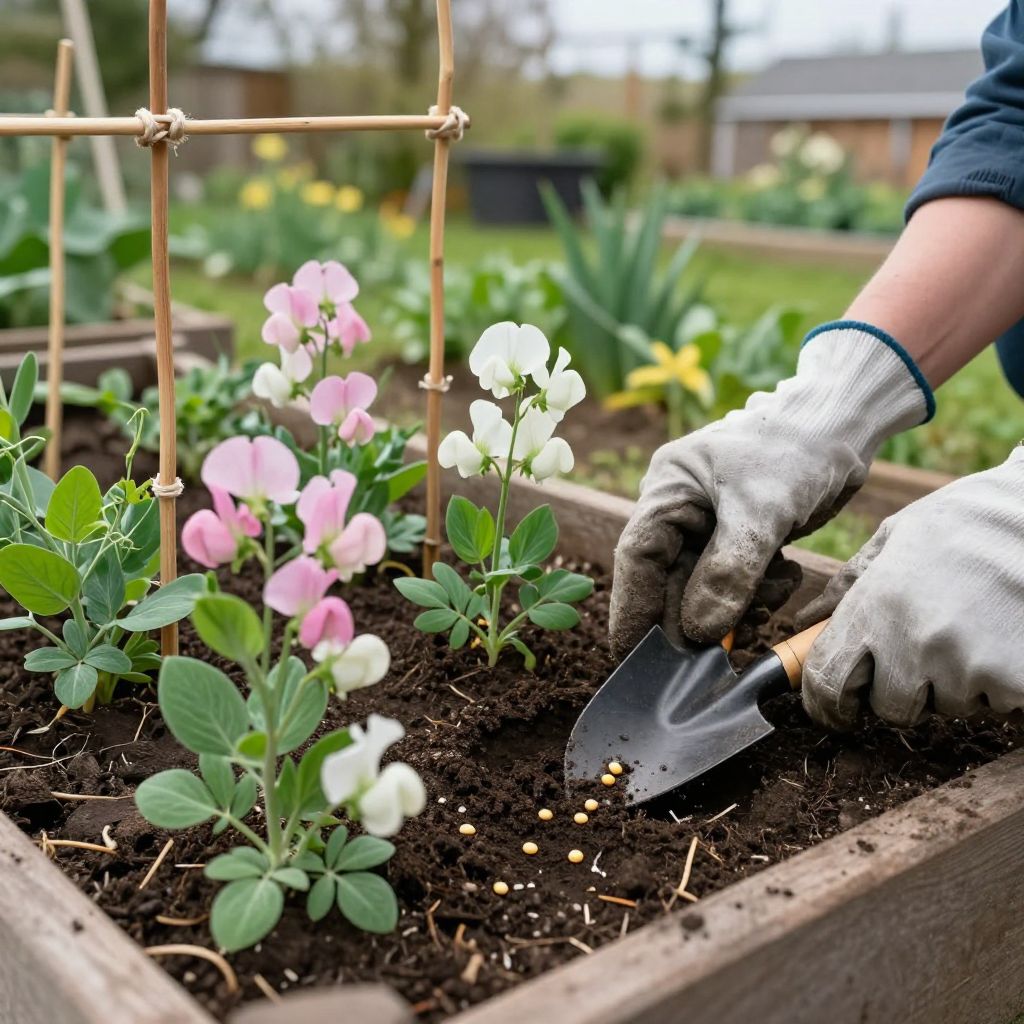
Wondering when to plant sweet peas so they flower well instead of sulking in the heat? Timing matters with this cool-season climber, and the best window depends on your climate, soil, and whether you’re sowing indoors or outdoors.
Get the timing right, and sweet peas can reward you with strong vines and fragrant blooms. Plant too late, and they may struggle in warm weather before they’ve had a chance to establish.
When to plant sweet peas?
Plant sweet peas (Lathyrus odoratus) in cool weather, usually in late winter to early spring outdoors, or in autumn in mild climates where winters are not severe. In very cold areas, start seeds indoors or sow outdoors as soon as soil can be worked. The goal is to give plants a long, cool start before summer heat arrives.
Best planting time by climate
Sweet peas are cool-season annuals, so the “best” planting time is usually earlier than many gardeners expect. They germinate and grow best when temperatures are cool, and they often stop performing once hot weather settles in.
Cool and cold climates
- Sow outdoors in early spring as soon as the soil is workable.
- If spring is short, start seeds indoors 4 to 6 weeks before your last expected frost.
- Transplant seedlings carefully before they become root-bound.
Mild-winter climates
- Autumn sowing is often ideal, especially where winters are cool but not harsh.
- Plants establish roots over winter and bloom earlier in spring.
- If fall is warm, wait until temperatures begin to cool so seedlings do not race into weak growth.
Warm climates
- Sweet peas are harder to grow well where winters are mild and springs turn hot quickly.
- Choose the coolest part of the season, often late fall through winter.
- Provide afternoon shade if spring heat arrives early.
How to know your sweet pea planting window
Instead of relying only on calendar dates, use soil and weather conditions. Sweet peas prefer cool soil and steady moisture, and they dislike being planted into cold, waterlogged ground or into soil that is already warming fast.
- Soil should be workable, not frozen or saturated.
- Daytime temperatures should be cool to mild, not consistently hot.
- Night temperatures can still be chilly; light frost is usually less of a problem than heat.
- If your area jumps quickly from cool to hot, plant as early as conditions allow.
Should you sow sweet peas indoors or outdoors?
Both methods can work, but outdoors is often simpler if your weather is suitable. Sweet peas have long taproots and dislike root disturbance, so direct sowing is usually the easiest and most reliable option.
Direct sowing outdoors
This is the preferred method in many gardens. Sow seeds where they will grow, because transplanted seedlings can stall if their roots are disturbed.
- Prepare a sunny site with rich, well-drained soil.
- Soak seeds for a few hours if you like, but it is not essential.
- Sow seeds about 1 inch deep and 2 to 3 inches apart.
- Water gently and keep the soil evenly moist until germination.
- Thin or space seedlings so vines have room to climb and air can move through them.
Starting seeds indoors
Indoor sowing helps in short seasons or when outdoor conditions are still too wet or frozen. Use deep pots, root trainers, or biodegradable pots to reduce root disturbance at transplanting.
- Sow 4 to 6 weeks before your last frost date.
- Use deep containers to accommodate the taproot.
- Keep seedlings in a cool, bright spot rather than a hot room.
- Harden them off gradually before planting outside.
Important: Sweet peas often do better in cooler indoor conditions. A warm windowsill can produce weak, leggy seedlings.
How to prepare the planting site
Sweet peas grow best in fertile soil with good drainage and enough room for roots to run deep. They are climbers, so they also need support from the start.
Soil and compost
- Work in compost or well-rotted organic matter before planting.
- Soil should hold moisture without staying soggy.
- A slightly alkaline to neutral soil is often suitable, but avoid overdoing lime unless a soil test shows it is needed.
Sunlight
- Choose a site with full sun in cool climates.
- In warmer areas, morning sun and some afternoon shade can help extend flowering.
- Too much shade can lead to fewer blooms and floppy growth.
Support
Install trellis, netting, pea sticks, or wire support at planting time. Sweet peas climb by tendrils and need something to grab early, not after they have already started sprawling.
Planting sweet peas step by step
Whether you sow in autumn or spring, the planting process is similar. The main difference is timing and how much cold your seedlings must handle after planting.
- Choose a cool day if possible.
- Loosen the soil to a good depth and mix in compost.
- Sow seeds 1 inch deep, or transplant seedlings at the same depth they were growing before.
- Space plants so air can circulate and stems can be tied in easily.
- Water well after planting, then keep the soil evenly moist.
- Protect young plants from birds, slugs, and hard frost if needed.
Common mistakes when planting sweet peas
Many sweet pea problems start at planting time. Avoiding a few common errors can make a big difference in how well they grow and bloom.
- Planting too late: heat can shorten flowering and weaken plants.
- Starting too warm indoors: this often causes tall, soft seedlings.
- Using shallow pots: sweet peas need room for their roots.
- Overwatering heavy soil: soggy ground can rot seeds or young roots.
- Skipping support: vines become tangled and harder to manage.
- Letting plants dry out: inconsistent moisture can reduce growth and bloom quality.
Sweet pea care after planting
Once sweet peas are in the ground, steady care helps them grow into strong flowering vines. The early weeks are especially important because young plants are building roots and climbing structure.
Watering
Keep soil evenly moist, especially while seedlings establish. Water deeply rather than giving frequent shallow sprinkles, and avoid soaking the foliage late in the day if disease pressure is a concern.
Feeding
Rich soil usually matters more than heavy feeding. Too much nitrogen can produce lush leaves but fewer flowers, so use a balanced approach and avoid overfertilizing.
Training and pinching
When seedlings are a few inches tall, encourage them to find their support. In some gardens, pinching out the growing tip once plants are established can encourage bushier growth and more flowering stems.
Mulching
A light mulch can help conserve moisture and keep roots cooler, especially as weather warms. Keep mulch a little away from the stems to reduce rot.
What if you missed the ideal planting time?
If you planted late, you may still get flowers, but the display may be shorter. In hot climates, late-sown sweet peas often struggle once temperatures rise, so focus on giving them the coolest conditions possible.
- Plant in the coolest spot available.
- Use mulch to keep roots cooler.
- Water consistently during dry spells.
- Provide afternoon shade if heat arrives early.
- Choose early-flowering varieties in future seasons if your climate is warm.
Pests and diseases to watch for
Sweet peas are not usually difficult, but young plants can be nibbled or weakened before they get established. Good spacing, airflow, and clean growing conditions help prevent many issues.
Common pests
- Slugs and snails may chew seedlings.
- Aphids can cluster on soft new growth.
- Birds may pull at seedlings or seeds in some gardens.
Common diseases
- Powdery mildew can appear in warm, dry conditions later in the season.
- Root rot may occur in poorly drained soil.
- Fungal problems are more likely when plants are crowded or overwatered.
To reduce problems, water at soil level, keep plants spaced well, and remove weak or diseased growth promptly.
When to harvest sweet pea flowers
Pick blooms regularly once plants start flowering. Frequent cutting encourages more flowers and keeps the plant from putting energy into seed production too early.
- Harvest when the first few blooms on a stem are open.
- Cut stems in the cool part of the day.
- Remove any seed pods you do not want to form, since pod production can slow flowering.
For the longest display, keep cutting and deadheading throughout the bloom period.
Quick planting checklist
If you want a simple answer to when to plant sweet peas, use this checklist before you sow:
- Is the weather cool enough for steady growth?
- Is the soil workable and well drained?
- Do you have a sunny site with support ready?
- Are you sowing early enough to beat the heat?
- Will you be able to keep the soil evenly moist?
Conclusion
The best time to plant sweet peas is when the weather is cool and the soil is workable, usually in early spring or in autumn in mild climates. Start them early, give them support, and keep the roots cool and evenly moist for the best chance of strong growth and fragrant flowers.
If you want to plan the rest of your spring garden, consider reading more about spring-flowering annuals and how to grow climbing flowers.