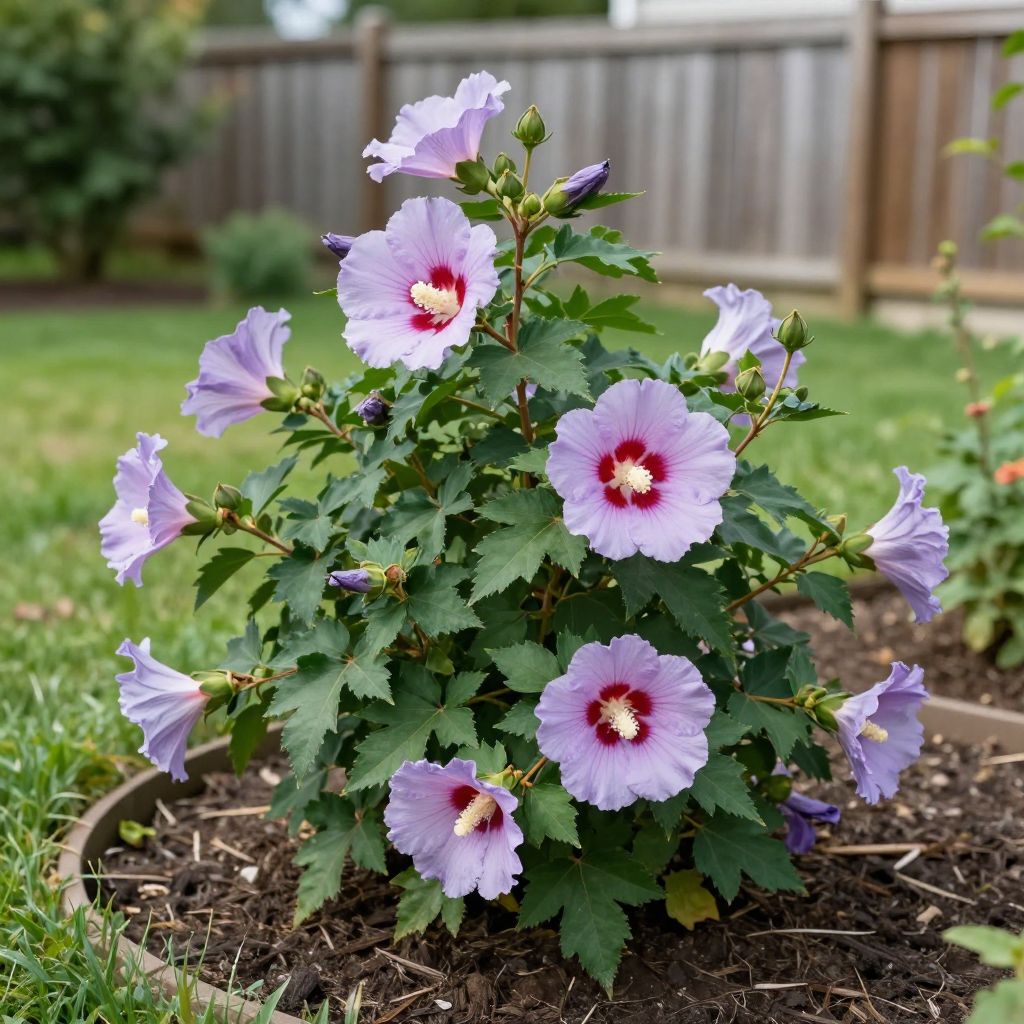
When does rose of Sharon bloom? In most gardens, Hibiscus syriacus starts flowering in mid to late summer and can keep going into early fall. The exact timing depends on your climate, sunlight, pruning, and how established the shrub is, but it is usually one of the later-blooming shrubs in the landscape.
If your plant is healthy but not flowering yet, the issue is often age, shade, too much nitrogen, or pruning at the wrong time. With the right growing conditions, rose of Sharon can become a long-season bloomer that adds color when many other shrubs are fading.
When does rose of Sharon bloom?
Rose of Sharon usually blooms from mid-summer through early fall, often beginning in July and continuing into September or even October in warm areas. Young plants may bloom later than established shrubs, and flowering is strongest when the plant gets full sun, moderate moisture, and little interference from late pruning.
What affects bloom timing?
Several factors can shift the bloom window earlier or later. Your local climate, the amount of sun the shrub receives, and how it was pruned all matter. Even the same plant can bloom at different times from one year to the next if spring weather is cool, dry, or unusually wet.
Climate and region
In warmer regions, rose of Sharon may begin blooming earlier and continue longer. In cooler climates, flowering often starts later in summer and may finish sooner if frost arrives early.
Sun exposure
Full sun produces the best bloom display. A plant growing in partial shade may still flower, but it often blooms less heavily and may start later. Aim for at least 6 hours of direct sun daily for strong flowering.
Plant age
Newly planted shrubs sometimes need a season or two to settle in before they bloom well. If a young rose of Sharon looks healthy but is not flowering much yet, patience is often part of the answer.
Pruning timing
Rose of Sharon blooms on new growth, so pruning at the wrong time can remove the wood that will carry flower buds. Heavy pruning in late spring or early summer can delay flowering or reduce the number of blooms.
How to encourage more blooms
If you want a fuller bloom season, focus on growing conditions rather than trying to force flowers. Healthy growth in the right place usually leads to better flowering than frequent fertilizing or severe pruning.
- Choose a sunny site. More sun usually means more flowers.
- Plant in well-drained soil. Rose of Sharon tolerates average soil, but it dislikes soggy roots.
- Water deeply during establishment. Keep newly planted shrubs evenly moist, especially during hot spells.
- Mulch lightly. A 2- to 3-inch layer helps conserve moisture and moderate soil temperature.
- Prune at the right time. If needed, prune in late winter or very early spring before new growth starts.
- Avoid excess nitrogen. Too much fertilizer can produce leafy growth with fewer flowers.
Growing conditions that support flowering
Soil and drainage
Rose of Sharon is adaptable, but it performs best in soil that drains well. Heavy clay can work if it does not stay waterlogged, while very sandy soil may need compost to hold moisture a little longer.
If your soil is poor, mix in compost at planting time to improve structure. Avoid burying the crown too deeply, and do not plant where water collects after rain.
Watering
Young shrubs need regular watering while roots establish. After that, rose of Sharon is fairly drought-tolerant, but prolonged dry stress can reduce bloom size and shorten the flowering season.
Water deeply when the top few inches of soil dry out, especially during summer heat. Try to water at the base rather than overhead to help keep foliage drier.
Fertilizer
Many rose of Sharon shrubs need little fertilizer if the soil is reasonably healthy. If growth is weak and leaves are pale, a light feeding in spring may help, but avoid overfeeding. Too much nitrogen often encourages leaves instead of flowers.
Why your rose of Sharon may not be blooming
If you are asking when does rose of Sharon bloom because your shrub has not flowered, the cause is often one of a few common issues. Most are fixable once you identify the problem.
- Too much shade: Move or thin nearby plants if possible.
- Pruned too late: Wait until late winter or early spring for shaping cuts.
- Too much fertilizer: Reduce high-nitrogen feeding.
- Plant is still young: Give it time to mature.
- Cold spring or late frost: Bud development may be delayed.
- Water stress: Drought can reduce flowering, especially in containers or newly planted shrubs.
How to tell if the plant is healthy but just late
Look for strong green growth, healthy leaves, and new stems forming through spring and early summer. If the shrub is vigorous but not yet budding, it may simply be behind schedule for your climate or have been set back by weather.
Pruning for better bloom timing
Rose of Sharon responds well to thoughtful pruning, but timing matters. Because flowers form on new growth, pruning should be done before active spring growth begins, not after buds are already forming.
Best pruning approach
- Remove dead, damaged, or crossing branches first.
- Thin crowded stems to improve light and airflow.
- Shape lightly rather than cutting back hard every year.
- Do major pruning in late winter or very early spring.
If you prune hard, expect a flush of new growth that may bloom a little later than an unpruned shrub. That is normal, but late pruning can still reduce the total number of flowers for the season.
Pests and diseases that can affect flowering
Rose of Sharon is generally tough, but stress from pests or disease can reduce bloom quality. Problems are more likely when shrubs are crowded, poorly watered, or growing in weak light.
Common issues to watch for
- Aphids: Can distort new growth and leave sticky residue.
- Japanese beetles: May chew foliage and weaken the plant.
- Leaf spot: Often worsens in humid conditions or with overhead watering.
- Root stress: Poor drainage can lead to weak growth and fewer flowers.
For most minor pest issues, a strong spray of water, hand-picking, or improving plant vigor is enough. Severe infestations or repeated disease problems may call for more targeted control, but healthy growing conditions are still the best long-term defense.
How to use rose of Sharon in the landscape
Because it blooms in late summer, rose of Sharon is useful for filling color gaps after spring shrubs finish. It works well as a specimen shrub, informal hedge, privacy screen, or mixed border plant.
Give it room to mature, since many varieties become sizable shrubs over time. Good spacing improves airflow, which helps reduce disease pressure and supports better flowering.
Propagation and plant replacement
If an older shrub blooms poorly or you want more plants, rose of Sharon can often be propagated from seed, cuttings, or layering depending on the variety and your experience level. Seed-grown plants may not match the parent exactly, so named cultivars are usually best started from cuttings if you want the same flower color and form.
When replacing a weak shrub, choose a site with full sun and prepare the soil before planting. A healthy young plant in the right place often outperforms an older shrub that has been struggling for years.
Seasonal checklist for better bloom
- Spring: Prune before new growth starts, then watch for strong shoot development.
- Early summer: Keep soil evenly moist during heat and dry spells.
- Mid to late summer: Expect buds and flowers to open, especially in full sun.
- Fall: Enjoy the last blooms, then let the plant slow down naturally.
- Winter: Remove dead wood and plan any shaping cuts for late winter.
Conclusion
Rose of Sharon typically blooms from mid-summer into early fall, but the exact timing depends on sun, climate, pruning, and plant maturity. If yours is not flowering well, check light, avoid overfertilizing, and prune only at the right time. Start by observing your shrub this season and note how much sun it gets each day.
For more help with seasonal shrub care, you may also want to read about how to prune flowering shrubs and choosing the best full-sun plants for your garden.