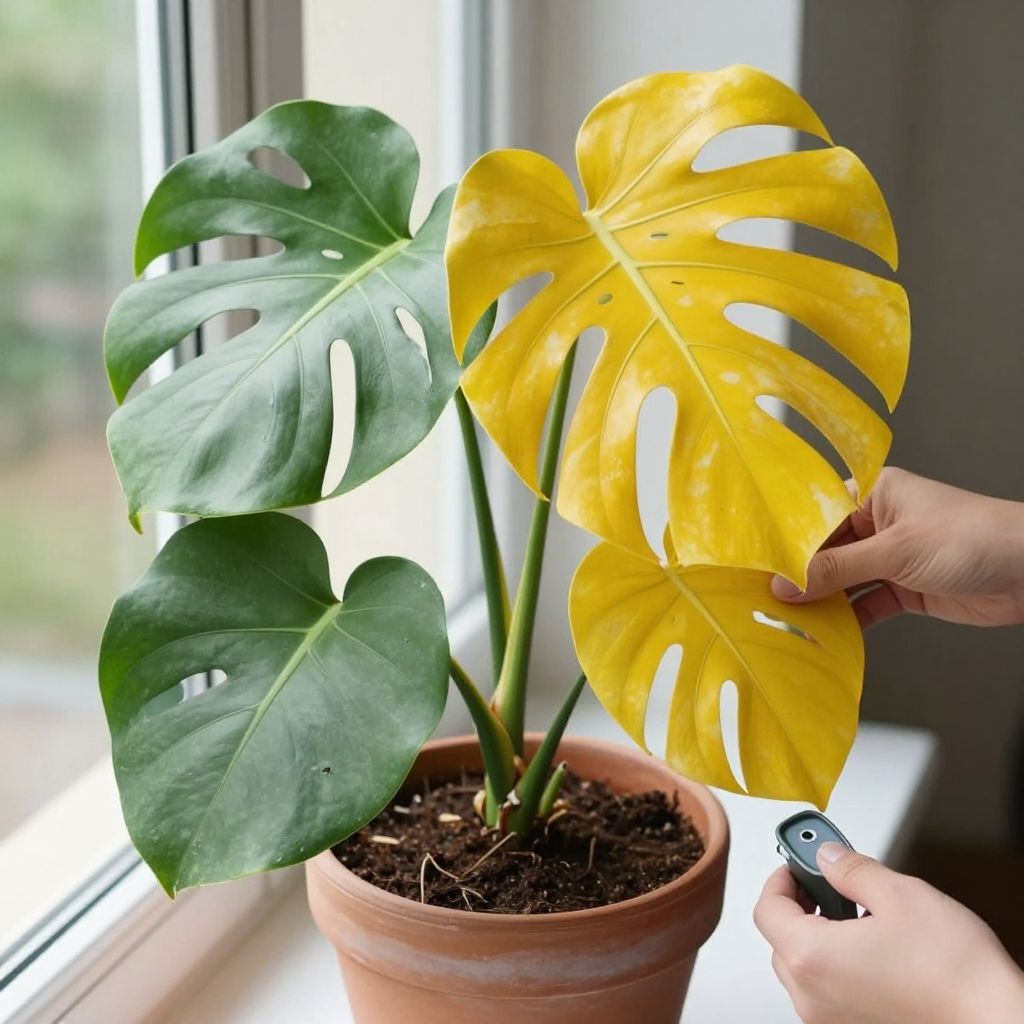
Why is my Monstera turning yellow? Yellow leaves are one of the most common Monstera problems, and the cause is usually a care issue rather than a disease. The good news is that most cases can be corrected once you identify whether the plant is getting too much water, too little light, poor drainage, or stress from pests or temperature swings.
Monstera deliciosa and related Monstera houseplants are forgiving, but they still need the right balance of moisture, light, and airflow. A yellow leaf is the plant’s way of telling you something is off, so use the pattern of yellowing to narrow down the cause before you change your care routine.
Why is my Monstera turning yellow?
In most cases, yellow Monstera leaves are caused by overwatering, poor drainage, or low light. Other common triggers include underwatering, nutrient imbalance, root problems, pests, and normal aging of older leaves. The key is to check the soil, roots, and light conditions before making changes, because the fix depends on the pattern of yellowing.
How to tell what’s causing the yellowing
Look closely at which leaves are yellowing, how fast it is happening, and what the soil feels like. That usually points you to the real problem faster than guessing.
Yellowing on older lower leaves
If the bottom leaves are yellowing one at a time while the plant keeps making new growth, it may be normal leaf aging. A Monstera will drop an old leaf occasionally, especially if it has outgrown its pot or is redirecting energy to new stems.
Yellowing on several leaves at once
When multiple leaves turn yellow together, especially if the soil stays wet, overwatering is the first thing to suspect. If the leaves are pale and the plant is stretching toward the window, low light may be part of the problem too.
Yellow leaves with brown, mushy stems
This often points to root stress or rot. If the potting mix smells sour, feels soggy, or the base of the plant is soft, the roots may not be getting enough oxygen.
Yellow leaves with dry soil and crispy edges
Dryness can also cause yellowing, especially if the plant has been left too long between waterings or exposed to hot, dry air. In that case, the leaves may yellow before they crisp or curl.
Common causes of yellow Monstera leaves and how to fix them
1. Overwatering
Overwatering is the most common reason a Monstera turns yellow indoors. The roots need air as well as moisture, and constantly wet soil can suffocate them.
Signs:
- Soil stays wet for many days
- Leaves turn yellow and feel soft or limp
- Stems near the soil line may look weak
- Mold, fungus gnats, or a sour smell may be present
What to do:
- Check the top 2 to 3 inches of soil before watering again.
- If the mix is still damp, wait until it dries slightly.
- Make sure the pot has drainage holes.
- If the soil is heavy or compacted, repot into a chunky, well-draining aroid mix.
A good Monstera potting mix should drain quickly but still hold some moisture. Many gardeners use a blend of indoor potting mix, orchid bark, and perlite or pumice for better airflow.
2. Poor drainage or a pot that is too large
Even if you water carefully, a pot without drainage holes or one that is much larger than the root ball can keep the soil wet for too long. That creates the same yellowing pattern as overwatering.
Fix it by:
- Using a pot with drainage holes every time
- Choosing a pot only 1 to 2 inches wider than the root ball for most houseplants
- Emptying saucers after watering
- Repotting into a smaller container if the current one stays wet too long
3. Too little light
Monsteras grow best in bright, indirect light. In low light, the plant uses water more slowly, which can make soil stay wet longer and lead to yellow leaves. Growth may also become leggy, with larger gaps between leaves.
What to do:
- Move the plant closer to a bright window with filtered light
- Avoid harsh direct sun, which can scorch leaves
- Rotate the pot every week or two so growth stays even
If you are growing Monstera outdoors in a warm climate, place it in dappled shade or morning sun with afternoon protection. Too much direct sun can bleach or yellow the leaves, especially in hot weather.
4. Underwatering or irregular watering
Although overwatering is more common, letting the plant dry out too much can also cause yellowing. Leaves may look dull, then yellow, then develop crispy tips or edges.
Signs:
- Soil pulls away from the sides of the pot
- Leaves feel thin or droopy
- New growth is smaller than usual
- Yellowing is paired with dry, brown edges
Fix it by watering thoroughly until excess water drains from the bottom, then letting the top layer dry before watering again. The goal is consistent moisture, not a strict calendar schedule.
5. Rootbound plants or exhausted potting mix
A Monstera that has filled its pot with roots may start to yellow because it can no longer access enough water or nutrients. Old potting mix can also break down and hold too much water while offering less oxygen to the roots.
Look for:
- Roots circling the pot or growing out of drainage holes
- Water running straight through the pot without soaking in
- Slowed growth despite good light and care
If the plant is rootbound, repot one size up and refresh the mix. Gently loosen any tightly circling roots, but do not tear up the root ball aggressively.
6. Nutrient problems
Yellowing can happen when a Monstera is not getting enough nutrients, but fertilizer is not the first thing to blame. If the plant is in poor light or soggy soil, adding fertilizer can make the problem worse.
Possible signs of nutrient stress:
- General pale color, not just one leaf
- Slow growth during the active growing season
- New leaves are smaller or less vibrant
If the plant is otherwise healthy, feed lightly during active growth with a balanced houseplant fertilizer according to the label. Reduce or stop feeding in low-light winter conditions, when the plant grows more slowly.
7. Pests
Spider mites, thrips, mealybugs, and scale can weaken a Monstera and cause yellow speckling or overall decline. Pests are more likely if the plant is stressed, dusty, or crowded near other houseplants.
Check for:
- Fine webbing, especially under leaves
- Sticky residue
- Small moving insects or cottony clusters
- Silvery streaks or stippling on leaves
Wipe leaves with a damp cloth, isolate the plant, and treat early with insecticidal soap or another houseplant-safe pest control method. Repeat as directed, because one treatment usually is not enough to stop an infestation.
8. Temperature stress and drafts
Monsteras dislike sudden swings in temperature. Cold drafts from windows, doors, or air conditioners can trigger yellowing, as can prolonged exposure to hot, dry air from vents or heaters.
Keep the plant away from:
- Cold windows in winter
- Heating vents and radiators
- Air conditioner blasts
- Frequent temperature swings
Stable indoor conditions help the roots function properly and reduce stress-related leaf drop.
What to do first when you see a yellow Monstera leaf
Start with the simplest checks before changing several things at once. That makes it easier to identify the real cause.
- Feel the soil. If it is wet, hold off on watering. If it is bone dry, water thoroughly.
- Check the drainage. Make sure the pot has holes and the saucer is not holding water.
- Inspect the light. Bright, indirect light is best for most indoor Monsteras.
- Look for pests. Check both sides of the leaves and the stems.
- Examine the roots if needed. If the plant smells sour or the soil stays wet, repot and trim only clearly rotten roots.
Should you cut off yellow Monstera leaves?
Yes, you can remove a fully yellow leaf if it is mostly spent. A yellow leaf will not turn green again, and removing it can help the plant focus energy on healthy growth.
Use clean, sharp pruners or scissors and cut the leaf stem close to the main stem without damaging it. If only part of the leaf is yellow, you can leave it until the plant finishes drawing nutrients from it.
How to prevent yellow leaves in the future
Prevention is mostly about consistency. Monsteras do best when their roots get air, moisture, and light in a steady balance.
- Water only when the top layer of soil has started to dry
- Use a chunky, well-draining potting mix
- Keep the plant in bright, indirect light
- Empty saucers after watering
- Repot when roots outgrow the container
- Inspect regularly for pests
- Keep the plant away from cold drafts and heat vents
Avoid the common mistake of watering on a fixed schedule without checking the soil first. Indoor conditions change with season, pot size, humidity, and light, so your Monstera’s needs will change too.
When yellowing is normal and when it is a warning
A single older leaf yellowing occasionally is usually not a crisis. But if yellowing spreads quickly, affects several leaves, or comes with soft stems, bad smells, or pest damage, you need to act promptly.
As a rule, healthy Monsteras should keep producing new growth while older leaves remain mostly green. If the plant is losing leaves faster than it is making new ones, something in the growing conditions needs correction.
Conclusion: the fastest way to solve yellow Monstera leaves
If you are wondering why your Monstera is turning yellow, begin with the soil and light. In most homes, the fix is to adjust watering, improve drainage, and move the plant to brighter indirect light. Once the roots are comfortable, the yellowing often slows and new growth improves.
If you want to keep troubleshooting your indoor jungle, you may also find it helpful to read about how to water houseplants correctly and the best potting mix for aroids for healthier roots and more reliable growth.