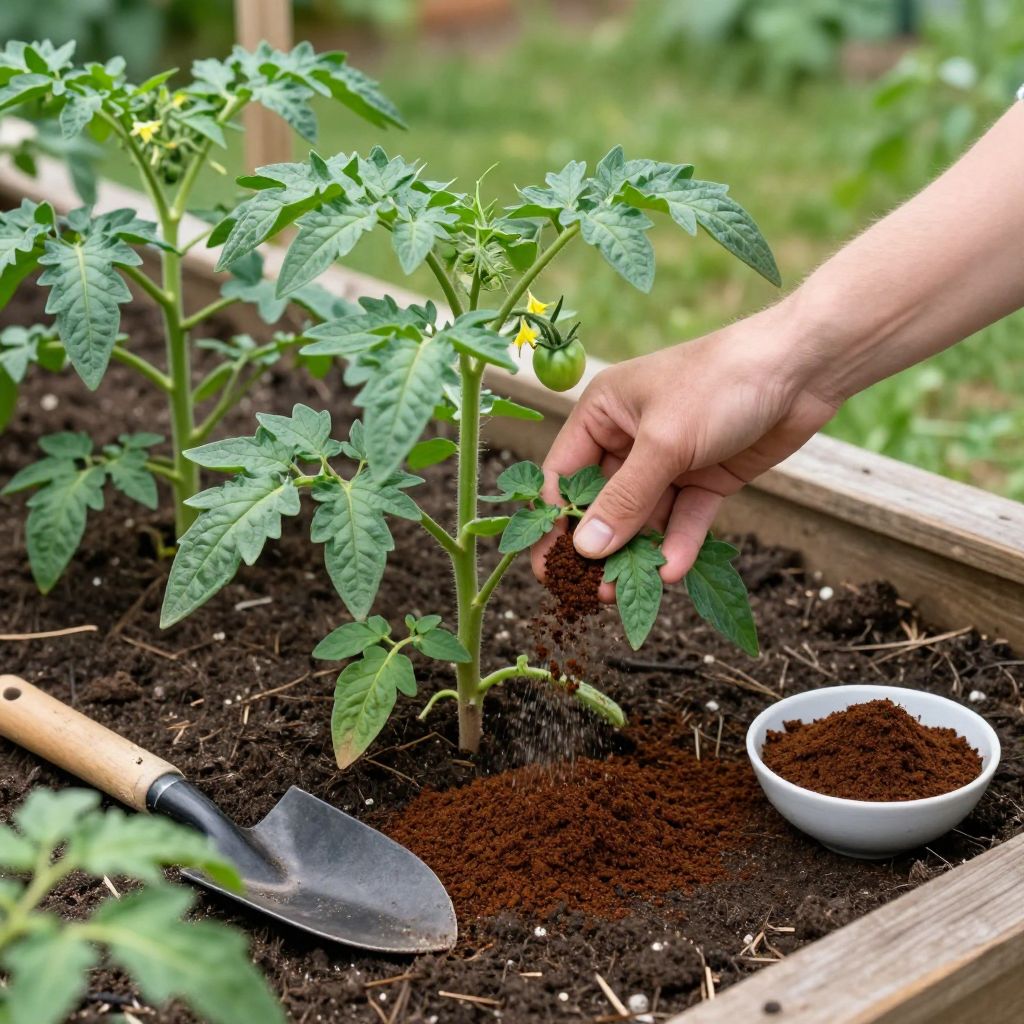
Are coffee grounds good for tomato plants? They can be, but only when used the right way. Coffee grounds are not a magic fertilizer, and fresh grounds can cause more problems than benefits if you pile them on around tomatoes.
Used thoughtfully, coffee grounds can support tomato plants by adding organic matter, feeding soil life, and helping improve compost. The key is moderation, proper composting, and balanced tomato care.
Are Coffee Grounds Good For Tomato Plants?
Yes, coffee grounds can benefit tomato plants when they are used as part of a healthy soil-building routine. They work best in compost or as a thin, mixed-in amendment, not as a thick surface layer. Tomatoes still need balanced nutrients, steady moisture, full sun, and well-drained soil to grow well.
What Coffee Grounds Actually Do in the Garden
Used coffee grounds are organic matter, not a complete plant food. They can improve soil structure over time and help feed beneficial microbes as they break down.
Benefits for tomatoes
- Add organic matter to garden soil or compost.
- Support soil biology as they decompose.
- Can help loosen heavy soil when composted first.
- May slightly contribute nitrogen, but not enough to replace fertilizer.
What they do not do
- They do not provide a full tomato fertilizer.
- They do not reliably control pests or diseases.
- They should not be used alone to fix poor soil.
Tomatoes are heavy feeders, so they need a broader nutrient plan than coffee grounds alone can provide. Think of grounds as a soil amendment, not the main meal.
How to Use Coffee Grounds Around Tomato Plants
The safest way to use coffee grounds for tomatoes is to compost them first. Composting helps break them down, reduces the chance of clumping, and makes them easier for soil life to use.
Best ways to apply them
- Add them to compost along with dry “brown” materials such as leaves, straw, shredded paper, or cardboard.
- Mix a small amount into the top few inches of soil only if the grounds are fully used and dry, and never in a thick layer.
- Use finished compost made with coffee grounds as a top-dressing around tomatoes.
How much is reasonable?
For home gardens, a light approach is best. If you are top-dressing, spread a thin layer of finished compost around the plant and keep it a few inches away from the stem. If you are adding grounds directly to a compost pile, balance them with plenty of dry material so the pile does not become wet and compacted.
Avoid dumping fresh grounds in a thick ring around tomato stems. That can crust over, shed water, and slow air movement into the soil.
When Coffee Grounds Can Cause Problems
Coffee grounds are often treated as universally helpful, but tomatoes can suffer if the grounds are misused. The main issue is not toxicity; it is poor application.
Common mistakes to avoid
- Using a thick layer that forms a barrier on the soil surface.
- Mixing in too many grounds without enough dry compost materials.
- Applying grounds to already soggy soil, which can worsen drainage issues.
- Expecting grounds to replace tomato fertilizer.
- Using grounds as a mulch by themselves instead of a mixed mulch blend.
Fresh grounds can also stay damp for a long time. In containers, that can be a problem because tomato roots need oxygen as well as moisture.
Do Coffee Grounds Make Soil More Acidic?
Used coffee grounds are often described as acidic, but after brewing they are usually much closer to neutral than many gardeners expect. They are unlikely to dramatically change garden soil pH on their own.
That said, tomatoes generally prefer slightly acidic soil, so pH is worth watching if you already have very alkaline or very acidic conditions. If your tomato leaves look stressed and growth is weak, a soil test is more useful than guessing based on coffee grounds alone.
What to do instead of guessing
- Test your soil if possible before planting.
- Use compost to improve structure and nutrient availability.
- Choose a tomato fertilizer or amendment based on the test results.
Coffee Grounds in Compost for Tomatoes
Composting coffee grounds is one of the best ways to use them for tomato beds. Grounds are considered a “green” material because they contribute nitrogen, but they still need dry “brown” materials for balance.
Simple compost balance
- Greens: coffee grounds, fruit and vegetable scraps, fresh grass clippings
- Browns: dry leaves, straw, shredded cardboard, paper
If your compost smells sour, feels slimy, or packs down tightly, it likely has too many wet materials and not enough air. Add more browns and turn the pile to restore airflow.
Finished compost made with coffee grounds can be spread around tomato plants to improve the soil gradually. This is especially helpful in raised beds and vegetable gardens that need regular rebuilding.
Using Coffee Grounds for Tomatoes in Containers
Container-grown tomatoes need extra care because potting mix dries out and compacts differently than garden soil. Coffee grounds can be used in containers, but only sparingly and preferably as part of finished compost.
Container tips
- Do not add a thick layer of grounds on top of the potting mix.
- Use composted grounds mixed into a quality potting blend instead.
- Make sure the container has drainage holes.
- Water deeply when the top inch or two of mix feels dry, depending on weather and pot size.
Because containers dry out faster, a crust of coffee grounds on the surface can interfere with even watering. If you garden in pots, composted grounds are much safer than raw grounds.
Will Coffee Grounds Help With Tomato Pests or Diseases?
There is no dependable evidence that coffee grounds solve common tomato pest or disease problems. They should not be used as a stand-alone treatment for aphids, hornworms, blight, or blossom-end rot.
Better prevention for healthy tomatoes
- Give plants full sun, ideally at least 6 to 8 hours daily.
- Water the soil, not the leaves, to reduce disease pressure.
- Mulch to keep soil moisture even.
- Space plants for airflow.
- Remove diseased leaves promptly.
If you are dealing with blossom-end rot, the issue is usually inconsistent watering or calcium uptake, not a lack of coffee grounds. If leaves yellow or curl, check watering, nutrition, pests, and root health before adding more amendments.
Best Soil Conditions for Tomatoes
Coffee grounds can be one small part of a good tomato-growing setup, but the basics matter much more. Tomatoes do best in fertile, well-drained soil with steady moisture and plenty of sun.
Focus on these growing conditions
- Soil: loose, rich, and well-draining
- Sunlight: full sun for strong growth and fruiting
- Water: consistent, deep watering rather than light daily splashes
- Mulch: helps hold moisture and reduce soil splash
- Support: stakes, cages, or trellises keep fruit off the ground
Healthy soil structure matters because tomato roots need both moisture and air. Coffee grounds can help indirectly when they are part of compost or well-managed organic matter, but they cannot fix compacted clay or poor drainage on their own.
Practical Ways to Use Coffee Grounds Without Harming Tomatoes
If you want to use coffee grounds in a tomato garden, keep the method simple and conservative. The goal is to improve soil over time, not to force a quick result.
Good routine for most gardeners
- Collect used coffee grounds and let them dry slightly if they are very wet.
- Add them to a compost pile with plenty of dry browns.
- Let compost finish fully before applying it near tomatoes.
- Spread finished compost around plants in a thin layer.
- Water after top-dressing so nutrients begin moving into the root zone.
If you do not compost
If you cannot compost, use coffee grounds very sparingly and mix them into existing soil only in small amounts. Never rely on them as the only amendment. Pair them with a balanced tomato fertilizer if your soil test or plant growth suggests a nutrient need.
Signs You May Be Using Too Many Coffee Grounds
Tomatoes usually show stress through growth changes, leaf color, or poor fruiting. If coffee grounds are being overused, the problem is often indirect.
Watch for these warning signs
- Soil surface stays crusted or water beads up instead of soaking in.
- Container mix feels soggy for too long.
- Plants grow leafy but set fewer flowers or fruit.
- Lower leaves yellow while soil stays overly wet.
- Compost smells sour or looks slimy.
If you see these signs, stop adding grounds and focus on improving drainage, airflow, and watering habits. Tomatoes recover best when the root zone is stable and not overloaded with wet organic material.
Bottom Line: Should You Use Coffee Grounds for Tomatoes?
Yes, but only as part of a bigger soil-building plan. Coffee grounds are useful in compost and can contribute organic matter, but they are not a complete tomato food and should not be used in thick layers around plants.
If you want healthier tomatoes, start with full sun, good drainage, steady watering, and finished compost. Then use coffee grounds as one small ingredient in that system, not the main one. For more tomato-growing guidance, look for related articles on composting, mulching, and caring for vegetable garden soil.