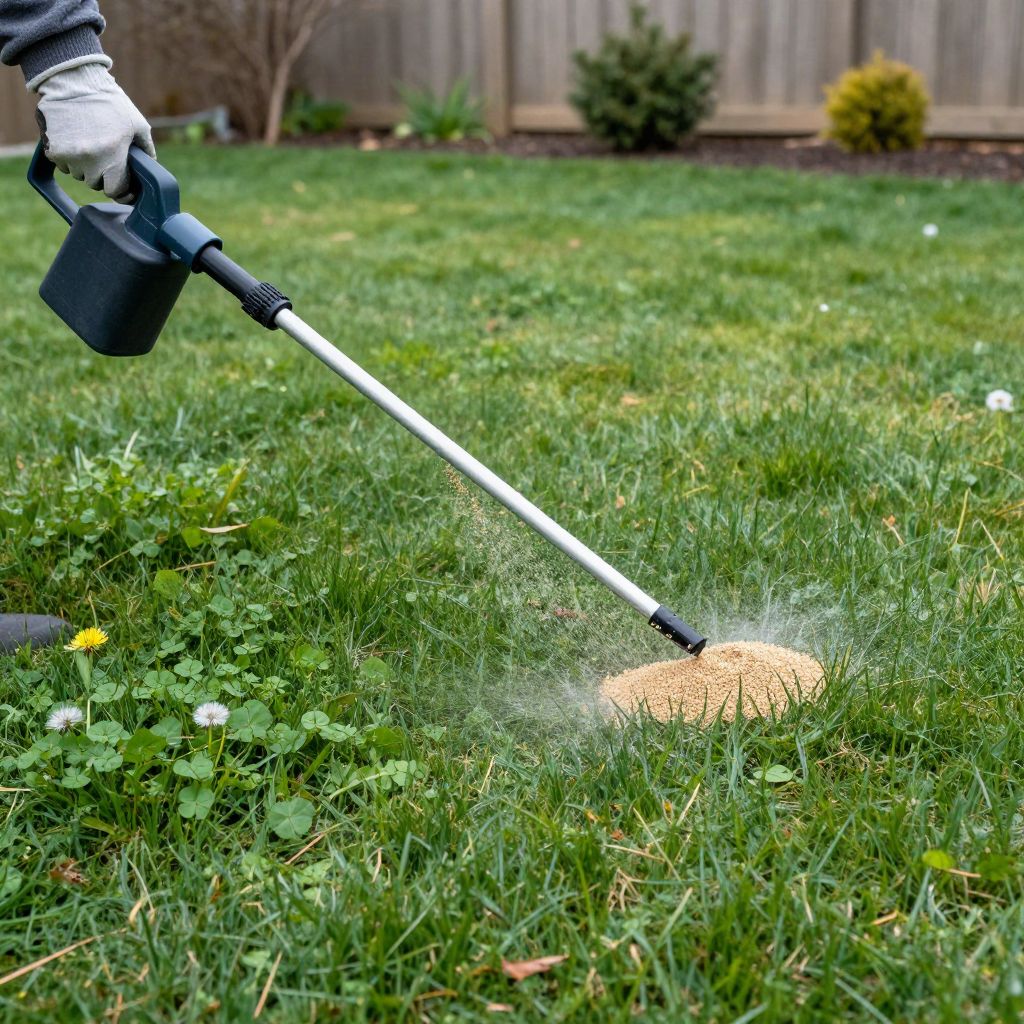
Does weed and feed work? In many lawns, yes—but only when the product matches the problem and the grass is actively growing. It can reduce some broadleaf weeds while also feeding turf, but it is not a cure-all for thin, stressed, or badly infested lawns.
If you want reliable results, timing, moisture, mowing height, and lawn health matter just as much as the product itself. Used the wrong way, weed and feed can waste money, miss weeds, or even stress your grass.
Does weed and feed work?
Yes, weed and feed can work on lawns with light to moderate broadleaf weeds, especially when applied to actively growing grass and moist soil. It works best as a maintenance tool, not a rescue treatment for neglected lawns, heavy weed pressure, or turf that is already drought-stressed, dormant, or thin.
How weed and feed actually works
Weed and feed combines a fertilizer with a selective herbicide. The fertilizer supports grass growth, while the herbicide targets certain broadleaf weeds such as dandelion, clover, chickweed, and plantain, depending on the product label.
It does not usually control grassy weeds like crabgrass, goosegrass, or nutsedge. It also will not repair bare spots, compacted soil, poor drainage, or shade problems that are causing the lawn to thin out.
Why results are often mixed
- Weeds must be actively growing for the herbicide to work well.
- The lawn should be healthy enough to absorb nutrients and recover.
- Rain, irrigation, or mowing at the wrong time can reduce effectiveness.
- Some weeds are naturally more resistant or too mature for good control.
When weed and feed is worth using
Weed and feed makes the most sense when your lawn is mostly grass, with scattered broadleaf weeds, and you want one product to handle both feeding and weed suppression. It is often more useful in established lawns than in newly seeded areas.
Good situations for weed and feed
- Established turf with a few common broadleaf weeds
- Lawns that need a seasonal nutrient boost
- Yards where you want a simple, combined treatment
- Grass that is growing vigorously, not dormant or heat-stressed
When it is usually the wrong choice
- Newly seeded lawns or recently sodded areas
- Lawns with heavy weed infestations
- Lawns suffering from compaction, poor drainage, or severe shade
- Yards with mostly grassy weeds, which need a different herbicide approach
How to use weed and feed correctly
For the best chance of success, follow the product label exactly. Labels vary by formulation, grass type, and weed species, so the instructions on the bag matter more than general advice.
- Identify your grass type and the weeds you want to control.
- Check that the product is labeled for your turf and target weeds.
- Mow a few days before application if the label allows it, but avoid scalping the lawn.
- Apply when the grass and weeds are actively growing.
- Water only if the label instructs you to, and avoid washing the product off too soon.
- Keep people and pets off the lawn until the product has settled or dried as directed.
Timing matters more than many gardeners realize
Broadleaf weeds absorb herbicides best while they are growing, not when they are stressed. In many climates, that means spring or early fall can be effective windows, but local weather and grass growth matter more than the calendar.
Avoid applying weed and feed during drought, extreme heat, freezing conditions, or when the lawn is dormant. If the grass is not growing, the fertilizer is less useful and the herbicide may be less effective.
Common mistakes that make weed and feed fail
Many disappointing results come from application errors rather than the product itself. A lawn can look “treated” but still not improve if the timing or conditions were poor.
- Applying to dry, stressed turf instead of actively growing grass
- Using it on the wrong weed type, such as crabgrass or sedges
- Mowing too soon before or after application
- Overwatering or watering at the wrong time
- Choosing a product not labeled for your grass species
- Expecting it to fix bare patches or soil problems
Why mature weeds can survive
Large, established weeds are harder to kill than young ones. If weeds have thick crowns, deep roots, or have already flowered, weed and feed may only partially damage them. In those cases, spot treatment or a separate weed-control plan is usually more effective.
What to do if weed and feed does not work
If the lawn still has weeds after treatment, do not keep reapplying blindly. First figure out whether the problem is product choice, timing, or lawn health.
Step-by-step troubleshooting
- Check the weed species. Broadleaf products do not control grassy weeds.
- Review the label. Make sure the product is approved for your grass type and weed list.
- Look at lawn conditions. Thin turf, shade, compaction, and poor drainage invite weeds back.
- Wait for visible response. Some weeds yellow slowly over several days to a couple of weeks.
- Spot treat stubborn weeds with a suitable selective herbicide if the label allows it.
- Overseed or repair thin areas once it is safe to do so for your lawn and product used.
In many cases, the best long-term fix is not more weed and feed. It is a better lawn care routine: proper mowing height, consistent watering, aeration if needed, and overseeding thin areas when conditions are right.
How to improve results naturally through better lawn care
A healthy lawn competes with weeds better than a weak one. Thick turf shades the soil, reduces weed seed germination, and recovers faster after stress.
Simple maintenance that helps
- Mow high enough for your grass type so blades can shade the soil.
- Water deeply but not constantly, adjusting for rainfall and soil type.
- Fix compacted areas with aeration if your soil is dense and runoff is common.
- Add compost or topdress lightly where soil is poor, if appropriate for your lawn.
- Overseed thin spots so weeds have less open space to invade.
If your lawn is patchy because of shade, tree roots, or poor drainage, weed and feed will not solve the root cause. Improving site conditions or choosing a more suitable groundcover may be a better long-term answer.
Safety and lawn-care precautions
Weed and feed products are designed for lawns, not for every planting area. Keep them away from flower beds, vegetable gardens, shrubs, and trees unless the label specifically says otherwise.
- Do not apply on windy days if drift could reach ornamentals.
- Rinse spreaders after use to avoid accidental contamination.
- Store products dry and sealed, out of reach of children and pets.
- Never exceed label rates in hopes of getting faster results.
Important: If you have a newly seeded lawn, read the label carefully. Many weed and feed products can damage young grass or interfere with seed germination.
Best alternatives if weed and feed is not enough
Sometimes a combined product is convenient, but separate steps work better. If weeds are widespread or your lawn needs more than a light feeding, a targeted approach usually gives you better control.
Consider these options
- Spot-spraying broadleaf weeds instead of treating the whole lawn
- Using a fertilizer alone when weeds are minimal
- Applying a pre-emergent at the right season for annual weeds, if appropriate for your turf
- Renovating thin areas with overseeding and soil improvement
For many gardeners, the smartest strategy is to feed the lawn when it needs nutrients and treat weeds separately when they appear. That approach gives you more control and often wastes less product.
Bottom line: should you use weed and feed?
Use weed and feed if your lawn is established, actively growing, and only lightly to moderately weedy. Skip it if your turf is stressed, newly seeded, or overrun with the wrong kind of weeds. The product can work well, but only when matched to the lawn, the weed, and the season.
If you want to improve your lawn further, read up on proper mowing height, overseeding thin spots, and soil improvement so you can make weed and feed part of a bigger, more effective lawn-care plan.