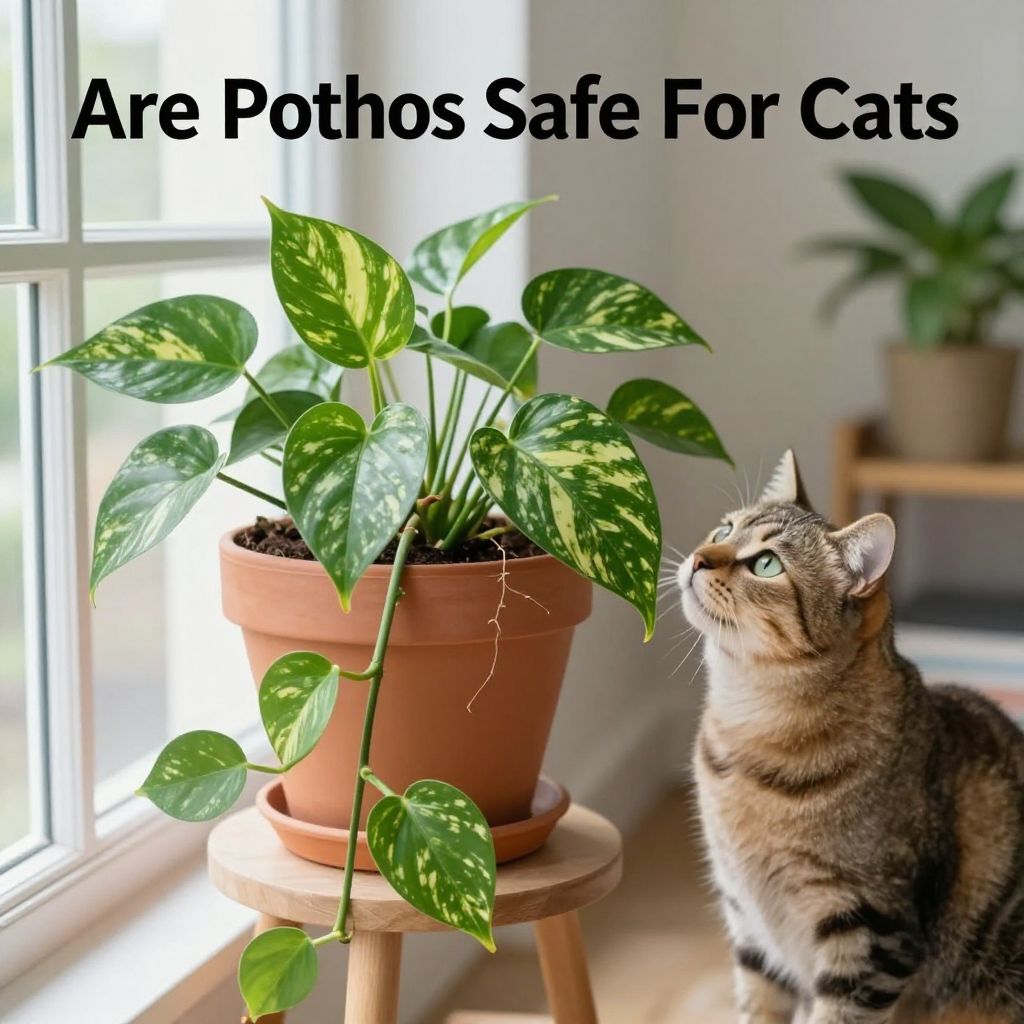
Are pothos safe for cats? If you grow pothos indoors, this is an important question to answer before a curious pet takes a bite. Pothos is one of the easiest houseplants to keep alive, but it is also toxic to cats, so placement and handling matter.
The good news is that you can still enjoy pothos in a cat household if you keep it out of reach and know what to do in an emergency. With a few smart growing and safety habits, you can protect both your plant and your pet.
Are pothos safe for cats?
No. Pothos (Epipremnum aureum) is not safe for cats. It contains insoluble calcium oxalates, which can irritate the mouth, tongue, and throat if chewed or swallowed. Even a small nibble may cause drooling, pawing at the mouth, vomiting, or trouble swallowing.
Why pothos can be risky in a cat home
Pothos is popular because it tolerates low light, irregular watering, and indoor conditions that challenge many other plants. Unfortunately, those same traits make it easy to place in spots where cats can reach it, such as shelves, windowsills, and hanging baskets.
The plant’s leaves and stems can be tempting to cats that like to chew greenery. Kittens, bored indoor cats, and pets attracted to dangling vines are especially likely to investigate it.
Common signs of pothos exposure in cats
- Drooling or foaming at the mouth
- Pawing at the face or mouth
- Vomiting
- Reduced appetite
- Oral irritation or swelling
- Difficulty swallowing
If your cat shows severe swelling, repeated vomiting, or breathing trouble, contact a veterinarian right away. For mild exposure, call your vet or a pet poison helpline for guidance.
How to grow pothos safely around cats
If you want to keep pothos, the safest approach is to treat it as a decorative plant that must stay physically inaccessible. Do not rely on training alone. Cats are agile, and a trailing vine can be hard for them to resist.
Best placement options
- High shelves that cats cannot jump to
- Closed rooms your cat cannot enter
- Hanging planters placed well above jumping height
- Plant stands with no nearby furniture or ledges
Even then, check the area from your cat’s point of view. A nearby chair, bookcase, or windowsill can turn a “safe” spot into an easy launch point.
Extra safety tips for indoor gardeners
- Trim long vines before they drape within reach.
- Remove fallen leaves promptly.
- Keep potting soil covered if your cat digs in containers.
- Use sturdy pots so the plant cannot be knocked over.
- Wash your hands after pruning or repotting.
Important: A plant that is “out of reach” today may not stay that way after a growth spurt or furniture rearrangement. Recheck placement regularly.
What to do if your cat chews pothos
Act quickly, but stay calm. Most pothos exposures cause irritation rather than life-threatening poisoning, yet your cat still needs prompt attention.
- Remove any plant material from your cat’s mouth if you can do so safely.
- Keep the cat from chewing more leaves or stems.
- Offer fresh water.
- Call your veterinarian for advice, especially if symptoms are present.
- Bring a sample or photo of the plant if your vet asks for identification.
Do not induce vomiting unless a veterinarian specifically tells you to do so. Different plants and situations require different responses.
Choosing safer plant alternatives for cat owners
If you prefer to remove the risk entirely, choose non-toxic houseplants instead of pothos. This is often the simplest solution for homes with playful cats or multiple pets.
Cat-friendlier indoor plant options
- Spider plant (Chlorophytum comosum)
- Boston fern (Nephrolepis exaltata)
- Areca palm (Dypsis lutescens)
- Prayer plant (Maranta leuconeura)
- Peperomia species
Even non-toxic plants should be kept in stable pots and monitored, because chewing any plant can still upset a cat’s stomach or create a mess.
Pothos care basics for healthy indoor growth
If you do keep pothos, good care helps it stay attractive without becoming leggy and more likely to trail into pet territory. Pothos is forgiving, but it grows best when you match its light, water, and soil needs.
Light
Pothos grows best in bright, indirect light, though it also tolerates lower light. In dim rooms, growth slows and stems may stretch, making the plant longer and harder to manage around pets.
Direct sun can scorch the leaves, especially through glass. A spot near an east-facing window or a few feet back from a brighter window often works well.
Watering
Let the top 1 to 2 inches of potting mix dry before watering again. Water thoroughly until excess drains out, then empty the saucer. Overwatering is a common mistake and can lead to root rot.
Because indoor conditions vary, check the soil with your finger rather than following a fixed schedule. Warm, bright rooms dry faster than cool, low-light spaces.
Soil and drainage
Use a well-draining indoor potting mix in a container with drainage holes. A chunky mix that includes ingredients such as bark, perlite, or coco coir can help prevent soggy roots.
Never let pothos sit in standing water. Good drainage is one of the simplest ways to keep the plant healthy and reduce pest and disease problems.
Pruning
Prune pothos to control size, encourage fuller growth, and keep vines from reaching cat-accessible areas. Cut just above a node, where a leaf joins the stem, to encourage branching.
Remove yellowing or damaged leaves as needed. If the plant becomes too long, a harder trim can make it easier to manage indoors.
Propagation and repotting with pet safety in mind
Pothos is easy to propagate from stem cuttings, but use caution if you have cats. Fresh cut stems and clippings can be tempting to bat at or chew.
Propagation steps
- Take a cutting with at least one node and one or two leaves.
- Place it in water or a moist propagation medium.
- Keep it in bright, indirect light.
- Change water regularly if rooting in water.
- Move rooted cuttings into potting mix once roots are established.
Keep cuttings, tools, and trimmings away from pets during the process. Clean up all fallen pieces right away.
Repotting tips
Repot pothos when roots fill the container or water runs through too quickly. Choose a pot only slightly larger than the old one, and refresh the mix rather than moving to an oversized container.
After repotting, place the plant where your cat cannot disturb loose soil or newly exposed stems while it settles in.
Common pothos problems and how they affect cat households
Most pothos problems are not directly related to cats, but pet activity can make them worse. Chewed leaves, knocked pots, and disturbed soil can stress the plant and create a bigger cleanup job.
Typical issues to watch for
- Yellow leaves: often linked to overwatering or poor drainage
- Leggy growth: usually caused by low light
- Brown tips: can come from dry air, inconsistent watering, or salt buildup
- Root rot: often the result of soggy soil
- Pests: mealybugs, spider mites, and scale can appear indoors
If your cat likes to brush against plants, inspect stems and leaf undersides regularly. Keep an eye out for sticky residue, webbing, or cottony clusters that suggest pests.
Outdoor use of pothos: what to know
Pothos is usually grown as an indoor plant in many climates. If you move it outdoors for summer, remember that the toxicity risk does not change. Cats that roam patios, porches, or balconies can still reach it.
Outdoors, place the plant in bright shade or filtered light and protect it from direct sun, wind, and heavy rain. Bring it back inside before temperatures drop if your climate is not suitable for tropical growth.
Also check for local wildlife or neighborhood pets if the plant is outside. A hanging basket may still be accessible to climbing animals or curious cats.
Final takeaways for cat owners
Are pothos safe for cats? No, they are toxic, so the safest choice is to keep them completely out of reach or replace them with a pet-safe plant. If you keep pothos, use careful placement, regular pruning, and quick cleanup to reduce risk.
Before you buy or move a pothos, take a minute to map out where your cat can jump, climb, or brush past the plant. If you want more pet-friendly indoor plant ideas, look for trusted gardening guides on non-toxic houseplants and indoor plant care.