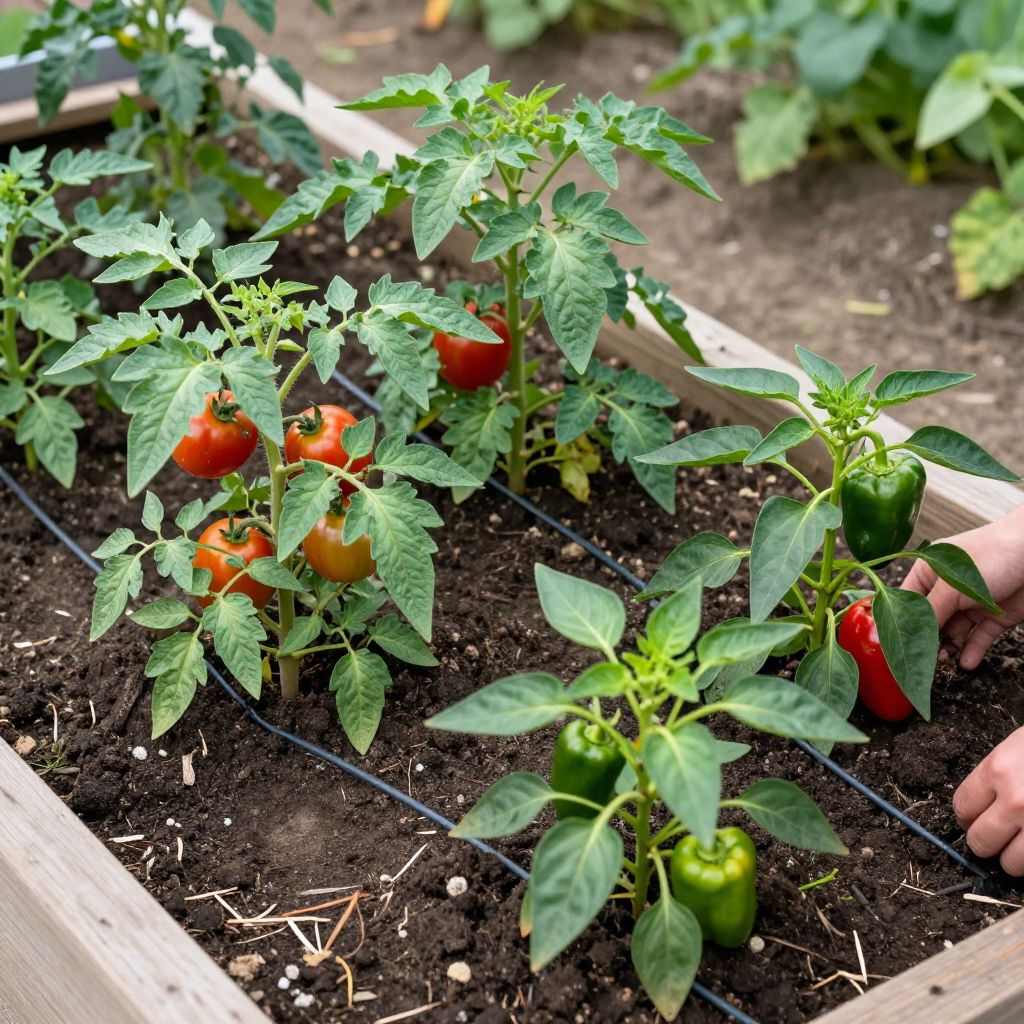
Can you plant peppers and tomatoes together? Yes—you can grow them side by side, and in many home gardens they make a practical pairing. Both are warm-season crops with similar light, soil, and watering needs, so they can share a bed or containers if you give each plant enough space and manage pests and diseases carefully.
The main challenge is not compatibility, but crowding, airflow, and shared problems such as aphids, whiteflies, and fungal diseases. With the right spacing, support, and care, peppers and tomatoes can thrive together without competing too heavily for resources.
Can you plant peppers and tomatoes together?
Yes. Peppers and tomatoes can be planted together because they prefer similar growing conditions: full sun, warm temperatures, fertile well-drained soil, and regular moisture. The key is to avoid overcrowding, since tomatoes grow larger and denser, which can shade peppers and increase disease pressure if spacing is too tight.
Why peppers and tomatoes work well in the same garden
Tomatoes and peppers are both members of the nightshade family, so their basic care requirements overlap. That makes them convenient companions in a vegetable bed, raised bed, or large container garden.
Shared growing needs
- Sun: Both need full sun for strong growth and fruiting.
- Soil: Both prefer rich, loose, well-drained soil.
- Water: Both do best with consistent moisture rather than frequent drying out.
- Warmth: Both are sensitive to cold and should be planted after frost danger passes.
Where the pairing helps
When grown together, you can manage one bed with similar care routines instead of juggling very different crops. That can simplify watering, mulching, staking, and pest monitoring.
What to watch out for when growing them together
The biggest downside is that tomatoes can outgrow peppers and cast too much shade. They also share several pests and diseases, so if one crop gets sick, the other may be at risk too.
Common problems in mixed plantings
- Shade: Tall tomato plants can reduce the light peppers receive.
- Airflow: Dense foliage traps humidity and encourages fungal issues.
- Shared pests: Aphids, whiteflies, hornworms, and some beetles may move between plants.
- Shared diseases: Early blight, bacterial spot, and some wilts can affect both crops.
How far apart should you plant peppers and tomatoes?
Give each plant enough room for mature size, not just the size of the seedling. In most gardens, tomatoes need about 2 to 3 feet between plants, while peppers usually need about 18 to 24 inches. If you plant them together, place peppers where they will still receive strong sunlight once tomatoes fill out.
Spacing tips that help both crops
- Put tomatoes on the north side of the bed if possible, so they do not shade peppers as much.
- Keep at least 2 feet between a tomato and a pepper plant when space allows.
- Use cages, stakes, or trellises to lift tomato foliage off the ground and improve airflow.
- Remove lower tomato leaves that touch soil or block light to nearby peppers.
Best soil and bed setup for peppers and tomatoes
Both crops perform best in fertile, well-drained soil with plenty of organic matter. A raised bed or amended in-ground bed is often ideal because it warms faster in spring and drains more reliably after rain.
Soil preparation basics
- Work in compost before planting to improve structure and moisture retention.
- Aim for soil that drains well but still holds even moisture.
- Avoid heavy, waterlogged ground, which can slow roots and increase disease risk.
- If your soil is compacted, loosen it deeply before planting so roots can spread.
If you garden in containers, choose large pots. Tomatoes usually need much more root room than peppers, so a container that is too small will favor the tomato and stress both plants.
Container guidance
- Use a large pot for each tomato, or a very roomy planter if combining plants.
- Choose containers with drainage holes.
- Use a quality potting mix, not garden soil.
- Mulch the surface to slow drying in hot weather.
How to plant peppers and tomatoes together successfully
Start with healthy transplants if your growing season is short or cool, since both crops need warmth to establish well. Direct seeding is possible in some climates, but transplants usually give you a stronger, earlier harvest.
Step-by-step planting plan
- Choose a sunny site that gets at least 6 to 8 hours of direct sun.
- Prepare soil with compost and make sure drainage is good.
- Set tomato supports in place before planting to avoid disturbing roots later.
- Space tomatoes and peppers so the tomato will not shade the pepper as it matures.
- Water deeply after planting to settle the soil around the roots.
- Mulch lightly to conserve moisture and reduce weeds, keeping mulch a little away from stems.
Best placement strategy
If you are planting both in one bed, think about height. Put the tallest tomatoes where they will not block light from peppers, especially in beds that face south or receive afternoon sun from one side.
Watering and feeding when peppers and tomatoes grow together
Both crops like even moisture, especially while flowering and fruiting. Irregular watering can lead to blossom-end rot in tomatoes and stress in peppers, so consistency matters more than a strict schedule.
Watering tips
- Water at the base of the plants rather than overhead when possible.
- Check soil moisture before watering; the top layer may dry while roots still have enough moisture below.
- Water deeply enough to moisten the root zone, then let the surface begin to dry slightly before watering again.
- Mulch helps reduce swings between dry and wet soil.
Feeding without overdoing it
Too much nitrogen can produce lots of leafy growth but fewer flowers and fruit, especially in tomatoes. Use compost and a balanced, garden-appropriate fertilizer if needed, but avoid pushing soft, excessive growth.
- Too much nitrogen can make tomatoes leafy and reduce fruiting.
- Peppers also perform better with steady nutrition rather than heavy feeding.
- If plants look healthy but fruiting is weak, review sun, spacing, and watering before adding more fertilizer.
Sunlight, pruning, and airflow
Sunlight and airflow are especially important when you plant peppers and tomatoes together. Tomatoes can become dense, so pruning and support help prevent the bed from turning into a humid thicket.
Pruning tomatoes carefully
Remove only what improves airflow and access. Over-pruning can stress the plant and expose fruit to sunscald.
- Remove leaves that touch the soil.
- Trim a few lower suckers or crowded stems if the plant is becoming too dense.
- Do not strip the plant bare; keep enough foliage to shade developing fruit.
Peppers need light too
Peppers usually stay shorter, so they are easy to crowd out. If tomato plants become large, thin them or redirect growth so the peppers still get strong light for flowering and fruit set.
Pests and diseases to monitor in mixed plantings
Because peppers and tomatoes share family traits, they can attract many of the same pests and diseases. Regular inspection is one of the best ways to protect both crops.
Common pests
- Aphids
- Whiteflies
- Spider mites in hot, dry conditions
- Hornworms on tomatoes
- Flea beetles in some gardens
Common disease concerns
- Early blight
- Septoria leaf spot on tomatoes
- Bacterial spot
- Powdery mildew in crowded, humid plantings
- Soil-borne wilts and root problems
Practical prevention
- Rotate crops if possible and avoid planting nightshades in the same spot year after year.
- Keep foliage dry by watering at soil level.
- Remove diseased leaves promptly and discard them, not into compost if disease is active.
- Clean pruners and stakes between plants if disease is suspected.
- Inspect the undersides of leaves every few days during peak growth.
Should you grow them in the same row, bed, or container?
The best setup depends on your space. In a small garden, a shared bed can work well if you respect spacing and support. In containers, it is usually easier to give each tomato its own pot and place peppers nearby in separate containers or in the same large planter only if it is truly spacious.
Best situations for planting together
- Raised beds with good sun exposure
- Large in-ground vegetable beds
- Patios with oversized containers and careful watering
Situations where separation is better
- Very small containers
- Shady gardens where tomatoes will dominate the light
- Areas with a history of severe fungal disease
- Gardens where you struggle to keep up with pruning and airflow
Harvesting and maintaining the plants through the season
As the season progresses, keep harvesting regularly. Picking ripe tomatoes and mature peppers encourages continued production and helps you notice problems early.
Maintenance checklist
- Check support ties so stems are not rubbing or constricted.
- Remove yellowing lower leaves from tomatoes.
- Watch for cracked fruit after heavy rain or uneven watering.
- Harvest peppers as soon as they reach usable size to reduce plant stress.
- Pick tomatoes promptly when ripe to encourage ripening of remaining fruit.
Common mistakes to avoid
Most problems with mixed planting come from trying to fit too many plants into too little space. A crowded bed may look productive at first, but it usually leads to weaker growth and more disease later.
- Planting too close together: This reduces light and airflow.
- Ignoring tomato size: A small transplant can become a large, shading plant.
- Overwatering the whole bed: Wet soil and wet foliage invite trouble.
- Skipping support: Sprawling tomatoes can smother peppers.
- Feeding too heavily with nitrogen: This can delay flowering and fruiting.
Final answer: yes, with the right setup
You can plant peppers and tomatoes together, and many gardeners do. The best results come from giving tomatoes enough support and spacing, keeping peppers in strong light, and watching closely for pests and disease. If you are planning your bed now, sketch the mature plant sizes before you dig so both crops have room to perform well.
If you want to plan the rest of your warm-season vegetable bed, it also helps to read more about growing tomatoes in home gardens and how to care for pepper plants for a better harvest.