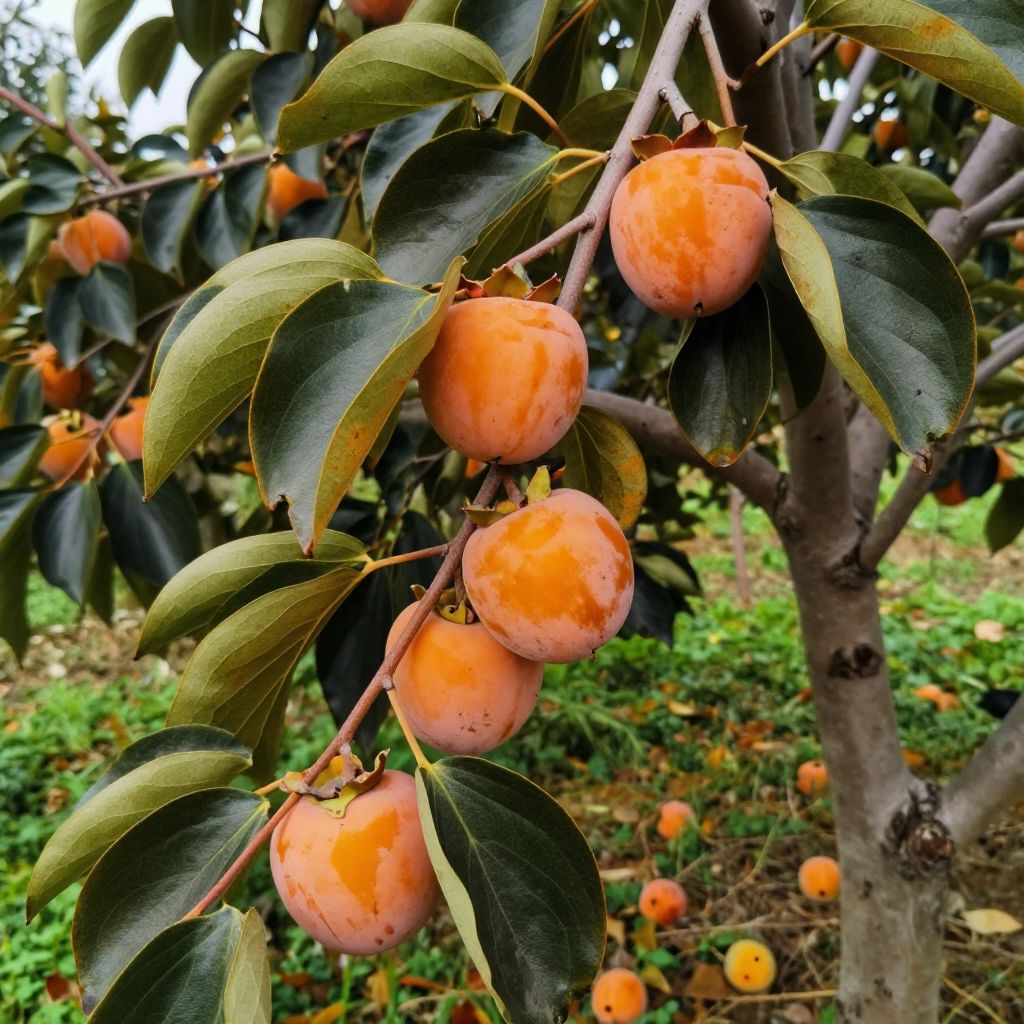
When is persimmon season? If you’re waiting for fruit to ripen, the answer depends on the type of persimmon, your climate, and whether you’re growing Asian or American persimmons. Most persimmons ripen from late fall into early winter, with fruit often hanging on the tree after leaves drop.
Knowing the seasonal window helps you harvest at the right time, avoid astringent fruit, and plan care for the tree through the rest of the year. A few simple checks for color, firmness, and flavor will tell you when your persimmons are ready.
When is persimmon season?
Persimmon season is usually late fall through early winter, often from October to December in many temperate climates. Some varieties ripen earlier or later depending on your region, chill, and weather. The fruit is ready when it has full color, a slight give, and, for astringent types, a very soft texture.
How to tell when persimmons are ripe
Ripeness matters more than the calendar. Persimmons can look colorful before they’re actually ready to eat, especially astringent types that turn sweet only after fully softening.
Signs of ripeness by type
- Astringent persimmons should be fully soft, almost jelly-like, before eating.
- Non-astringent persimmons can be eaten while still firm, though they should still have full color and a sweet taste.
- The skin usually becomes deep orange, red-orange, or golden, depending on variety.
- Fruit may begin to soften at the calyx end first.
- Some varieties drop naturally when ripe, while others stay attached and need to be picked by hand.
Simple harvest test
- Gently cup the fruit in your hand.
- Look for even color and a glossy skin.
- Press lightly near the blossom end.
- If it is astringent, wait until it feels very soft.
- For firm-eating types, taste a small sample before harvesting the whole crop.
Asian vs. American persimmons: seasonal differences
Two common garden persimmons behave differently at harvest. Knowing which one you have helps you avoid picking too early or waiting too long.
Asian persimmon (Diospyros kaki)
Asian persimmons are the ones most gardeners encounter in home orchards and markets. Many varieties are harvested in late fall, and some can be eaten firm if they are non-astringent. Astringent cultivars must soften fully before eating.
American persimmon (Diospyros virginiana)
American persimmons are usually smaller and often more cold-hardy. Their fruit commonly ripens after the first cool weather of fall, and many selections are best when they become very soft or even slightly wrinkled.
Why the season can vary
- Climate: Warm autumns can delay full ripening, while cool nights often speed color development.
- Variety: Early, midseason, and late cultivars do not ripen at the same time.
- Tree age: Young trees may produce fewer fruit and ripen less evenly.
- Sun exposure: Fruit on well-lit branches ripens more evenly than shaded fruit.
Growing conditions that affect ripening time
Persimmon season is not just about the fruit; it starts with how well the tree grows during the year. Healthy trees with enough sun and good drainage usually ripen fruit more reliably.
Sunlight
Persimmons perform best in full sun, which usually means at least 6 hours of direct light a day. More sun often improves fruit color, sweetness, and ripening consistency.
Soil and drainage
These trees prefer well-drained soil. Heavy, waterlogged ground can slow growth and increase root problems, which may reduce fruit quality. If your soil stays wet after rain, consider planting on a raised bed or mound.
Watering
Established persimmon trees are fairly drought-tolerant, but fruiting trees still benefit from steady moisture during dry spells. Irregular watering can lead to stress, smaller fruit, or premature drop.
Mulch and compost
A 2- to 4-inch layer of organic mulch helps conserve moisture and moderate soil temperature. Keep mulch a few inches away from the trunk. A light top-dressing of compost in spring can support soil health without forcing soft, weak growth.
Planting and seasonal care for better harvests
If you want a dependable persimmon season, good care throughout the year matters. The tree’s spring and summer growth sets up the fall crop.
Best time to plant
In many climates, bare-root or container-grown persimmons are planted during dormancy or mild weather, when the tree can establish roots without heat stress. Local timing depends on winter severity and soil conditions.
Basic planting steps
- Choose a site with full sun and drainage.
- Dig a hole wider than the root ball but no deeper.
- Set the tree at the same depth it grew in the nursery.
- Backfill with native soil if it drains well.
- Water thoroughly to settle the soil.
- Mulch around the root zone, keeping the trunk clear.
Pruning
Prune lightly to remove dead, crossing, or crowded branches and to maintain a strong structure. Heavy pruning can delay fruiting and stimulate excess leafy growth. For young trees, training a good framework early usually pays off later.
Fertilizer caution
Too much nitrogen can produce vigorous shoots with fewer fruits. If your soil is already fertile, you may only need compost or a modest balanced feeding based on a soil test. Avoid pushing the tree hard late in the season, when tender growth is more vulnerable.
Common problems that affect persimmon season
When fruit does not ripen on time, the issue is often cultural rather than seasonal. A few common problems can delay or reduce harvest quality.
Fruit stays hard too long
- The variety may be astringent and simply not ready yet.
- The tree may not be getting enough sun.
- Cool, cloudy weather can slow ripening.
- Overcropping can leave fruit underdeveloped.
Fruit drops early
- Inconsistent watering can stress the tree.
- Wind or heavy rain may knock fruit loose.
- Poor pollination can reduce fruit set in some varieties.
- Pests or disease can weaken stems and branches.
Pests and diseases to watch for
Persimmons are often relatively trouble-free, but they can still suffer from scale insects, borers, leaf spots, or root issues in poorly drained soil. Inspect leaves, twigs, and fruit during the growing season so problems do not build up unnoticed.
Practical troubleshooting
- Thin crowded fruit if a tree is overloaded and branches are bending excessively.
- Improve drainage before planting if the site stays soggy.
- Water deeply during dry periods rather than giving frequent shallow sprinkles.
- Remove fallen fruit to reduce pest pressure and disease carryover.
Harvesting persimmons at the right time
Harvesting is the final step in the season, and timing depends on the fruit type. Picking too early is the most common mistake, especially with astringent persimmons.
How to harvest
- Use clean hand pruners or twist fruit gently from the stem.
- Handle ripe fruit carefully; it bruises easily.
- Place fruit in shallow containers rather than deep piles.
- Sort damaged fruit first so it is used quickly.
What not to do
- Do not assume orange color alone means the fruit is ready.
- Do not force hard astringent fruit to eat before it softens.
- Do not leave overripe fruit on the tree too long if birds, wasps, or rot are becoming a problem.
Can you grow persimmons in a home garden?
Yes, if your climate suits the tree and you have room for a small to medium fruit tree. Persimmons make attractive landscape plants as well as productive orchard trees, especially when given sun, space, and a well-drained site.
Good garden uses
- Edible landscape specimen
- Backyard orchard tree
- Pollinator-friendly spring bloom source
- Low-maintenance fruit tree for sunny borders
Propagation note
Home gardeners usually buy grafted trees rather than starting from seed. Seed-grown trees may not come true to type and can take much longer to fruit. If you want reliable harvest timing, a named cultivar from a reputable nursery is the safer choice.
Conclusion: plan for late fall and watch the fruit, not just the date
When is persimmon season? In most gardens, expect it in late fall, with harvest stretching into early winter depending on your climate and variety. Watch for full color, proper softness, and good flavor, then harvest carefully to avoid bruising.
If you are planning a new tree, choose a sunny, well-drained site and learn whether your variety is astringent or non-astringent. For more fruit-tree timing and care tips, you may also want to read about fruit tree pruning basics and how to plant a fruit tree.