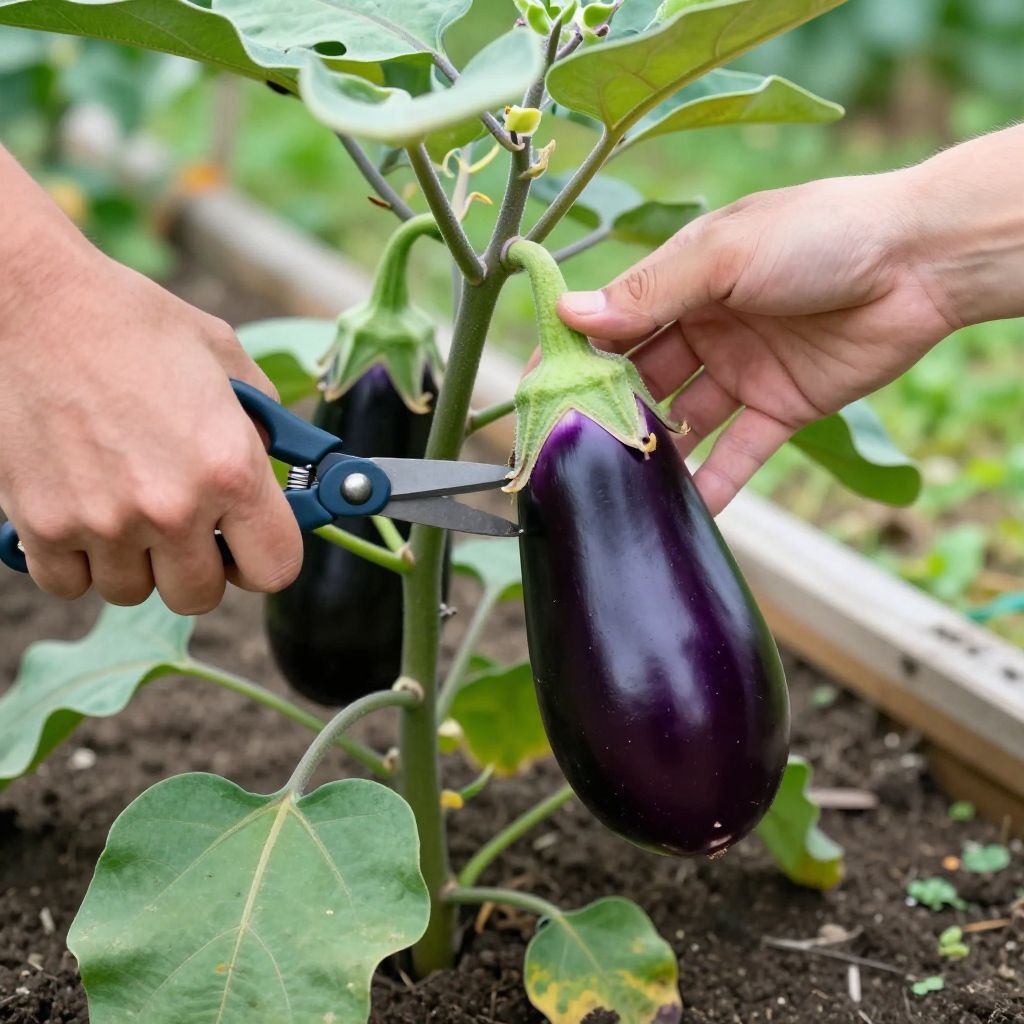
Wondering when to harvest eggplant? The right picking time makes the difference between tender, flavorful fruit and bitter, seedy ones. Eggplants are best harvested while the skin is glossy, the fruit feels firm but not hard, and the seeds inside are still small and pale.
Because varieties differ in size and color, the best harvest cue is not a calendar date but the fruit’s stage of maturity. A few simple checks will help you pick at the right moment and keep the plant producing longer.
When to harvest eggplant?
Harvest eggplant when the fruit has reached its mature size for the variety, the skin is shiny and smooth, and the flesh springs back slightly when pressed with a thumb. Pick before the skin turns dull, the fruit gets soft, or the seeds become large and brown, which usually means the eggplant is overripe.
How to tell eggplant is ready to pick
Eggplant maturity is best judged by appearance, feel, and size together. Different cultivars mature at different lengths and colors, so use these signs rather than relying on one exact number of days.
1. Check the skin
- Ready to harvest: skin is glossy, smooth, and richly colored.
- Too early: fruit may still be small and underdeveloped.
- Too late: skin looks dull, leathery, or faded.
2. Press the fruit gently
Press the side of the eggplant with your thumb. A ripe fruit should feel firm but slightly springy. If it is rock-hard, it may need more time. If the dent stays in, the fruit is likely overripe.
3. Look at the size and shape
Harvest at the size recommended for your variety, but avoid waiting too long just to make the fruit larger. Many eggplants taste best when picked a little earlier rather than later.
- Globe types are often picked when full-sized and still glossy.
- Long Asian types are usually harvested when slender and tender.
- Small-fruited varieties should be picked before they become dull or spongy.
4. Inspect the seeds if you cut one open
If you are unsure, cut one fruit open. Young, tender eggplants have small, pale seeds. Large, dark seeds often mean the fruit is past peak eating quality.
Why timing matters
Eggplant quality changes quickly once the fruit matures. Picking at the right time gives you better texture, milder flavor, and fewer seeds. It also encourages the plant to keep producing new flowers and fruit.
- Picked too early: fruit may be underdeveloped and less flavorful.
- Picked too late: flesh becomes tough, bitter, or spongy.
- Picked regularly: plants often redirect energy into more fruit.
What affects eggplant harvest time?
The exact harvest window depends on variety, weather, growing conditions, and how vigorously the plant is growing. Warm, sunny conditions usually speed ripening, while cool nights can slow it down.
Variety differences
Some eggplants are bred to be harvested small and tender, while others are meant to grow larger. Always check the expected mature size for the specific type you planted.
Climate and season
In cooler climates or during cloudy weather, fruit may take longer to reach harvest stage. In hot weather, fruits can size up quickly, so check plants often to avoid missing the ideal window.
Plant health
A stressed plant may produce smaller fruit or slow down ripening. Good sunlight, steady moisture, and fertile, well-drained soil help fruit develop evenly.
How to harvest eggplant correctly
Use a clean, sharp tool rather than twisting the fruit off by hand. Eggplant stems can be tough, and pulling can damage the plant or break nearby fruiting branches.
- Choose fruit that meets the ripeness signs.
- Hold the fruit gently with one hand.
- Cut the stem with pruners, scissors, or a sharp knife.
- Leave a short piece of stem attached to the fruit.
- Place harvested eggplants in a basket or shallow container to avoid bruising.
Tip: Wear gloves if the plant has prickly stems or calyxes. Some varieties are more irritating to handle than others.
How often should you pick?
Check plants every few days once fruiting begins, especially in warm weather. Eggplants can move from perfect to overripe surprisingly fast, and regular harvesting helps prevent that problem.
- During peak season, inspect plants every 2 to 3 days.
- In cooler weather, every 4 to 5 days may be enough.
- Harvest promptly after rain or a heat spike, when fruit can change quickly.
Common mistakes when harvesting eggplant
Many gardeners miss the best harvest window because they wait for fruit to become oversized. Bigger is not always better with eggplant.
Waiting until the skin turns dull
Dull skin is one of the clearest signs that the fruit is past peak. The texture often becomes tougher and the flavor less pleasant.
Letting fruit sit too long on the plant
Overripe eggplants can become spongy and full of seeds. Once a fruit is past its best stage, the plant may slow down new production.
Harvesting by size alone
Size matters, but it should be paired with skin shine and firmness. A large fruit can still be good if it is glossy and tender, while a smaller one can be overripe if left too long.
Pulling fruit off by hand
Tugging can tear stems and damage the plant. Clean cuts are safer and help reduce stress on the vine.
What if your eggplant is not ripening?
If fruit is forming but staying small or green for too long, the plant may need better growing conditions. Eggplants are warm-season crops and perform best with full sun and consistent care.
Check sunlight
Eggplants usually need at least 6 to 8 hours of direct sun. In partial shade, plants may grow slowly and produce fewer ripe fruits.
Review watering
Uneven moisture can stall fruit development. Keep the soil evenly moist, but not soggy, so the roots can function well and the fruit can size up steadily.
Look at soil and drainage
Eggplants prefer fertile, well-drained soil. Heavy, waterlogged soil can weaken roots and reduce fruit quality. Adding compost before planting can improve soil structure and nutrition.
Watch for pests and disease
Pests such as flea beetles, aphids, and spider mites can stress plants and reduce harvest quality. Diseases that damage leaves or roots can also delay ripening. Remove badly affected foliage if needed and keep plants healthy with good spacing and airflow.
Can you harvest eggplant before it is fully mature?
You can pick eggplant a little early if the fruit has reached a usable size and the skin is glossy. Very immature fruit may be tender, but it can also be less flavorful. For best quality, wait until the fruit is fully sized for the variety and just before it starts to lose its shine.
After harvesting: what to do next
Handle eggplants gently after picking because they bruise more easily than many other vegetables. Store them in a cool place and use them soon for the best texture.
- Keep harvested fruit out of direct sun.
- Avoid stacking heavy items on top of them.
- Use soon after harvest for the best quality.
If you want to improve future harvests, keep checking your plants every few days, pick at the glossy stage, and remove overripe fruit promptly. For more help with productive vegetable beds, you may also want to read about growing eggplants and other warm-season crop care.