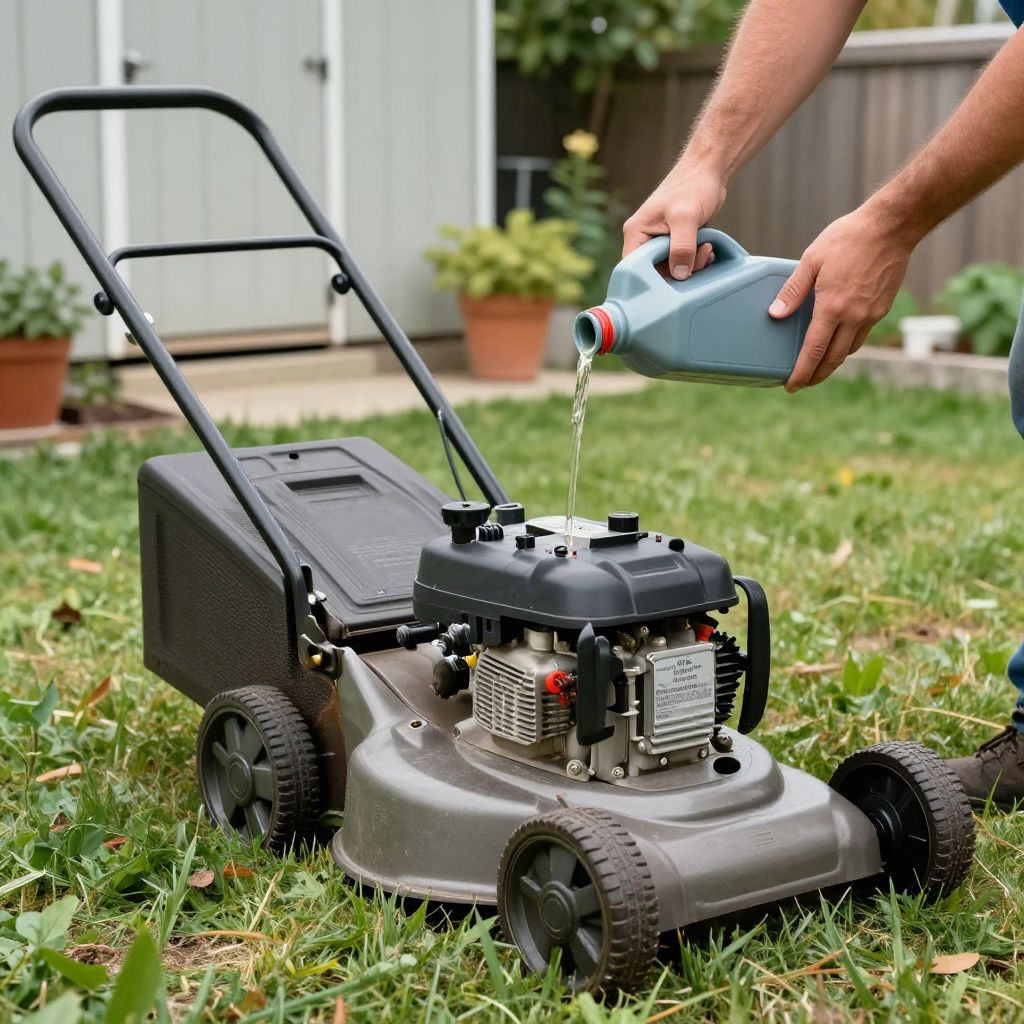
What type of oil does a lawn mower take? The short answer is: it depends on the engine type, the temperature where you mow, and the mower manufacturer’s instructions. Most four-stroke lawn mowers use SAE 30, 10W-30, or 5W-30, while two-stroke engines require a fuel-and-oil mix instead of separate crankcase oil.
Choosing the right oil helps your mower start more easily, run cooler, and last longer. The good news is that once you know whether your mower has a four-stroke or two-stroke engine, the rest is usually straightforward.
What type of oil does a lawn mower take?
Most walk-behind and riding lawn mowers with four-stroke engines use SAE 30 in warm weather, while 10W-30 or 5W-30 are common for cooler conditions and wider temperature swings. If your mower has a two-stroke engine, it does not use regular crankcase oil; it needs a gasoline-and-oil fuel mix according to the engine ratio in the manual.
First, identify your mower engine type
The oil you use depends on the engine, not just the mower brand. Before adding anything, check the owner’s manual or look for labels on the engine housing.
Four-stroke engines
These are the most common in modern lawn mowers. They have a separate oil sump, so you add oil to a dedicated fill cap or dipstick tube.
Two-stroke engines
These are less common in today’s lawn mowers but still appear in some older or smaller machines. They usually burn oil mixed with gasoline, so there is no separate oil reservoir.
How to tell quickly
- Look for an oil dipstick or fill cap on the engine.
- Check the manual for “4-cycle,” “4-stroke,” “2-cycle,” or “2-stroke.”
- If the mower has a separate oil fill, it is almost certainly a four-stroke engine.
- If the manual mentions a fuel mix ratio, it is a two-stroke engine.
Best oil choices for four-stroke lawn mowers
For most standard mowers, the safest choice is the oil grade recommended by the manufacturer. If you do not have the manual, these common options are usually suitable for typical home lawn care.
SAE 30
This is a classic mower oil for warm weather. It works well in many small engines when daytime temperatures are consistently warm.
10W-30
This multi-viscosity oil is often used when temperatures vary through the mowing season. It can be a practical choice for spring and fall conditions.
5W-30
This is often recommended for colder starts or broader temperature ranges. It can help the engine turn over more easily in cool weather.
Synthetic oil
Some mowers can use synthetic 5W-30 or other synthetic grades if the manual allows it. Synthetic oil can offer good protection in hot weather and during frequent mowing, but it should still match the engine’s specifications.
Important: Never assume “thicker is better.” Using the wrong viscosity can make starting harder, reduce lubrication, or cause poor engine performance.
What about two-stroke mower oil?
If your mower has a two-stroke engine, you need a specific two-cycle oil mixed with gasoline at the ratio listed by the manufacturer. Common ratios include 50:1 or 40:1, but you should never guess.
Two-stroke oil basics
- Use oil labeled for two-stroke or 2-cycle engines.
- Mix only the amount you plan to use soon, because old fuel mixes can degrade.
- Measure carefully to avoid running too lean or too rich.
If you add straight motor oil to a two-stroke fuel tank, the engine may smoke, foul the spark plug, or run poorly. If you add mixed fuel to a four-stroke mower, you can create performance problems and possible damage.
How weather affects mower oil choice
Temperature matters because oil thickens when cold and thins when hot. A mower that starts easily in midsummer may struggle in early spring if the oil is too heavy for the conditions.
Warm climates
In consistently warm weather, SAE 30 is often a dependable choice for four-stroke mowers, provided the manual allows it.
Cooler climates or variable seasons
If you mow in spring and fall, or your temperatures swing a lot, 10W-30 or 5W-30 may be more practical. These oils flow better during cooler starts.
Hot weather and heavy use
When mowing thick grass, tall lawns, or slopes, the engine works harder. In those conditions, following the manual’s recommended oil becomes even more important because the engine runs hotter under load.
How to check mower oil correctly
Checking the oil level is just as important as choosing the right oil. Low oil can damage the engine, while overfilling can cause smoking, leaks, and poor performance.
- Park the mower on level ground.
- Turn off the engine and let it cool.
- Remove the dipstick or oil cap, depending on your model.
- Wipe it clean, reinsert it, then check the level again.
- Add oil slowly if needed, using small amounts at a time.
Many mowers have a fill range on the dipstick. Aim for the correct mark, not above it. If you overfill, drain the excess before mowing.
How to change lawn mower oil
Oil changes are a basic part of mower maintenance and help keep the engine clean and protected. The exact interval depends on the mower, how often you use it, and the manufacturer’s guidance.
Simple oil change steps
- Run the mower briefly if the manual suggests warming the oil first.
- Shut it off and disconnect the spark plug wire for safety.
- Drain the old oil into a suitable container or use the drain method recommended for your mower.
- Replace the drain plug or close the drain system.
- Add the correct oil slowly and recheck the level.
- Wipe up spills and dispose of used oil properly.
If your mower has a paper air filter, inspect it during maintenance. A dirty air filter can make the engine run poorly even if the oil is correct.
Common mistakes to avoid
Most mower oil problems come from simple mistakes that are easy to prevent. A few minutes of checking can save you from engine trouble later.
- Using the wrong viscosity for the season or engine type.
- Overfilling the crankcase.
- Mixing two-stroke fuel incorrectly.
- Using old or contaminated oil.
- Skipping the manual and guessing based on another mower.
- Running the mower on a slope while checking oil, which gives an inaccurate reading.
Troubleshooting oil-related mower problems
If your mower is smoking, hard to start, or running rough, oil may be part of the problem. The issue is not always the oil itself, but the level, type, or condition of it.
Blue or white smoke
This can happen if the engine is overfilled with oil, tipped the wrong way, or has oil entering the combustion chamber. Check the level first.
Hard starting
Oil that is too thick for the weather can make starting harder, especially in cool conditions. Confirm that the oil matches the season and engine recommendation.
Excessive engine wear or knocking
Low oil can lead to poor lubrication. Stop the mower immediately if you suspect the oil is low and check the level before using it again.
Frequent oil loss
If you keep needing to add oil, look for leaks, worn seals, or signs of engine wear. A mower that burns oil may need professional service.
Should you use car oil in a lawn mower?
Sometimes yes, but only if the oil grade and specifications match the mower manual. For many four-stroke mowers, automotive oil such as SAE 30 or 10W-30 can be suitable. However, not every car oil is ideal, and some modern automotive oils contain additives that are not the best fit for small engines.
When in doubt, choose an oil labeled for small engines or lawn mowers, and follow the viscosity listed in the manual. That is the most reliable way to protect the engine.
Quick buying checklist
If you are standing in the store aisle and need a fast decision, use this checklist before buying mower oil.
- Confirm whether your mower is four-stroke or two-stroke.
- Check the manual for the recommended viscosity.
- Match the oil to your local mowing temperatures.
- Choose a reputable brand labeled for the correct engine type.
- Buy only what you need for the season so the oil stays fresh.
Conclusion: choose the right oil and check it regularly
The best answer to what type of oil a lawn mower takes is the one your engine manual specifies. For many four-stroke mowers, that means SAE 30, 10W-30, or 5W-30 depending on temperature. For two-stroke engines, it means the correct fuel-oil mix. Check the level before mowing, change oil on schedule, and your mower will usually run more smoothly and last longer.
If you want to compare mower oil options or double-check the basics, you may also find this helpful: what kind of oil does a lawn mower take.