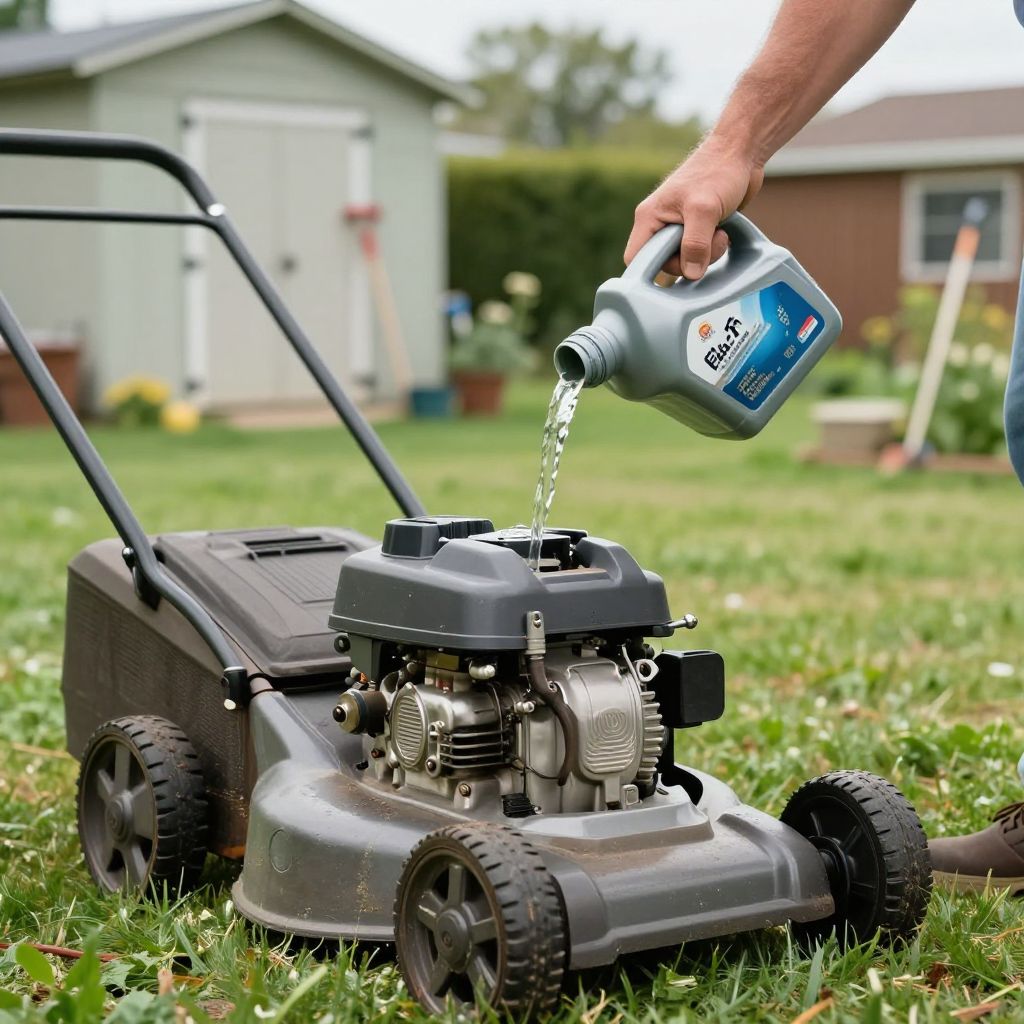
What kind of oil does a lawn mower take? The short answer is: it depends on the mower engine, the season, and the manufacturer’s recommendation. Most small gasoline lawn mower engines use detergent motor oil, commonly SAE 30 in warm weather or 10W-30 for broader temperature ranges, while many newer engines may call for synthetic 5W-30.
The safest choice is always the one listed in your owner’s manual. Using the wrong oil can make starting harder, increase wear, or cause smoking and poor performance, especially in hot weather or on slopes.
What kind of oil does a lawn mower take?
Most gas lawn mowers take small-engine motor oil, not automotive oil meant for cars with special additives. Common choices are SAE 30 for warm conditions, 10W-30 for variable temperatures, and synthetic 5W-30 where the manufacturer allows it. Check the manual first, because engine design and climate matter.
How to choose the right oil for your mower
The best oil depends on the engine type, outdoor temperature, and how hard the mower works. A push mower used on a small, flat lawn may have different needs than a self-propelled or riding mower used for long sessions in summer heat.
1. Check the owner’s manual first
Your manual is the most reliable source for oil grade, capacity, and change intervals. If you still have it, look for the section labeled “lubrication,” “engine oil,” or “maintenance.”
If you do not have the manual, look up the mower model and engine model number from the label on the deck or engine shroud. Manufacturer guidance matters because some engines are designed to run best with a specific viscosity.
2. Match the oil to the temperature
Oil viscosity changes with temperature. Thicker oils protect well in heat but can be harder to circulate in cool weather, while thinner oils flow more easily during cold starts.
- SAE 30: A common choice for warm-weather mowing.
- 10W-30: Useful when temperatures vary across spring, summer, and fall.
- 5W-30 synthetic: Often recommended for easier starting in cooler conditions if the engine allows it.
For very hot weather, some manufacturers still prefer SAE 30 in small air-cooled engines. For cool mornings or shoulder seasons, a multigrade oil may start more easily and protect better during warm-up.
3. Use the right oil type for the engine
Most gasoline lawn mowers use four-stroke engine oil. These engines have a separate oil reservoir and do not require mixing oil with gas.
If you have a two-stroke machine, the fuel and oil are mixed according to the manufacturer’s ratio. That is less common in modern lawn mowers, but it still appears in some older or specialty equipment.
- Four-stroke mower: Fill the crankcase with engine oil only.
- Two-stroke mower: Mix oil and fuel exactly as directed.
How to check mower oil correctly
Checking oil is one of the simplest ways to keep a mower healthy. Do it on level ground, with the engine off and cool, so the reading is accurate and safe.
- Place the mower on a flat surface.
- Remove the dipstick or oil fill cap.
- Wipe it clean, then reinsert it according to the manual.
- Remove it again and read the level.
- Add oil slowly if the level is low, checking often.
Do not overfill. Too much oil can cause smoking, fouled spark plugs, and messy leaks through the air filter or crankcase vent.
How much oil does a lawn mower take?
Capacity varies by engine size and design, so avoid guessing. Small walk-behind mowers often take less than a quart, but the exact amount may be much lower. Add oil gradually and stop when the dipstick shows the correct level.
Never rely only on the container size. Some mowers need only a few ounces more than half a quart, and overfilling is a common mistake.
When to change lawn mower oil
Fresh oil helps the engine run cooler and reduces wear. The ideal change interval depends on how often you mow, how dusty the conditions are, and whether the mower is new or older.
General maintenance timing
- Change oil after the first short break-in period if the manual calls for it.
- After that, many mowers need an oil change at least once per season or every 25–50 operating hours, depending on the engine.
- If you mow dusty, dry, or heavily overgrown areas, check and change oil more often.
Old oil can darken, thicken, and collect debris. If the mower runs hotter than usual, smokes, or becomes harder to start, inspect the oil condition and level before assuming there is a bigger problem.
Signs you may be using the wrong oil
If the mower is struggling, the oil may be part of the problem. The symptoms are not always dramatic, but they are worth checking early.
- Hard starting, especially in cool weather
- Excessive smoke from the muffler
- Oil leaking into the air filter housing
- Engine knocking or running unusually hot
- Oil that looks milky, gritty, or very thin
These symptoms can also point to other maintenance issues, such as a clogged air filter, stale fuel, or a dirty spark plug. Still, oil type and oil level are among the first things to verify.
Common mistakes to avoid
Most mower oil problems come from simple errors during maintenance. A few careful habits can prevent them.
- Using car oil without checking the label: Some automotive oils are fine, but not all are ideal for small engines.
- Mixing two-stroke and four-stroke care: They are not maintained the same way.
- Overfilling the crankcase: This can cause smoking and seal problems.
- Checking oil on uneven ground: That gives a false reading.
- Ignoring the manual: The engine maker knows the design best.
What if your mower is smoking?
Blue or white smoke after an oil change often means the engine was overfilled or tipped the wrong way during maintenance. Let the mower sit level, check the oil again, and remove any excess if needed.
If smoke continues, inspect the air filter for oil saturation and make sure the mower has not been run on a steep angle that allowed oil into the combustion chamber.
Seasonal tips for mower oil care
Because mowing conditions change through the year, oil care should change too. A mower used in cool spring weather may need different attention than one working through hot, dry summer grass.
Spring
Before the first mow, check oil level, color, and smell. If the mower sat unused over winter, stale oil or condensation may be present, especially in damp storage areas.
Summer
Heat and long mowing sessions put more stress on the engine. Keep the oil at the proper level, clean the cooling fins and air filter, and watch for signs of overheating.
Fall
If you are finishing the season, consider an oil change before storage. Fresh oil helps reduce corrosion and makes spring startup easier.
Storage
Store the mower upright on a level surface in a dry place. If you tip it for cleaning or blade work, follow the manual’s direction to avoid flooding the air filter with oil or fuel.
Quick troubleshooting guide
If your mower is not running well, oil is only one part of the picture, but it is an important one. Use this simple checklist before moving on to more complicated repairs.
- Check the oil level on level ground.
- Confirm the oil type matches the manual.
- Look for dirty or clogged air filters.
- Inspect the spark plug if starting is difficult.
- Drain and replace old fuel if the mower has sat unused.
If the engine still runs poorly after basic maintenance, the issue may be carburetor-related, mechanical, or due to internal wear. At that point, a small-engine repair shop can save time and prevent further damage.
Final answer: what oil should you buy?
For many gas lawn mowers, a good starting point is SAE 30 in warm weather or 10W-30 for more flexible use, but the manual should always decide. If the engine allows synthetic oil, 5W-30 synthetic can be a practical option for easier starting and consistent protection.
Before your next mow, check the manual, inspect the dipstick, and top up or change the oil as needed. A few minutes of maintenance can extend engine life, improve starting, and keep your lawn mower working smoothly all season.
If you want to keep your mower in top shape, it also helps to read about air filter care and blade maintenance in your gardening equipment guide.