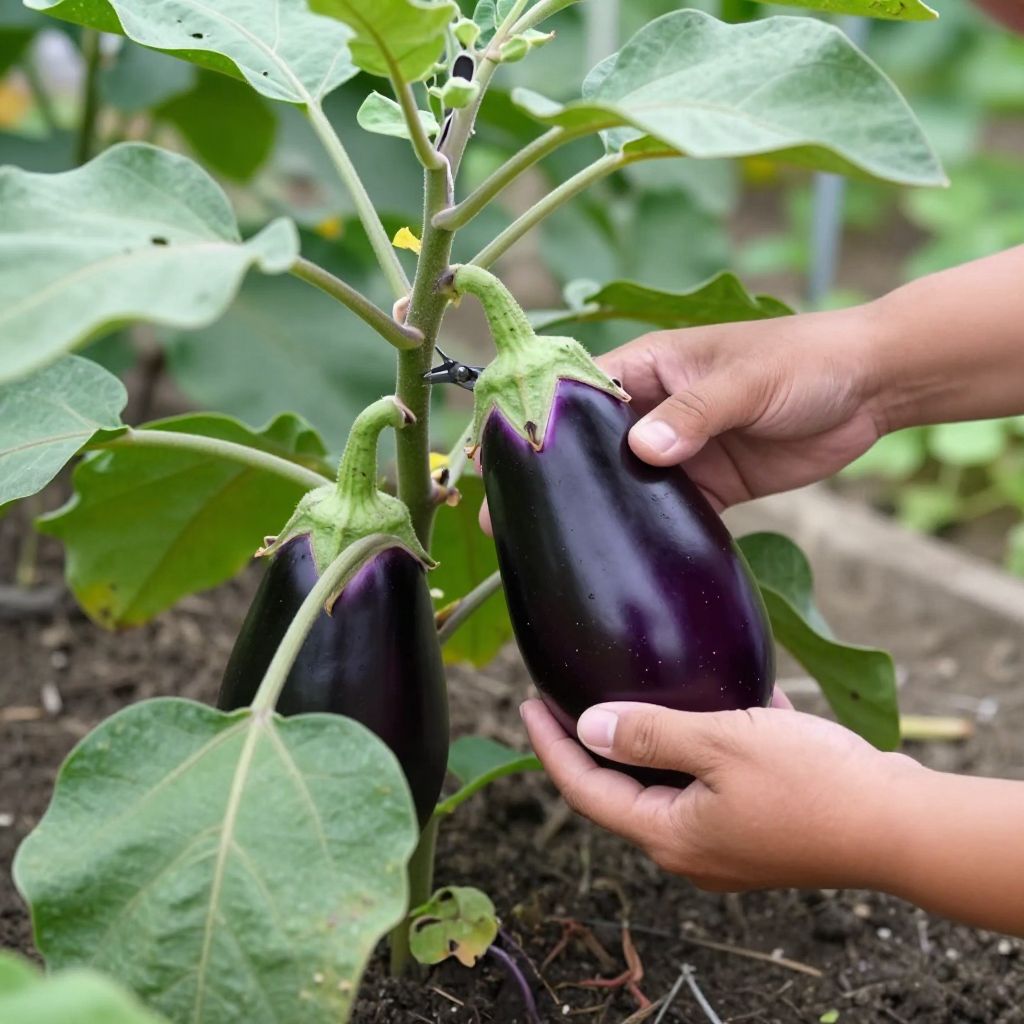
Wondering when to pick eggplant so it tastes best and doesn’t turn bitter or seedy? The right harvest window is usually easy to spot once you know what to look for: glossy skin, firm flesh, and a size that matches the variety you’re growing.
Pick too early and the fruit can be underdeveloped and bland. Wait too long and it may become dull, tough, and full of seeds, so timing matters more than many gardeners realize.
When to pick eggplant?
Pick eggplant when the skin is shiny, the fruit feels firm but not hard, and it springs back slightly when pressed with a finger. Harvesting at this stage gives the best texture and flavor. Most eggplants are ready 50 to 80 days after transplanting, but always judge by appearance and feel, not the calendar alone.
How to tell eggplant is ready to harvest
Eggplant ripens quickly once it reaches usable size, so check plants every couple of days during warm weather. The exact harvest point depends on the variety, but the signs are consistent.
Look for these ripeness clues
- Glossy skin: Mature eggplants usually have a bright, shiny surface. Dull skin often means the fruit is overripe.
- Firm flesh: A ripe eggplant should feel solid but give a little under gentle pressure.
- Appropriate size: Harvest when the fruit reaches the size typical for its variety, not necessarily the largest possible size.
- Even color: The fruit should have rich, uniform color for its type, whether deep purple, white, green, or striped.
- Fresh stem and calyx: The cap and stem should look green and healthy, not dry or brown.
The finger-press test
Press the side of the fruit lightly with your thumb. If the indentation disappears quickly, the eggplant is usually ready. If it stays dented, the fruit is likely overmature or stressed from heat or water issues.
What happens if you harvest eggplant too early or too late?
Harvest timing affects both texture and flavor. Eggplant is one of those crops that can go from perfect to poor fairly fast, especially in hot weather.
If you pick too early
- The flesh may be spongy or underdeveloped.
- The flavor can be mild but less satisfying.
- Smaller fruit may have less usable flesh.
If you pick too late
- The skin becomes dull and less tender.
- The flesh may turn tough or bitter.
- Seeds become more noticeable.
- The plant may slow production because mature fruit stays on too long.
Best practice: harvest a little early rather than too late if you are unsure. Eggplant usually holds quality better when picked just before full maturity than after it has become soft or dull.
Seasonal timing: when eggplant is usually ready
Eggplant is a warm-season crop, so harvest timing follows heat, sunlight, and plant maturity. In most gardens, fruits begin forming after the plant has established well and nights stay warm.
Typical harvest window
- From transplanting: many varieties are ready about 50 to 80 days after transplanting.
- From flowering: fruit may be ready a few weeks after blossoms are pollinated and set.
- During peak summer: check plants frequently, because fruit can size up fast.
In cooler climates, eggplants may ripen more slowly. In hot climates, they can mature quickly and become overripe in just a few days if left unattended.
Why local climate matters
If your summer is short or nights cool down early, your plants may need extra warmth to finish fruiting. If you garden in a long, hot season, you may need to harvest more often to keep fruit tender.
How to harvest eggplant correctly
Use clean, sharp pruners or scissors rather than twisting the fruit off by hand. The stem is tough, and pulling can damage the plant or tear nearby fruiting stems.
- Inspect the fruit for shine, firmness, and size.
- Hold the fruit gently with one hand.
- Cut the stem about 1 to 2 inches above the calyx.
- Place harvested fruit in a shaded spot right away.
Wear gloves if the plant is prickly, especially on the stems and calyx. Some varieties have sharper spines than others.
Handle fruit carefully after picking
Eggplant bruises more easily than many gardeners expect. Avoid stacking heavy fruit on top of each other, and don’t leave harvested eggplants in direct sun, where they can soften quickly.
How often to check eggplants at peak season
Once plants start producing, check them every 2 to 3 days, and daily during hot spells. Eggplant can go from ideal to overripe fast, especially on vigorous plants with plenty of water and warmth.
If you miss a fruit and it becomes dull or seedy, remove it anyway. Leaving overmature fruit on the plant often reduces the plant’s energy for new flowers and fruit set.
Growing conditions that affect harvest timing
Healthy, well-grown plants produce better fruit and make harvest timing easier. If your eggplants are slow to mature, the issue is often growing conditions rather than the plant itself.
Sunlight
Eggplants need full sun for strong growth and reliable fruiting. Less light can delay flowering and slow fruit development, which pushes harvest later in the season.
Soil and drainage
Use fertile, well-drained soil enriched with compost. Waterlogged soil can stunt plants and reduce fruit quality, while very poor soil may lead to small or misshapen fruit.
Watering
Keep soil evenly moist, especially during flowering and fruit fill. Irregular watering can cause stress, smaller fruit, or tough texture. Mulch helps steady soil moisture and reduce temperature swings.
Heat
Eggplant thrives in warm conditions. Cool nights can slow ripening, while extreme heat may stress flowers and reduce fruit set, which means fewer fruits to harvest.
Common harvest problems and what they mean
If your eggplants don’t seem to be ripening properly, the plant may be telling you something about its environment or care.
Dull skin before the fruit is large
This can mean the fruit is past its best stage, or the plant is under stress from heat, drought, or nutrient imbalance. Harvest promptly and adjust care for the next flush of fruit.
Small fruit that never seems to size up
Possible causes include insufficient sun, cool weather, poor pollination, or a plant that is carrying too many fruits at once. In some cases, removing a few small developing fruits helps the plant focus on the strongest ones.
Hard or bitter flesh
This usually points to overmaturity. Pick sooner next time, and harvest more frequently once fruits begin forming.
Flowers dropping without fruit
Eggplant flowers may drop in cool weather, extreme heat, or when plants are stressed. Improving moisture consistency and reducing stress often helps future fruit set.
Practical tips for better eggplant harvests
- Choose varieties suited to your season length and climate.
- Set out transplants only after warm weather has settled in.
- Use compost to improve soil structure and fertility.
- Mulch to conserve moisture and keep roots more stable.
- Check plants often once fruits begin to swell.
- Harvest regularly to encourage continued production.
Supportive staking or cages can also help keep fruit off the ground and make it easier to spot ripe eggplants before they overmature.
Can you eat eggplant if it is picked a little early?
Yes, slightly early eggplant is usually still usable, though it may be firmer and less flavorful. It is better to pick a little early than to wait too long and end up with tough, seedy fruit.
If the fruit is very small, pale, or underdeveloped, let it grow a bit longer. But once the skin is shiny and the fruit has reached a usable size, it is usually safe to harvest.
Storing eggplant after harvest
Eggplant stores best for a short time. Keep it in a cool spot and use it soon after picking for the best texture. Refrigeration can help for a few days, but very cold storage may affect quality if held too long.
For the best flavor and texture, plan to use harvested eggplant soon after picking rather than storing it for long periods.
Conclusion: the simplest rule for picking eggplant
When in doubt, pick eggplant when it is glossy, firm, and full-sized for its variety. Check plants often, harvest with pruners, and don’t wait until the skin turns dull. If you want to improve your timing next season, start by observing how quickly your fruits size up in your own garden conditions.
For more help with warm-season vegetables, you may also want to read about how to grow eggplant successfully in the garden and common vegetable harvesting mistakes to avoid.