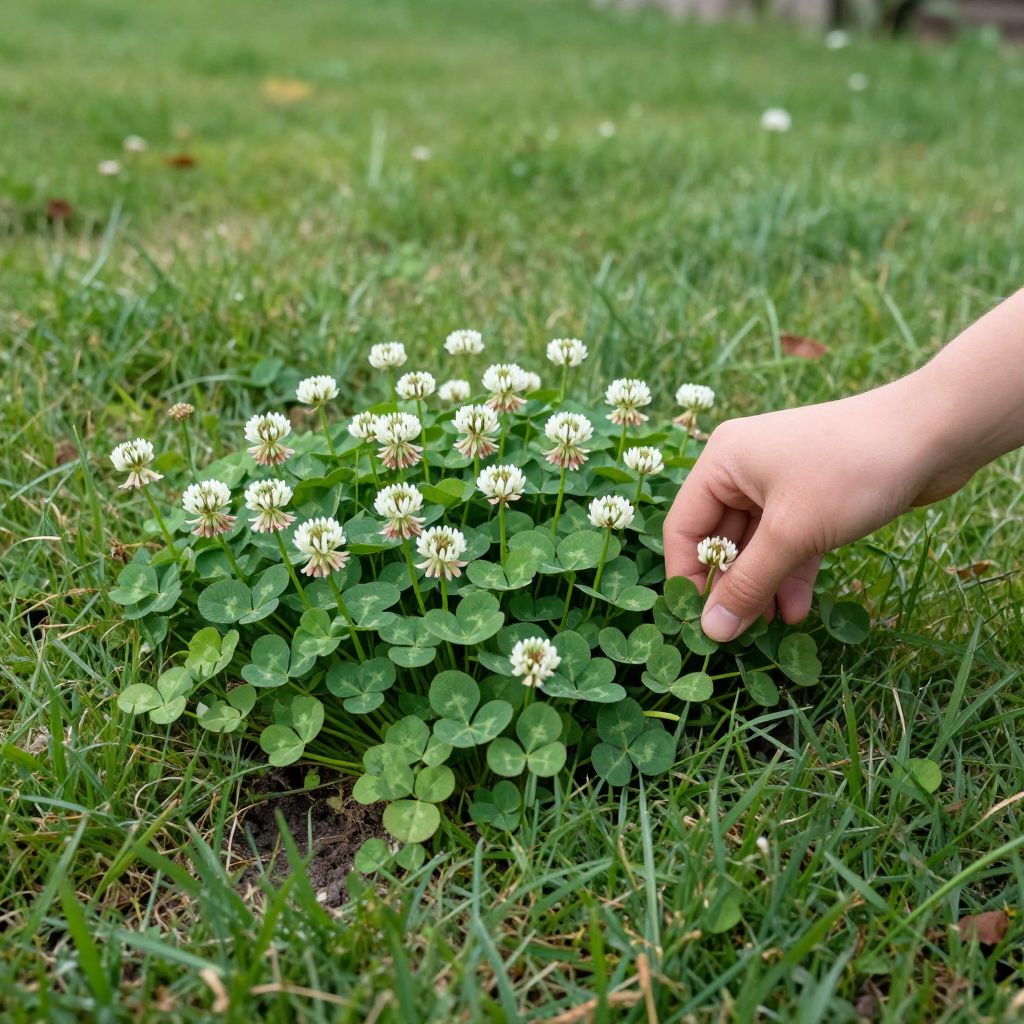
Are clovers weeds, or are they useful plants you should keep? The answer depends on where they’re growing and what you want from your lawn, bed, or container. Clover can be a nuisance in some settings, but it can also be a beneficial groundcover that improves soil and supports pollinators.
If you’re deciding whether to remove clover or encourage it, the key is to identify the species, understand the growing conditions, and match your management to your garden goals. A little clover may be harmless or even helpful; a heavy infestation in turf can signal thin grass, compacted soil, or low fertility.
Are clovers weeds?
Clovers are not automatically weeds. In gardening, a weed is simply a plant growing where you don’t want it, so clover can be a weed in a lawn but a useful living mulch or pollinator plant in other places. White clover (Trifolium repens) is the most common lawn clover, and it often appears where grass is struggling.
Why clover shows up in lawns and beds
Clover usually appears because the site favors it. It handles low fertility better than many grasses, tolerates foot traffic reasonably well, and spreads into open spaces where turf is thin.
Common reasons clover takes over
- Low nitrogen in the soil, which gives clover a competitive edge.
- Thin or patchy grass cover that leaves bare soil exposed.
- Compacted soil that limits grass roots.
- Mowing too short, which weakens turf and lets clover spread.
- Dry spots or uneven watering that stress grass more than clover.
Because clover fixes nitrogen through a relationship with soil bacteria, it can persist in poorer soils where grass declines. That does not mean you must accept it everywhere, but it does explain why it keeps returning.
When clover is useful
Clover has several garden benefits when it is used intentionally. It can act as a low-growing groundcover, help reduce bare soil, and attract bees and other pollinators when it flowers.
Good uses for clover
- Mixed into a lawn where you want a softer, greener look with less fertilizer input.
- As a temporary cover crop in some garden beds to protect soil.
- As a pollinator-friendly patch in low-traffic areas.
- In erosion-prone spots where fast ground cover is helpful.
Keep in mind that clover flowers are attractive to bees, so it is best used away from play areas, paths, or places where people frequently sit barefoot. If you want a neat, uniform lawn, you may prefer to manage or remove it instead.
When clover is a problem
Clover becomes a weed when it invades a lawn that should be mostly grass, spreads into ornamental beds, or crowds out plants you want to grow. It can also make a lawn look uneven if you prefer a consistent texture and color.
Signs you should control it
- It is forming dense patches in turfgrass.
- It is creeping into flower beds or vegetable rows.
- You want a formal lawn appearance.
- It is flowering heavily in areas where bee activity is a concern.
If clover is only scattered through a healthy lawn, it may not need urgent action. If it is spreading quickly, treat it as a symptom of lawn stress and correct the underlying conditions as well as the clover itself.
How to tell clover from other lawn plants
Not every small three-leaved plant is clover. Accurate identification helps you avoid removing harmless groundcovers or missing a different weed problem.
Typical clover features
- Three leaflets per leaf, often with a pale chevron or marking.
- Rounded flower heads, usually white or pinkish depending on species.
- Low, spreading growth that hugs the ground.
- Stems that root at nodes as they spread.
Some oxalis species, also called wood sorrel, can look similar but have more distinctly heart-shaped leaflets. If you are unsure, wait for flowers or compare the leaf shape carefully before deciding on removal.
How to manage clover in lawns
The most effective control depends on whether you want to remove clover completely or simply reduce it. For many homeowners, improving lawn health is the best long-term solution.
Step-by-step lawn control
- Mow higher. Keep turf at a height that suits your grass type, because taller grass shades soil and weakens clover seedlings.
- Water deeply but less often. Encourage deeper grass roots instead of frequent shallow watering that favors clover and shallow-rooted weeds.
- Feed the lawn appropriately. A soil test is the best guide. If nitrogen is low, grass may need more fertility to compete.
- Overseed thin areas. Fill bare spots with the right grass seed for your climate and sun exposure.
- Reduce compaction. Aerate heavily used turf if the soil is dense and water runs off instead of soaking in.
- Remove isolated clumps. Hand-pull small patches when the soil is moist so roots come out more easily.
Be patient. Clover often returns if the lawn stays thin, shaded, or underfed. The goal is not just to remove the plant you see, but to make the site less favorable for regrowth.
When to use herbicides
If you choose a herbicide, use a product labeled for your turfgrass and follow the label exactly. Many broadleaf weed controls can reduce clover, but they may also injure desirable plants if applied carelessly.
Spot treatment is usually better than blanket spraying. Avoid spraying on windy days, during drought stress, or when temperatures are extreme, because turf can be more easily damaged then.
How to remove clover from garden beds
In ornamental beds and vegetable gardens, clover is usually best removed by hand or with careful cultivation. It spreads by creeping stems, so small pieces left behind can regrow.
Best removal methods
- Hand-pulling: Works best after rain or watering when the soil is soft.
- Mulching: A 2 to 3 inch layer of mulch can suppress new seedlings and limit spread.
- Hoeing or shallow cultivation: Useful for young plants in open soil, but avoid disturbing nearby roots.
- Edge maintenance: Keep bed edges clean so clover does not creep in from adjacent turf.
Do not compost mature clover that has formed seed heads unless your compost gets hot enough to kill seeds. If you are unsure, dispose of flowering or seeding material separately to avoid spreading it back into the garden.
Growing clover on purpose
If you want clover as a groundcover or lawn companion, you can encourage it rather than fight it. The best results come from matching the species and site conditions to your goal.
Basic growing conditions
- Sunlight: Full sun to partial shade, depending on species and local climate.
- Soil: Average soil is usually fine; clover is not fussy, but it dislikes prolonged waterlogging.
- Drainage: Good drainage helps roots stay healthy and reduces rot.
- Water: Keep newly seeded areas evenly moist until established, then water as needed for your weather and soil.
For seeding, prepare a clean seedbed with loose topsoil and good seed-to-soil contact. Lightly rake the seed in and keep the surface damp, not soggy, until germination and early growth are underway.
Maintenance tips for intentional clover
- Mow occasionally if you want a tidier look, but avoid cutting too short.
- Watch for weeds that can outcompete young clover, especially in open ground.
- Do not overwater, since wet soil can encourage disease and weak growth.
- Re-seed thin areas if patches open up after heat, drought, or heavy use.
Common clover problems
Clover is generally tough, but it can still run into trouble. Most issues come from poor site conditions rather than pests or disease alone.
Yellowing or weak growth
Yellow clover may be reacting to poor drainage, compacted soil, heat stress, or low light. Check whether the area stays wet after rain or whether nearby plants are shading it too heavily.
Patchy dieback
Patchy areas often point to foot traffic, drought, or competition from stronger plants. If clover is part of a lawn, the same patchiness may mean the grass is also under stress and needs renovation.
Pests and diseases
Clover can sometimes be affected by aphids, leaf spots, or root rot in overly wet conditions. In most home gardens, these problems are minor and do not require aggressive treatment.
Good airflow, proper spacing where possible, and avoiding constant wetness are usually enough to prevent most issues. If a patch repeatedly fails, the soil or drainage is often the real problem to fix.
Should you keep clover or remove it?
The best choice depends on your gardening style. Keep clover if you want a lower-input, pollinator-friendly groundcover and do not mind a mixed look. Remove it if you want a uniform lawn, a formal landscape, or a planting bed with less competition.
A practical middle ground is to keep clover in low-traffic, informal areas and control it where you want cleaner turf or more precise planting beds. That approach gives you the benefits without letting it spread everywhere.
Quick decision guide
- Keep it if the area is informal, thin, dry, or pollinator-friendly.
- Reduce it if you want a greener lawn but can tolerate some clover.
- Remove it if it is invading beds, paths, or formal turf.
- Fix the site if clover keeps returning in the same weak spots.
In other words, clover is not always a weed; it is a plant whose value depends on where it grows and what you want from the space. If you decide to manage it, start by improving lawn or bed conditions, then remove the clover that remains. For more practical lawn and bed guidance, you may also want to read about lawn care basics and organic weed control.