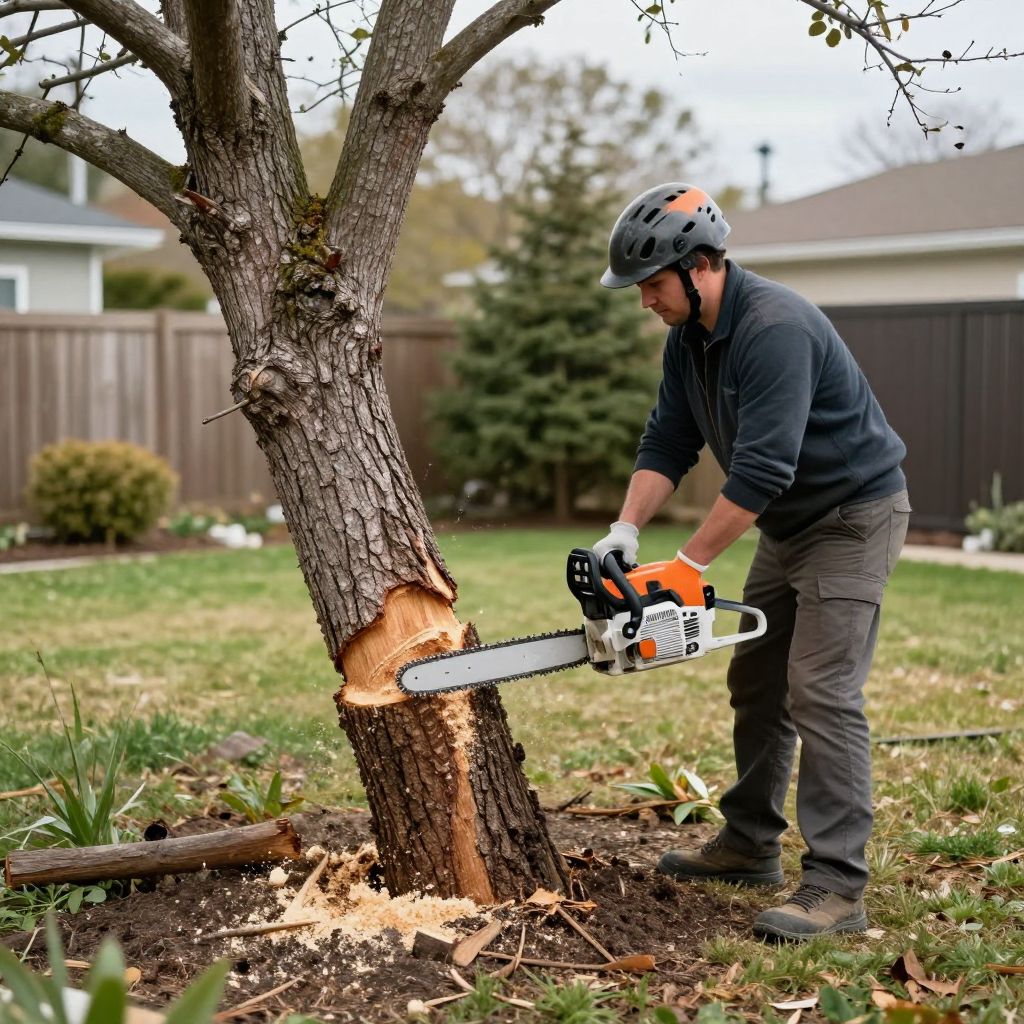
Cutting down a tree seems straightforward, but one wrong move can turn it into a dangerous job fast. If you’re wondering what never do this when cutting down a tree, the short answer is: never cut without a clear fall plan, proper escape route, and an honest assessment of the tree’s lean, size, and hazards.
Tree felling is one of the riskiest tasks in home gardening and landscape maintenance. The safest approach is to know your limits, use the right tools, and stop before the job becomes unpredictable.
Never do this when cutting down a tree?
Never stand in the tree’s fall path, cut a damaged or unstable tree without planning, or underestimate its weight and lean. Avoid working alone on large trees, cutting from a ladder, or making random cuts without a notch and escape route. If the tree is near buildings, power lines, or is already split or hollow, call a professional arborist.
Why tree felling is different from ordinary pruning
Pruning removes branches. Cutting down a tree means controlling the movement of a heavy, living structure that can twist, split, or fall unpredictably. Even a smaller tree can kick back, barber-chair, or drop limbs before the trunk is fully severed.
The biggest mistake is treating felling like routine garden work. A tree can store tension in its trunk and branches, and that tension changes as you cut.
High-risk situations to stop and reassess
- The tree is leaning toward a house, fence, shed, road, or utility line.
- The trunk is cracked, hollow, rotten, or visibly split.
- Large dead limbs are hanging overhead.
- The tree is tall, wide, or too heavy for one person to control safely.
- Wind, rain, ice, or slippery ground makes footing unstable.
What you should never do before making the first cut
Before you touch the saw, inspect the tree from several angles. Look for lean, deadwood, broken tops, root damage, and obstacles in the drop zone. Also check for hidden hazards such as overhead wires, underground utilities, and nearby structures.
Never skip a full site check
A tree may look simple from one side and dangerous from another. Walk around it, note where it naturally wants to fall, and identify two clear escape routes at about a 45-degree angle away from the expected fall line.
Never ignore the weather
Wind can change the fall direction, and wet ground can make retreat difficult. If conditions are gusty or unstable, delay the work. A calm day with dry footing is far safer.
Never cut a tree without a plan for the fall
One of the most important rules is to decide where the tree should land before you start cutting. If you cannot safely direct the fall into an open area, the tree may need to be dismantled in sections instead of felled whole.
Basic fall-planning checklist
- Choose the intended landing zone.
- Clear people, pets, tools, and vehicles from the area.
- Identify the tree’s natural lean.
- Check for branches that could snag nearby trees or structures.
- Plan your escape route before the final cut.
Never assume the tree will fall exactly where you want it just because you made a cut. Lean, wind, branch weight, and internal decay can all change the outcome.
Never make random cuts in the trunk
Random cutting can cause the trunk to split, bind the saw, or fall unpredictably. For a small, straightforward tree, the usual approach is a directional notch followed by a back cut, but only when the tree is sound and the area is clear.
A safer general sequence
- Clear the area and confirm your escape route.
- Make a proper notch on the side facing the intended fall direction.
- Make the back cut from the opposite side, leaving a hinge of wood to guide the fall.
- Move away immediately once the tree begins to commit.
If you are not fully confident in the cut sequence, do not improvise. A poor cut can trap your saw and leave you standing too close to a falling trunk.
Never cut from a ladder or unstable footing
Using a ladder while cutting down a tree is a serious mistake. You need both hands on the saw and stable balance, which a ladder rarely provides. Uneven ground, roots, wet grass, and debris all increase the chance of slipping.
Better footing means better control
Wear sturdy boots with good traction and keep the ground around the base clear. If the slope is steep or the base is unstable, reconsider the job or bring in a professional.
Never work alone on a tree that could injure you
Even if the tree seems small, a second person can help watch the fall zone, call for help if needed, and keep others away. For larger trees, working alone is especially risky because there is no one to assist if the saw binds or the tree shifts unexpectedly.
When a helper matters most
- When the tree is near a structure or driveway.
- When you need someone to monitor the drop zone.
- When branches must be cleared as you work.
- When the tree is partially dead or unstable.
Never forget what the tree is connected to
A tree is not an isolated object. Roots, nearby plants, fences, buried lines, and overhead wires all affect the job. Cutting without checking these connections can damage the landscape or create a dangerous situation.
Watch for hidden landscape damage
- Surface roots that can shift footing or snag tools.
- Ornamental beds that may be crushed by falling limbs.
- Nearby shrubs or perennials that need protection.
- Underground irrigation lines, edging, or lighting cables.
If you are removing a tree to improve a garden bed or open up light, plan the aftermath too. The stump, roots, and shade pattern will affect what you can plant next.
Never use dull or unsuitable tools
A dull chain or the wrong saw makes cutting slower and less controlled. That increases fatigue and the chance of forcing the tool, which is when many accidents happen. Keep cutting tools sharp, clean, and appropriate for the tree size.
Basic tools that matter
- Chainsaw sized for the job, if you are trained to use one.
- Hand saw for smaller stems and finishing cuts.
- Helmet, eye protection, hearing protection, gloves, and sturdy boots.
- Wedges and a clearing tool, if appropriate for the job and your experience.
Never use a chainsaw you do not know how to handle safely. If you are inexperienced, a hand saw may be safer for very small trees, but only when the trunk diameter and site conditions are truly manageable.
Never cut a tree that may be rotten or hollow without extra caution
Decay changes everything. Rotten wood can fail suddenly, and a hollow trunk may behave differently from a solid one. The outside may look sound while the inside is weak, making the tree unpredictable during the cut.
Signs decay may be present
- Mushrooms or fungal growth at the base.
- Soft, crumbly, or discolored wood.
- Large cavities or missing bark.
- Severe dieback in the crown.
- Exposed roots with obvious damage or rot.
If you suspect internal decay, do not rely on a standard felling approach. A professional can assess whether the tree should be removed in sections instead.
Never leave the stump and cleanup plan as an afterthought
Once the tree is down, the job is not finished. Branches, trunk sections, and the stump can still create hazards in the garden. Cleanup should be planned before the first cut so you are not forced to drag heavy wood through beds or across wet turf.
Cleanup priorities after felling
- Wait until the tree is fully settled before approaching.
- Remove smaller branches first to clear access.
- Cut the trunk into manageable sections.
- Inspect the area for hidden damage to irrigation, fencing, or plantings.
- Decide whether the stump will be ground out, left temporarily, or removed later.
If you plan to replant the area, remember that stump removal, root decay, and soil disturbance can affect drainage and soil structure. You may need to wait and amend the area before planting anything new.
When you should call a professional instead
Some trees are not suitable for DIY removal. The safest choice is to hire a qualified arborist when the tree is large, compromised, close to structures, or near power lines. Professionals have the equipment and training to dismantle trees in sections when needed.
Call for help if any of these apply
- The tree is touching or near utility lines.
- The trunk is split, leaning heavily, or uprooted.
- The tree is over a roof, greenhouse, conservatory, or greenhouse-style structure.
- The base is hidden by brush, fencing, or poor access.
- You cannot identify a safe fall zone.
Practical mistakes to avoid after the tree is down
People often relax too soon after the trunk falls. That is when injuries happen from rolling logs, springy branches, and unstable limbs. Stay alert until everything is fully secured and cut to size.
Do not:
- Stand on loose branches or unstable wood.
- Rush while cutting up the trunk.
- Stack heavy sections where they can roll.
- Leave debris where it can trip you or damage lawn equipment.
Take your time with the cleanup. A tidy work area is safer and makes it easier to restore the garden afterward.
Conclusion: the safest rule to remember
If you remember only one thing about never do this when cutting down a tree, make it this: never start without a clear plan, clear space, and a realistic assessment of the tree’s condition. If the tree is large, damaged, or near anything valuable, stop and get professional help.
For more help identifying trees before you decide whether to remove them, you may also find this useful: how to identify what type of tree it is.