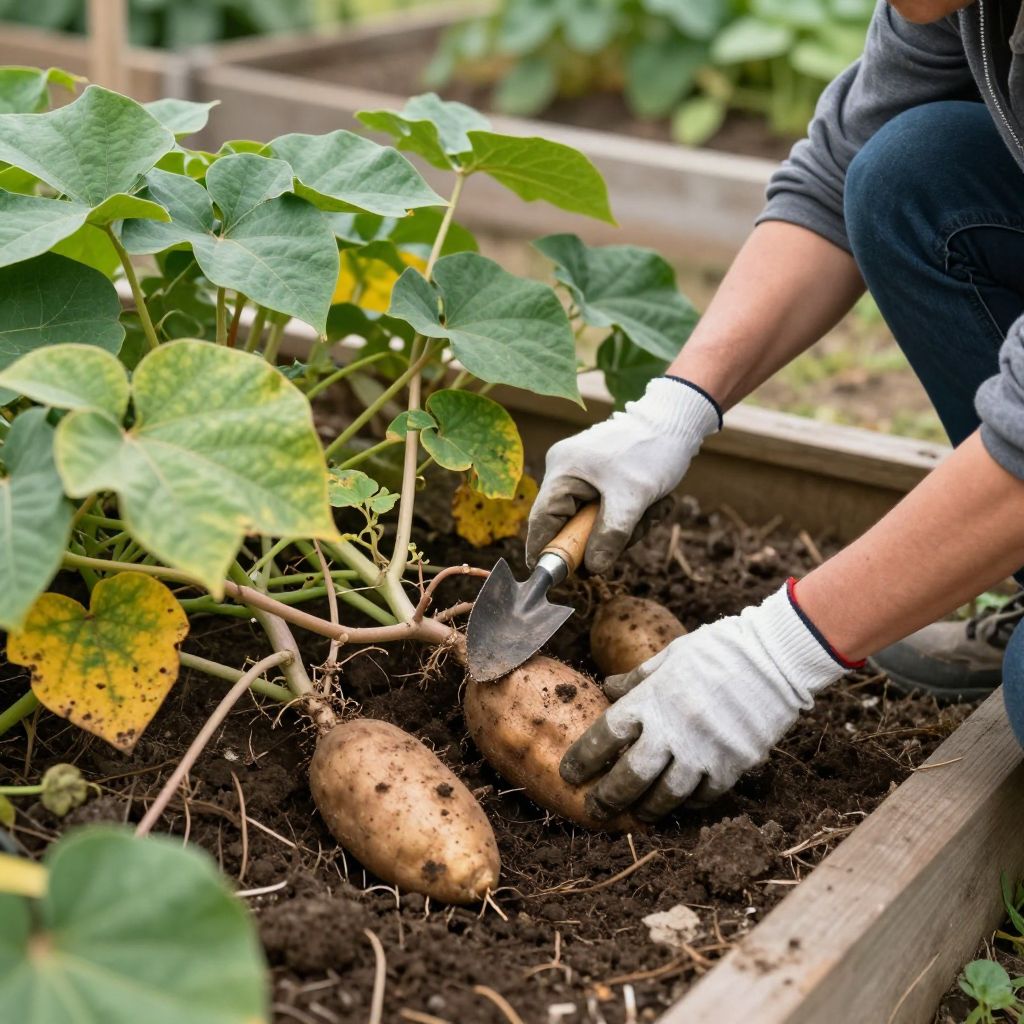
Wondering when to pick sweet potatoes so they’re sweet, fully sized, and easy to store? The timing matters more than the calendar, because sweet potatoes mature according to heat, soil, and the variety you planted. Harvest too early and the roots may be small and less flavorful; wait too long and cold weather can damage them.
The good news is that sweet potatoes give you several clear signs when they’re ready. With a little observation, you can harvest at the right stage, cure them properly, and improve both flavor and storage life.
When to pick sweet potatoes?
Pick sweet potatoes when the vines begin to yellow and die back, usually after about 90 to 150 days of growth depending on the variety and climate. Harvest before the first hard frost, and dig carefully once roots are large enough for your needs. If frost is forecast, harvest immediately.
How to tell sweet potatoes are ready to harvest
Sweet potatoes don’t always announce maturity as clearly as potatoes do, so use several clues together. The most reliable sign is vine decline, but that should be checked alongside elapsed growing time and root size.
Look for these maturity signs
- Vines start yellowing and losing vigor.
- Leaves begin to thin out or die back, especially on older growth.
- Days since planting are in the typical harvest window for your variety.
- Test roots are a usable size when you gently explore the soil.
Because foliage can decline from drought, disease, or insect damage, don’t rely on vine color alone. If the plants look stressed early in the season, check the roots before deciding they’re ready.
Use days to maturity as a guide, not a rule
Many sweet potato varieties need roughly 90 to 150 days from transplanting to harvest. Warm weather, rich soil, and a long frost-free season can help roots size up faster, while cool nights slow them down.
If you’re not sure of the variety, count from the day you set out slips and compare that with the plant’s expected maturity range. In cooler climates, the crop may be ready later than the average catalog estimate.
What happens if you harvest too early or too late?
Harvest timing affects both flavor and storage. Sweet potatoes continue to size up while the vines are healthy and the weather is warm, but they stop growing when temperatures drop.
Harvesting too early
- Roots may be smaller than expected.
- Starch and sugar development may be less complete.
- Skin may be thinner and more easily damaged.
Harvesting too late
- Cold soil can reduce quality.
- Frost can injure vines and roots.
- Overgrown roots may become more difficult to dig without damage.
The best harvest is usually a balance: wait until roots are sized up, but don’t gamble with cold weather.
How to harvest sweet potatoes without damaging them
Sweet potatoes bruise easily, and damaged roots store poorly. Use a careful digging method so you can lift them with minimal cuts and scrapes.
- Choose a dry day if possible, after the soil has drained.
- Cut back the vines to make access easier.
- Start digging 8 to 12 inches away from the crown.
- Loosen the soil deeply with a garden fork or spade.
- Lift roots gently by hand rather than pulling on the vines.
- Brush off excess soil, but do not wash them before curing.
Be careful not to spear the roots. A single puncture can shorten storage life, so work slowly and widen your digging area if needed.
Tools that help
- Garden fork or digging fork
- Shovel or spade
- Hand pruners for cutting vines
- Harvest basket or crate
- Soft gloves to reduce surface damage
How weather affects the best harvest time
Weather is one of the biggest factors in deciding when to pick sweet potatoes. These are warm-season plants, and cold conditions quickly lower quality.
Before frost
Harvest sweet potatoes before the first hard frost. A light chill may not kill the crop, but frost can blacken vines and damage roots in the soil.
After a cool spell
If nights turn cool but frost has not arrived, you may still have time to let roots enlarge a bit more. However, don’t wait so long that the soil becomes cold and wet for extended periods.
In rainy weather
Wet soil makes digging harder and increases the chance of skin injury. If you must harvest in damp conditions, handle the roots as gently as possible and let them dry in a shaded, airy place before curing.
Should you dig up one plant to check?
Yes. A test harvest is one of the best ways to answer the question of when to pick sweet potatoes in your own garden. If the roots are still small, you can leave the rest in the ground a little longer.
How to do a test harvest
- Choose one plant at the edge of the bed.
- Dig carefully around it to expose a few roots.
- Check root size and skin condition.
- Re-cover any roots you leave behind if the crop needs more time.
This method is especially useful if the vines look healthy but you are unsure whether the roots have reached a useful size. It gives you real evidence instead of guessing.
Curing sweet potatoes after harvest
Curing is one of the most important steps after harvest. It helps heal small injuries, toughen the skin, and improve sweetness and storage quality.
Basic curing conditions
- Warm temperatures: about 80 to 85°F is commonly recommended.
- High humidity: helps prevent shriveling.
- Good air circulation: reduces rot.
- Time: often about 7 to 14 days, depending on conditions.
Home gardeners often cure sweet potatoes in a warm indoor room, greenhouse, or protected porch area. Keep them out of direct sun and away from cold drafts.
Why curing matters
Freshly dug sweet potatoes are more vulnerable to bruising and drying out. Curing improves keeping quality and often makes the flesh taste sweeter over time.
How to store sweet potatoes after curing
Once cured, store sweet potatoes in a cool, dry, dark place with good ventilation. Avoid refrigeration, which can harm texture and flavor.
Storage tips
- Keep them in a single layer if possible.
- Use ventilated boxes, crates, or baskets.
- Check regularly for soft spots or rot.
- Separate damaged roots and use those first.
Ideal storage is usually cooler than curing conditions but not cold. A basement, pantry, or root-cellar-style space often works if it stays dry and above chilling temperatures.
Common mistakes when picking sweet potatoes
Most harvest problems come from rushing the crop or handling it too roughly. A few simple habits can make a big difference.
Mistakes to avoid
- Waiting for all the vines to die completely if frost is near.
- Digging when soil is soggy and sticky.
- Pulling roots out by the vines.
- Washing roots before curing.
- Storing unhealed or injured roots with the rest of the crop.
If you’re growing in a short-season climate, the main mistake is waiting too long for perfection. It is often better to harvest slightly early than to lose the crop to frost.
Growing conditions that affect harvest timing
Sweet potatoes grow best in full sun, loose soil, and warm temperatures. Those conditions help roots size up faster and make harvest easier.
Soil and drainage
Loose, well-drained soil helps roots develop smoothly and makes digging less damaging. Heavy clay can lead to misshapen roots and more breakage at harvest.
Watering
Consistent moisture during the growing season supports root development, but overly wet soil can reduce quality. As harvest approaches, avoid waterlogging the bed.
Spacing and vine growth
Healthy vines generally mean more energy going into root production. If the bed is overcrowded, roots may stay smaller and be harder to find at harvest.
Can you eat sweet potatoes before they’re fully cured?
Yes, you can cook freshly dug sweet potatoes, but they usually taste better after curing. Uncured roots are more likely to be bland, watery, or easily damaged in storage.
If you need to use a few right away, set those aside and cure the rest. That way you preserve the main crop for longer storage.
Quick harvest checklist
- Check the calendar against the variety’s maturity range.
- Watch for yellowing vines and declining growth.
- Dig a test plant if you’re unsure.
- Harvest before frost.
- Handle roots gently and avoid cuts.
- Cure the crop in warm, humid conditions.
- Store only sound, healed roots.
Conclusion
When to pick sweet potatoes comes down to a mix of vine condition, root size, and weather. If the vines are yellowing, the roots are large enough, and frost is approaching, it’s time to dig. Harvest carefully, cure the crop, and you’ll get better flavor and storage life.
If you want to improve next year’s results, keep notes on planting date, variety, and harvest timing, then compare them with your local weather. For more useful growing guidance, you may also enjoy reading about how to cure sweet potatoes after harvest and how to grow sweet potatoes in raised beds.