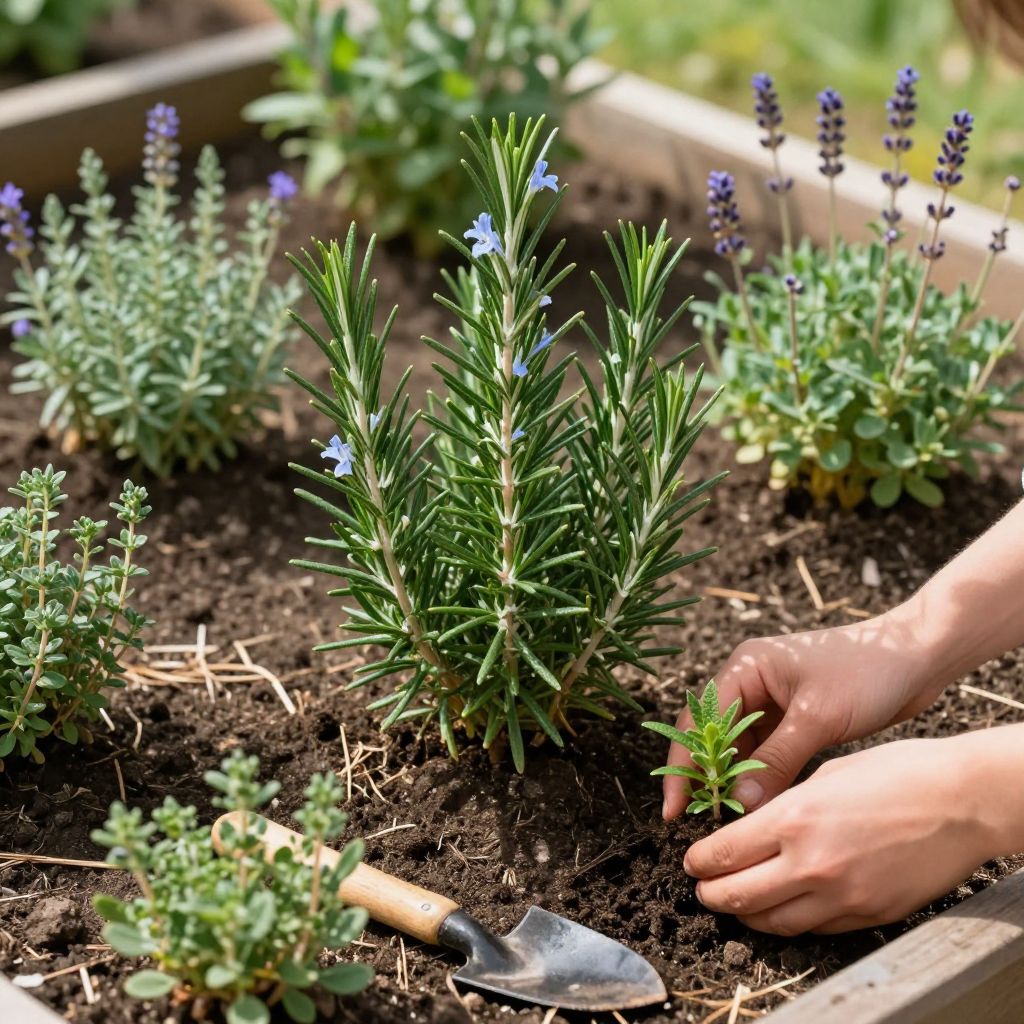
Wondering what to plant with rosemary so your bed looks good and grows well? Rosemary is a sun-loving, drought-tolerant herb that pairs best with plants that like the same conditions: sharp drainage, moderate fertility, and relatively dry soil.
The right companions can make rosemary easier to maintain, reduce watering conflicts, and create a more attractive herb garden or border. The wrong ones often fail because they need richer soil or more moisture than rosemary can handle.
What to plant with rosemary?
Plant rosemary with herbs, flowers, and edibles that prefer full sun and well-drained soil, such as thyme, sage, oregano, lavender, marigolds, yarrow, and some Mediterranean vegetables. Avoid pairing it with thirsty plants that need consistently moist soil, because rosemary is most likely to struggle in soggy conditions.
Best companion plants for rosemary
The best companions match rosemary’s growing style. Look for plants that enjoy full sun, lean soil, and good airflow, especially in raised beds, gravel gardens, or mixed herb borders.
Herbs that grow well with rosemary
- Thyme (Thymus spp.)
- Sage (Salvia officinalis)
- Oregano (Origanum vulgare)
- Marjoram (Origanum majorana)
- Lavender (Lavandula spp.)
- Bay laurel (Laurus nobilis) in larger containers or mild climates
These herbs usually prefer similar conditions and can be grouped for easy harvesting. They also help create a cohesive herb bed that looks intentional rather than crowded.
Flowers that complement rosemary
- Marigolds (Tagetes spp.)
- Calendula (Calendula officinalis)
- Yarrow (Achillea millefolium)
- Coreopsis (Coreopsis spp.)
- Salvia (Salvia spp.)
Choose flowers that tolerate heat and less frequent watering. Their upright or airy forms also help rosemary stay visible and avoid a cluttered look.
Vegetables and edible plants to consider
- Carrots
- Beans in sunny, well-drained spots
- Brassicas such as cabbage or kale if soil moisture is managed carefully
- Strawberries in containers or raised beds with excellent drainage
Edibles can work with rosemary if you can balance their needs. Rosemary is not the best partner for crops that need rich, evenly moist soil, so keep the planting design simple and watch moisture closely.
Plants to avoid planting with rosemary
Some plants fail near rosemary because they want more water, richer soil, or shade. If you mix incompatible plants, one of them usually suffers.
- Mint and other moisture-loving herbs
- Basil, which usually prefers more regular watering and richer soil
- Parsley, which often needs more moisture than rosemary likes
- Impatiens and other shade plants
- Hostas or other plants that prefer consistently damp ground
These plants may look fine at planting time, but over time the different watering needs create problems. Rosemary is especially sensitive to root rot in wet soil, so avoid placing it where runoff collects or irrigation stays on too long.
How to plant rosemary with companion plants
Good companion planting starts with the site. Rosemary performs best where the soil drains quickly and the plants receive at least 6 hours of direct sun a day, though local conditions and summer heat can change what “best” means in your garden.
- Choose a sunny spot. Morning sun and open air help reduce disease problems.
- Check drainage. If water pools after rain, improve the bed or use containers.
- Prepare the soil lightly. Mix in compost only if your soil is very poor; rosemary does not need heavily amended, rich soil.
- Space plants for airflow. Leave room for mature size so leaves dry quickly after rain or watering.
- Plant at the same depth. Keep the root crown level with the soil surface.
- Water in once. Give a thorough watering to settle the soil, then let the surface dry before watering again.
If you are planting in containers, use a pot with drainage holes and a gritty potting mix. A container is often the easiest way to grow rosemary with other herbs because you can control drainage and move the pot if weather becomes too wet.
Soil, drainage, and watering needs
Rosemary is happiest in soil that drains fast and does not stay wet for long. It tolerates lean soil better than heavy, fertile soil, and it often declines when overfed or overwatered.
Soil tips for mixed plantings
- Use loose, well-drained soil rather than dense clay.
- Add coarse sand, fine gravel, or grit only where needed to improve drainage.
- Use compost sparingly if your soil is already fertile.
- Avoid planting rosemary in low spots where water collects.
Watering guidance
Water newly planted rosemary more regularly until roots establish, but do not keep the soil constantly damp. After establishment, rosemary usually prefers deeper, less frequent watering than many companion plants.
If nearby plants need more water, group them separately or use a drip system that can be adjusted. Overhead sprinklers can keep rosemary foliage wet too long and increase the risk of fungal problems.
Design ideas for rosemary companion plantings
Rosemary can be used in several garden styles, from formal herb beds to informal pollinator borders. The best design depends on how much water, space, and sun your site offers.
Herb spiral or kitchen garden
Place rosemary near the driest, sunniest part of the bed, with thyme and sage nearby. Keep basil, parsley, and cilantro in a separate, moister section.
Gravel or Mediterranean border
Combine rosemary with lavender, yarrow, coreopsis, and ornamental grasses that enjoy dry conditions. This style works well in hot, sunny gardens with average to poor soil.
Raised bed planting
Raised beds improve drainage and make it easier to separate rosemary from thirstier crops. Use the back or edge of the bed for rosemary so it does not shade smaller plants.
Container grouping
Use one large pot or trough for rosemary and other drought-tolerant herbs. Make sure each plant has enough space and that the container drains freely.
Pruning and maintenance with companion plants
Rosemary stays healthier when you prune it lightly and regularly. Pruning also keeps it from overwhelming nearby plants and helps maintain airflow through the bed.
- Trim lightly after flowering or during active growth, depending on your climate.
- Remove dead, crossing, or woody stems as needed.
- Avoid cutting far back into old wood if your rosemary variety does not resprout well from it.
- Keep nearby plants from crowding the base of the shrub.
Companion plants should be maintained with the same principle in mind: keep the planting open, airy, and easy to water without soaking rosemary. If one plant becomes too large, move it or divide it rather than forcing everything to share the same space.
Common problems when planting rosemary with other plants
Yellowing or dropping leaves
This often means the soil is too wet, drainage is poor, or the plant is getting too much shade. Check the root zone first before adding fertilizer.
Leggy growth
Rosemary that stretches toward light usually needs more sun and better spacing. Companion plants that crowd it can make the problem worse.
Root rot
Soft stems, wilt despite moist soil, and a sour smell from the root area can point to root rot. Improve drainage immediately and reduce watering; in severe cases, you may need to replace the plant.
Pests
Rosemary may attract aphids, spider mites, or whiteflies, especially if it is stressed. Good airflow, correct watering, and regular inspection usually prevent most serious issues.
Best companion planting combinations for rosemary
If you want a simple starting point, use these combinations:
- Rosemary + thyme + sage for a classic herb bed
- Rosemary + lavender + yarrow for a dry, pollinator-friendly border
- Rosemary + oregano + marjoram for a compact culinary herb grouping
- Rosemary + calendula + marigolds for color and easy care in full sun
These combinations work because the plants share similar light and drainage preferences. That makes watering simpler and helps the whole planting stay healthier over time.
When rosemary is better on its own
Sometimes the best answer to what to plant with rosemary is “not much.” If your site is very wet, very shady, or heavily irrigated, rosemary may do better in its own raised spot or container.
Growing it separately can be the smartest choice if you want to protect it from plants that need richer soil or more frequent watering. You can still place it near compatible herbs visually without forcing them into the same root zone.
Conclusion
To choose what to plant with rosemary, match it with sun-loving, drought-tolerant companions that enjoy sharp drainage and modest soil fertility. Start with thyme, sage, oregano, lavender, or heat-tolerant flowers, and keep moisture-loving plants elsewhere. If you want more gardening ideas, you may also enjoy reading about how to grow thyme in containers and designing a low-water herb garden.