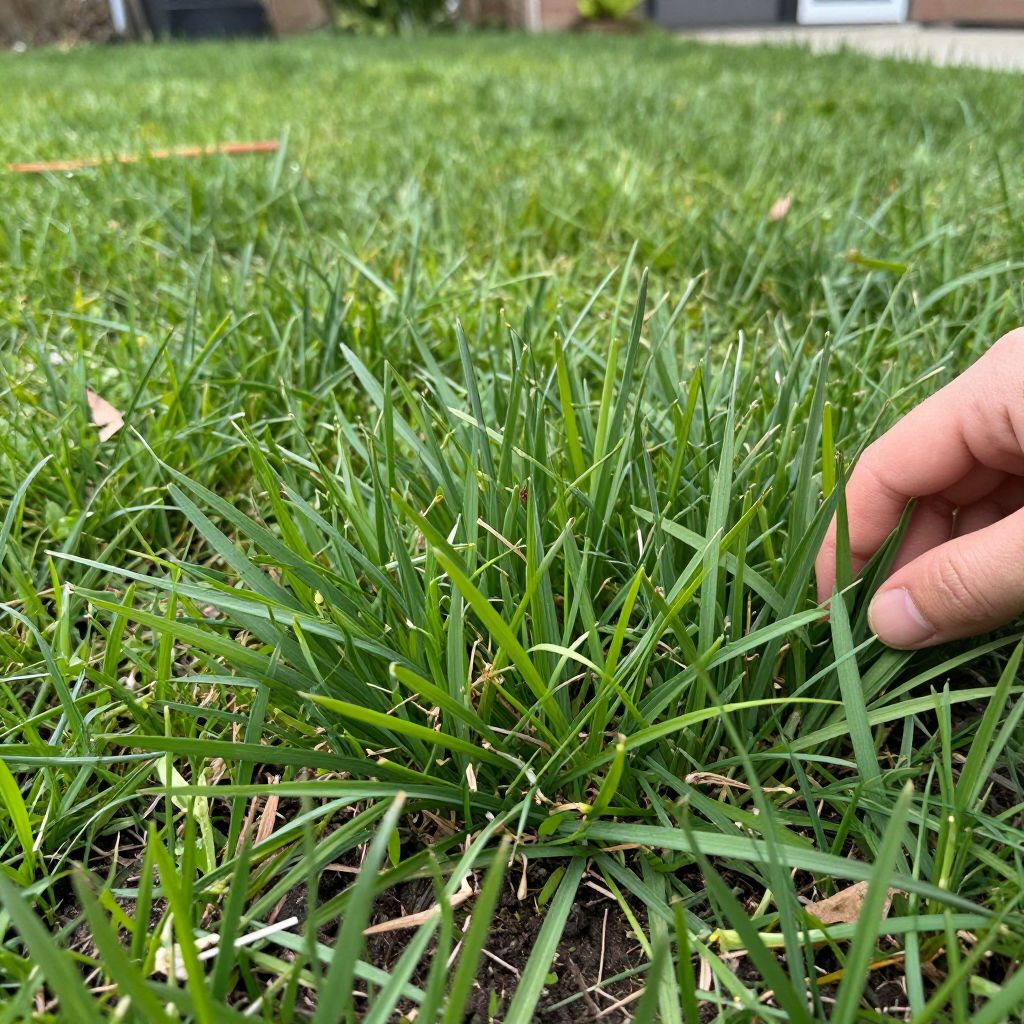
What kind of grass is this? If you’ve found an unknown lawn grass, weed, or clump in a border, the fastest way to identify it is by looking at the blade shape, growth habit, seed head, and where it’s growing. Most grasses can be narrowed down with a few simple observations, even before you know the exact species.
Once you know whether you’re dealing with a lawn grass, ornamental grass, or a grassy weed, you can decide whether to keep it, improve it, or remove it. The key is to identify it accurately first, then match your care or control method to the plant’s real needs.
What kind of grass is this?
To identify unknown grass, check the leaf width, blade texture, growth pattern, collar and ligule area, and the type of seed head it produces. Clumping grasses, spreading turf grasses, and grassy weeds often look similar at first, but their stems, roots, and seasonal growth habits usually give them away.
Start with the fastest identification clues
Before you pull it out, take a close look at the plant in good light. A photo of the whole plant, plus close-ups of the base and seed head, is often enough to narrow it down.
1. Look at the growth habit
- Clumping growth: The grass grows in a tight tuft or mound from one crown.
- Spreading growth: It creeps outward by runners, called stolons above ground or rhizomes below ground.
- Patchy invasion: A grass that appears in rough patches through a lawn is often a weed rather than a desired turf grass.
2. Check the leaf blade
- Fine blades often belong to lawn grasses or some ornamental grasses.
- Broad, coarse blades may indicate a vigorous turf grass or a grassy weed.
- Feel the blade edges: some grasses are soft, while others feel rough or slightly sharp.
3. Examine the base and stem
Pull one stem gently from the base. Many grasses have visible nodes, and some have flattened or rounded stems that help separate similar-looking species.
4. Look for a seed head
Seed heads are often the easiest clue. They may appear as spikes, open sprays, finger-like clusters, or fluffy plumes, depending on the type of grass.
Common kinds of grass you may be seeing
If you’re trying to answer “what kind of grass is this,” these are some of the most common possibilities in home gardens and lawns. Exact identification still depends on your local climate and the plant’s features.
Lawn grasses
- Fescues usually have fine to medium blades and form tufts or spreading turf depending on the type.
- Ryegrass tends to have shiny, medium-width blades and a bunching growth habit.
- Bermudagrass is a warm-season grass that spreads aggressively by runners and forms a dense mat in hot weather.
- Bluegrass often has a softer look and can spread by underground stems, creating a smoother lawn surface.
Ornamental grasses
- Miscanthus produces tall, arching clumps with showy plumes.
- Panicum often has upright, airy flower heads and good seasonal color.
- Carex is technically a sedge, not a true grass, but is commonly grown for its grass-like foliage.
Grassy weeds
- Crabgrass spreads low and wide in sunny, thin lawns.
- Quackgrass spreads by tough underground rhizomes and is hard to remove completely.
- Annual bluegrass can appear in cool, moist areas and often seeds heavily.
How to identify grass by where it is growing
Location matters as much as appearance. A grass in a border, vegetable bed, shady corner, or dry driveway edge may be responding to different conditions than one in a lawn.
In a lawn
If the plant matches the rest of the turf, it may simply be part of the lawn. If it stands out in color, height, or texture, it may be a weed or a different grass species that invaded the area.
In a garden bed
Ornamental grasses are often intentionally planted in beds, but self-seeded or spreading grasses can become invasive. Check whether the plant forms a neat clump or sends runners into nearby plants.
In shade or damp soil
Some grasses tolerate shade better than others, but many lawn grasses thin out in low light and allow weeds to move in. Persistent growth in damp soil can also point to sedges or moisture-loving weeds rather than true turf grass.
Simple tests that help narrow it down
You do not need a lab to get a useful identification. A few basic checks can tell you whether the plant is a lawn grass, ornamental grass, or a weed that needs control.
- Pull one stem and inspect the crown. A tight crown suggests a clumping plant; spreading stems suggest runners.
- Measure blade width. Fine blades tend to be under about 1/8 inch wide, while coarse blades are noticeably broader.
- Look for hairs or roughness. Some grassy weeds have hairy leaf sheaths or rough blade edges.
- Check the seed head shape. Finger-like, feathery, or spike-like heads each point to different groups.
- Note the season. Cool-season grasses often look best in spring and fall, while warm-season grasses peak in heat.
What to do once you identify it
Identification is only useful if it leads to the right next step. Once you know what you have, your care should match the plant’s growth habit and purpose in the garden.
If it is a desirable lawn grass
- Mow at the correct height for the type of turf, not too short.
- Water deeply but only when the lawn actually needs it.
- Feed the soil with compost or a balanced lawn fertilizer if your soil is poor, but avoid overfeeding.
- Overseed thin areas with the same grass type when conditions are suitable in your region.
If it is an ornamental grass
- Give it enough space for mature size.
- Cut back dead foliage at the right time for the species, usually before or as new growth begins.
- Divide crowded clumps when they become woody or thin in the center.
- Keep the root zone well-drained, especially for grasses that dislike soggy soil.
If it is a grassy weed
- Remove small plants early, before they set seed.
- Dig out as much root or rhizome as possible for spreading weeds.
- Repair thin lawn areas so weeds have less room to return.
- Use mulch in beds to block new seedlings.
Growing conditions that affect grass appearance
Grass often looks different depending on soil, water, light, and mowing. A stressed lawn can resemble a weed patch, while a healthy ornamental grass can look untidy if it is crowded or overwatered.
Soil and drainage
Most grasses prefer soil that drains well enough to stay moist, not waterlogged. If water sits on the surface after rain, roots may suffer, and the grass may yellow, thin out, or invite moss and weeds.
Sunlight
Many turf grasses need full sun for dense growth. In shade, they often become thin and leggy, which makes identification harder and encourages weed invasion.
Watering
Deep, infrequent watering usually supports stronger roots than frequent shallow watering. Adjust based on rainfall, soil type, and whether the grass is newly planted or established.
Soil fertility
Poor soil can make grass pale, sparse, or slow-growing. Compost can improve soil structure, but avoid piling it too thickly over existing turf or around crowns of ornamental grasses.
Common mistakes when trying to identify grass
- Judging by color alone. Many grasses look similar when stressed or newly mown.
- Ignoring the seed head. Flowering structures are often the best clue.
- Confusing sedges and grasses. Sedges often have triangular stems and different growth habits.
- Removing the plant too quickly. You may lose the best identifying features before you can compare them.
- Assuming all grassy plants are lawn grass. Some are weeds, and some are ornamental species or sedges.
When to call it a weed and remove it
If the plant spreads aggressively, seeds heavily, or keeps returning after pulling, treat it as a weed unless you intentionally want it in the space. In beds, a grass that outcompetes perennials is usually not worth keeping.
Be especially cautious with grasses that spread by rhizomes. These can travel beyond the original clump and become difficult to control once established.
Tools that make identification easier
- A pair of small garden scissors or pruners
- Gloves for pulling tough stems
- A ruler or tape measure for blade width and height
- A phone camera with close-up mode
- A trowel for lifting a small section with roots attached
How to compare your grass with confidence
If you still wonder “what kind of grass is this,” compare your plant to a few likely matches rather than random images online. Look for the same leaf width, stem shape, seed head, and growth habit in each comparison.
For the best result, photograph the plant from three angles: the whole clump, the base, and the seed head. That gives you the clearest picture of whether you are dealing with a turf grass, ornamental grass, or a grassy weed.
Conclusion
The quickest way to answer what kind of grass is this is to study the plant’s growth habit, blade shape, base, and seed head, then match those clues to where it is growing. Once identified, you can mow, divide, improve, or remove it with much better results. If you want to keep learning, a good next step is reading about how to identify lawn grass types and ornamental grass care and maintenance.