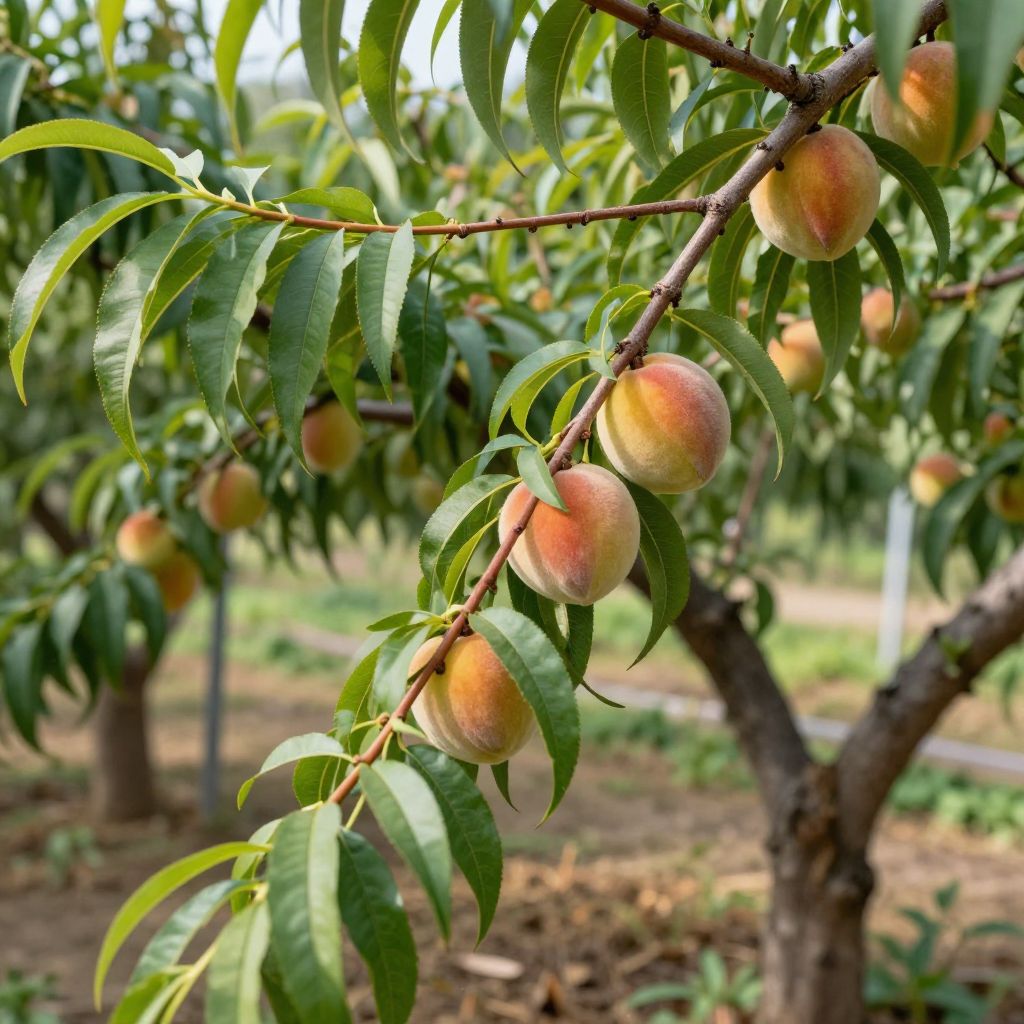
Do peaches grow on trees? Yes—peaches grow on deciduous fruit trees, most commonly Prunus persica. If you want sweet, homegrown peaches, the real question is not whether they grow on trees, but what those trees need to thrive: full sun, well-drained soil, regular pruning, and protection from pests and spring frost.
With the right care, a peach tree can be a productive addition to a backyard orchard or edible landscape. Success depends on matching the tree to your climate and giving it the conditions it needs from planting through harvest.
Do peaches grow on trees?
Yes. Peaches grow on small to medium deciduous trees called peach trees, and the fruit develops on wood produced in the previous season. A healthy tree needs lots of sun, good air circulation, and soil that drains well. Poor drainage, shade, and neglected pruning are common reasons peach trees underperform.
What a peach tree needs to fruit well
Peach trees are not difficult to grow, but they are particular about a few basics. If you get these right, the tree is much more likely to flower, set fruit, and stay healthy.
Sunlight
Peaches need full sun, which means at least 6 to 8 hours of direct sunlight daily. More sun usually means better flowering, stronger growth, and sweeter fruit.
Soil and drainage
Plant peaches in loose, fertile soil that drains quickly. Heavy clay or waterlogged ground can lead to root problems, weak growth, and disease. If your soil stays wet after rain, consider planting on a raised mound or choosing a better-drained site.
Climate and chilling needs
Peach trees need winter chill to flower properly, but the exact amount varies by variety. If you live in a mild-winter area or a place with late spring frosts, choose a tree suited to your local climate. Local nurseries are often the best source of region-appropriate advice.
Space and airflow
Give the tree enough room for its mature size and keep the canopy open. Good airflow helps leaves dry faster after rain, which reduces disease pressure.
How to plant a peach tree
Planting correctly gives your tree the best start. A peach tree that begins life in poor conditions may struggle for years, even if later care is excellent.
- Choose the site: Pick a sunny, well-drained spot away from large trees that compete for light and moisture.
- Prepare the soil: Work in compost if your soil is poor, but avoid creating a planting hole that holds water like a basin.
- Set the tree at the right depth: Keep the root flare near soil level. Do not bury the trunk too deeply.
- Backfill gently: Firm the soil lightly to remove air pockets, then water thoroughly.
- Mulch properly: Apply a 2- to 4-inch layer of mulch around the root zone, but keep it a few inches away from the trunk.
If you are planting a bare-root peach tree, handle the roots carefully and plant it as soon as practical. Container-grown trees can be planted when conditions are suitable, but avoid setting them out in frozen or saturated soil.
Watering, feeding, and mulch
Young peach trees need consistent moisture while roots establish. Mature trees still need water during dry spells, especially when fruit is sizing up, but they dislike soggy soil.
Watering
Water deeply rather than frequently. A slow soak encourages roots to grow downward. Check the soil with your finger or a trowel; if the top few inches are dry and the tree is newly planted or fruiting during hot weather, it likely needs water.
Fertilizing
Use compost or a balanced fertilizer only if the tree shows a need or your soil is low in nutrients. Too much nitrogen can produce lush leaves but fewer flowers and more pest problems. Soil testing is the best way to guide long-term feeding.
Mulching
Mulch helps conserve moisture and suppress weeds, both of which reduce stress on the tree. Keep mulch away from the trunk to prevent rot and rodent damage.
Pruning peach trees for better fruit
Pruning is one of the most important parts of peach care. Peach trees fruit on one-year-old wood, so annual pruning helps maintain a productive framework and encourages new fruiting shoots.
Why pruning matters
Without pruning, peach trees can become crowded, shaded inside, and more prone to disease. A well-pruned tree is easier to spray, easier to harvest, and more likely to produce good-quality fruit.
Basic pruning goals
- Open the center of the tree for light and airflow.
- Remove dead, damaged, or crossing branches.
- Encourage strong, outward-growing shoots.
- Keep the tree at a manageable height for harvesting.
Prune during the dormant season in many climates, but avoid pruning so late that you remove flower buds or expose fresh cuts to severe weather. If you are unsure, local extension guidance can help you time pruning for your area.
Common pests and diseases
Peach trees can be productive, but they are also vulnerable to several pests and diseases. Early inspection is one of the best ways to keep problems under control.
Common pests
- Peach tree borers: Larvae can damage the trunk and lower stem. Look for gum-like sap and weakened growth.
- Aphids: These small insects cluster on new growth and can distort leaves.
- Scale insects: They attach to stems and branches and can weaken the tree over time.
- Japanese beetles and other leaf feeders: They may chew foliage and reduce vigor.
Common diseases
- Peach leaf curl: Leaves become thickened, curled, and distorted, often in cool, wet spring weather.
- Brown rot: Fruit can rot on the tree or after harvest, especially in humid conditions.
- Bacterial spot: Dark lesions may appear on leaves and fruit, often worse in rainy weather.
Good sanitation helps a lot. Remove fallen fruit, rake up diseased leaves, prune out dead wood, and keep the canopy open. For severe or recurring issues, choose resistant varieties when possible and follow local recommendations for disease management.
Pollination and fruit set
Many peach varieties are self-fertile, which means a single tree can produce fruit on its own. That said, pollination still depends on weather, bee activity, and healthy blossoms.
If your tree flowers but does not set fruit, common causes include late frost, poor pruning, too much shade, stress from drought, or a variety that is not well suited to your local chill conditions. A tree can bloom beautifully and still fail to crop if spring weather is too cold or windy for pollination.
When and how to harvest peaches
Peaches do not ripen much after picking, so timing matters. Harvest when the fruit has full color for the variety, a fragrant aroma, and a slight softness near the stem end.
Signs of ripeness
- The background color changes from green to cream, yellow, or another mature tone depending on the variety.
- The fruit gives slightly when gently pressed.
- The fruit comes away from the branch with a gentle lift and twist.
- The aroma becomes noticeably sweet and fruity.
Pick carefully to avoid bruising. If birds, squirrels, or wasps are a problem, harvest promptly and consider protective netting or other physical barriers.
Growing peaches in small spaces or containers
If you do not have room for a full-size tree, look for dwarf or semi-dwarf peach trees suited to container culture. Even then, peaches in pots need more attention than in-ground trees.
Container basics
- Use a large container with excellent drainage holes.
- Choose a high-quality potting mix, not garden soil.
- Water more often than you would in the ground, especially in warm weather.
- Feed lightly and monitor for root crowding as the tree grows.
Container-grown peaches are best for gardeners who can provide full sun and consistent care. They are especially useful on patios, decks, and small yards, but they still need pruning and winter protection appropriate to your climate.
Propagation and buying a healthy tree
Most home gardeners buy grafted peach trees rather than starting from seed. Grafted trees are more predictable in fruit quality, size, and performance.
What to look for when buying
- A straight trunk with no major wounds or cracks.
- Healthy roots that are not circling tightly in the pot.
- Fresh, firm buds and no signs of severe insect damage.
- A variety suited to your climate and available space.
Growing peaches from seed is possible, but the resulting tree may not resemble the parent fruit and can take longer to bear. For reliable results, start with a named variety from a reputable nursery.
Common mistakes to avoid
Many peach tree problems come from a few avoidable errors. Fixing these early can save years of frustration.
- Planting in poorly drained soil: This is one of the fastest ways to weaken a peach tree.
- Giving too much shade: Fruit quality drops when the tree does not get enough sun.
- Skipping annual pruning: Crowded trees are harder to manage and often less productive.
- Overfertilizing with nitrogen: Excess leafy growth can reduce fruiting.
- Ignoring thinned fruit or overloaded branches: Too much fruit can lead to small peaches and broken limbs.
Fruit thinning is often worth the effort. Removing some small developing peaches can improve fruit size and reduce stress on the tree. It also helps prevent branches from bending or snapping under heavy crops.
Conclusion: start with the right tree and the right site
So, do peaches grow on trees? Absolutely—and with the right site, pruning, and care, a peach tree can reward you with beautiful blooms and flavorful fruit. Start by choosing a sunny, well-drained location, then keep the canopy open and the tree healthy through the season.
If you are planning a home orchard, you may also want to read more about fruit tree pruning basics and improving garden soil drainage before planting.