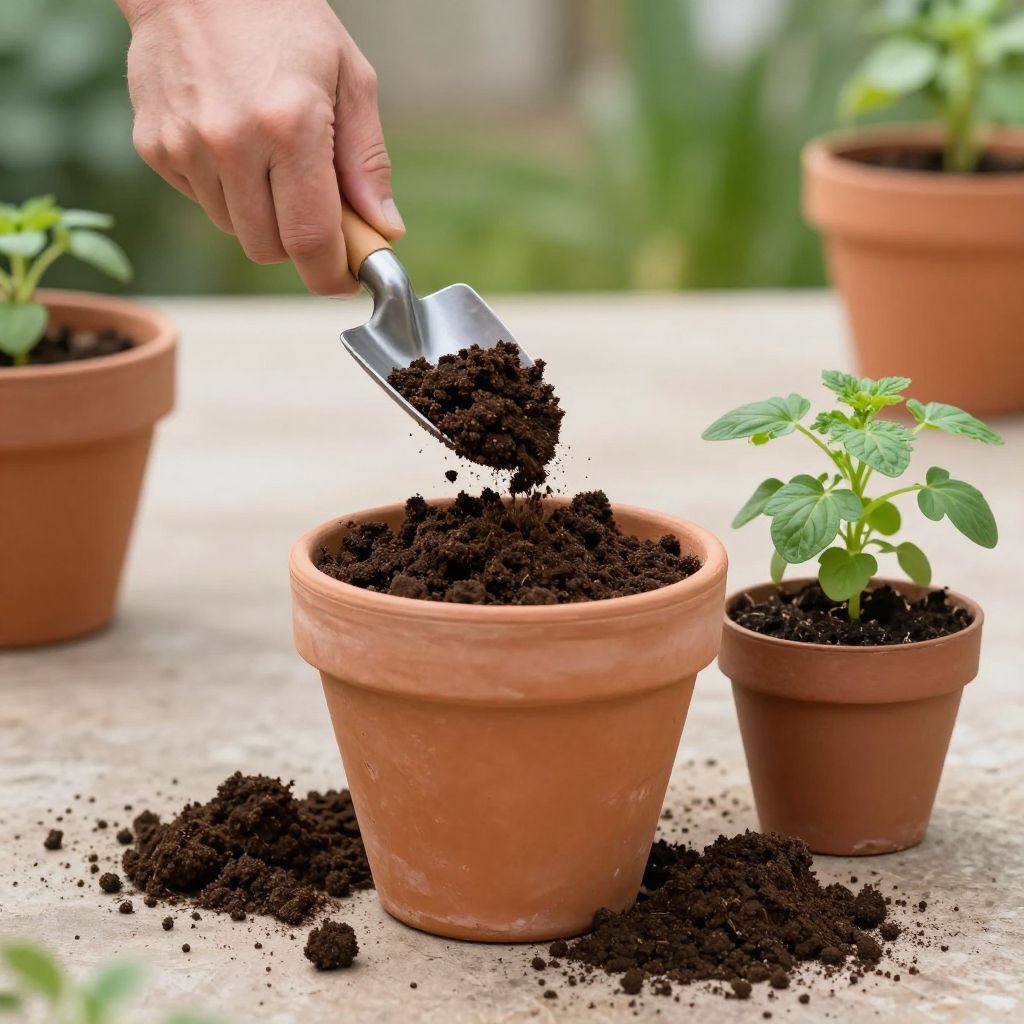
Can you use garden soil in pots? Yes, but usually not by itself. Garden soil is often too dense for containers, so it can hold too much water, compact around roots, and reduce air flow. In a pot, roots depend on a lighter, better-draining growing mix than they do in open ground.
You can sometimes blend garden soil into a container mix for large planters or outdoor seasonal containers, but it needs careful amendment. The right approach depends on the plant, pot size, climate, and how often you can water and monitor the container.
Can you use garden soil in pots?
Garden soil can be used in pots only with caution, and it is usually not the best choice on its own. In containers, soil should stay loose, drain well, and still hold enough moisture for roots. Straight garden soil often compacts, drains poorly, and can lead to root rot, especially in small pots.
Why garden soil behaves differently in containers
In the ground, soil is supported by surrounding earth and natural drainage. In a pot, the root zone is confined, so any problem with texture or drainage becomes much more serious.
Common problems with straight garden soil in pots
- Compaction: Soil settles tightly, leaving fewer air pockets for roots.
- Poor drainage: Water can sit around roots after watering or rain.
- Slow drying: Wet soil in a pot can stay soggy longer than you expect.
- Weight: Heavy soil makes large containers difficult to move.
- Pests and diseases: Garden soil may carry weed seeds, fungus gnats, or soil-borne pathogens.
These issues are most noticeable in small and medium pots, hanging baskets, and indoor containers. Larger outdoor planters can tolerate more garden soil, but they still need a mix that drains freely.
When garden soil can work in pots
Garden soil is more usable in very large containers, raised planters, or temporary outdoor pots where drainage is excellent and the plant likes evenly moist conditions. Even then, it should usually be mixed with lighter ingredients rather than used alone.
Better situations for a garden-soil blend
- Large patio tubs or half-barrel planters
- Outdoor containers that dry out quickly in hot weather
- Short-term plantings, such as seasonal flowers
- Containers for sturdy shrubs or perennials, if the mix is improved
For indoor plants, succulents, herbs in small pots, and seedlings, a true potting mix is usually the safer choice. These plants need more air around the roots and more predictable drainage.
How to improve garden soil for containers
If you want to use garden soil in pots, treat it as one ingredient in a container mix, not the whole recipe. The goal is to make the soil lighter, airier, and faster draining.
A simple container blend
A practical starting point is:
- 1 part screened garden soil
- 1 part compost
- 1 part coarse ingredient such as perlite, pumice, or coarse sand
This is not a universal formula, but it is a useful baseline for many outdoor containers. If your garden soil is already heavy clay, use even less of it and increase the airy component.
What to avoid mixing in
- Fine sand, which can make clay soil denser
- Fresh manure, which may burn roots or be too strong for containers
- Large clods, sticks, and stones that create uneven pockets
- Unscreened soil full of weed seeds or debris
Screening the garden soil through a hardware cloth or garden sieve helps remove rocks, roots, and large lumps. That extra step makes a big difference in pots.
Choosing the right pot for garden soil blends
The container itself matters almost as much as the soil. Even a decent mix can fail in a pot with poor drainage or the wrong size.
Pot features that help
- Drainage holes: Essential for nearly all container plants
- Appropriate size: A pot that is too large can stay wet too long
- Sturdy material: Terra cotta dries faster; plastic holds moisture longer
- Enough depth: Deep-rooted plants need more root room and better moisture balance
If you are using a garden-soil blend, pots with generous drainage holes are especially important. Set the container on pot feet or a stand so excess water can escape freely.
How to plant in a container with garden soil
Planting is straightforward, but the details matter. A well-prepared mix and careful watering at planting time help settle the roots without turning the pot into mud.
- Choose a pot with drainage holes and clean it before use.
- Mix screened garden soil with compost and a coarse amendment.
- Fill the pot loosely rather than packing the mix down.
- Set the plant at the same depth it was growing before.
- Backfill gently and water until excess drains from the bottom.
- Check the surface after watering and top up if the mix settles too much.
Do not press the soil tightly into the container. Roots need air as much as they need water, and compacted soil reduces both.
Watering containers with garden soil
Containers made with garden soil usually need close attention because they can swing between soggy and dry more quickly than you expect. The right watering method depends on weather, pot size, plant type, and how much compost or coarse material is in the mix.
How to tell when to water
- Check the top 1 to 2 inches of soil with your finger.
- Lift the pot if possible; a dry pot is noticeably lighter.
- Look for wilting, but do not wait for severe drooping.
- Water when the root zone is partly dry, not constantly wet.
Water thoroughly until liquid runs from the drainage holes, then let the excess drain away. Avoid frequent light watering, which can keep the upper layer damp while the deeper roots stay dry or poorly aerated.
Signs of overwatering
- Leaves yellowing while the soil stays wet
- Mushy stems or soft growth
- Mold, algae, or sour-smelling soil
- Fungus gnats around the pot
Best plants for garden-soil container mixes
Some plants cope better with heavier mixes than others. Tough, established plants generally handle a garden-soil blend better than delicate seedlings or moisture-sensitive species.
Plants that may do well in a blended mix
- Many annual flowers in large outdoor pots
- Some herbs, especially in roomy containers
- Compact vegetables in very large planters, if drainage is good
- Hardy perennials moved into temporary containers
Plants that usually need a lighter potting mix
- Succulents and cacti
- Seedlings and young transplants
- Indoor foliage plants
- Orchids and other specialty plants with specific media needs
If you are unsure, choose the lighter mix. It is easier to add water to a free-draining container than to rescue roots from a soggy one.
Seasonal and climate considerations
Your local weather changes how garden soil behaves in pots. Hot, windy climates dry containers quickly, while cool or rainy climates can keep them wet for too long.
In hot, dry weather
- Use a slightly more moisture-retentive blend with compost.
- Mulch the surface lightly to slow evaporation.
- Group pots together to reduce drying from wind.
- Monitor daily during heat waves.
In cool or wet weather
- Increase the amount of coarse amendment.
- Use pots with excellent drainage.
- Avoid oversized containers for small plants.
- Reduce watering and empty saucers after rain.
Outdoor containers may also need protection from heavy rain. If your pot sits where runoff collects, even a good mix can become waterlogged.
Common mistakes to avoid
Most problems with garden soil in pots come from trying to treat container plants like in-ground plants. Containers need a different balance of air, water, and structure.
- Using straight garden soil: This is the most common mistake.
- Skipping drainage holes: A decorative pot without drainage is risky.
- Using soil from a weedy bed: Weed seeds and pests can spread to the pot.
- Overpacking the mix: Tight soil suffocates roots.
- Overwatering on a schedule: Water based on soil moisture, not the calendar.
- Ignoring pot size: A huge pot can stay wet too long for a small plant.
Troubleshooting container problems
If a plant in garden soil is struggling, the fix is often in the root zone. Check the mix before assuming the plant needs more fertilizer or more water.
If the soil stays wet for days
- Move the pot to a brighter, breezier spot if the plant tolerates it.
- Stop watering until the top layer dries.
- Repot into a lighter mix if drainage is poor.
- Make sure the drainage holes are not blocked.
If the plant wilts even when the soil is damp
- Roots may be stressed from lack of air or rot.
- Check for sour smell, black roots, or mushy stems.
- Repot into fresh, airy media if needed.
- Trim damaged roots with clean tools before replanting.
If the mix dries too fast
- Add more compost or a moisture-holding component next time.
- Use a larger pot if the plant is rootbound.
- Move the container out of harsh afternoon sun if appropriate.
- Mulch the surface lightly with compost or fine bark.
Can you reuse garden soil from pots?
Yes, but only if the soil is still healthy. Old container soil often becomes compacted and depleted, so it usually needs refreshing before reuse.
Remove old roots, break up clumps, and mix the soil with fresh compost and a coarse amendment. If a plant in that pot had disease, root rot, or severe pest problems, it is safer not to reuse the soil for the same type of plant.
Bottom line
You can use garden soil in pots, but it works best as part of a blended container mix rather than on its own. For the healthiest roots, focus on drainage, air space, and the needs of the specific plant you are growing. If you want to try it, start with one pot, monitor moisture closely, and adjust the mix based on how your plant responds.
For more container-growing help, you may also want to read about container gardening basics and how to plant in containers.