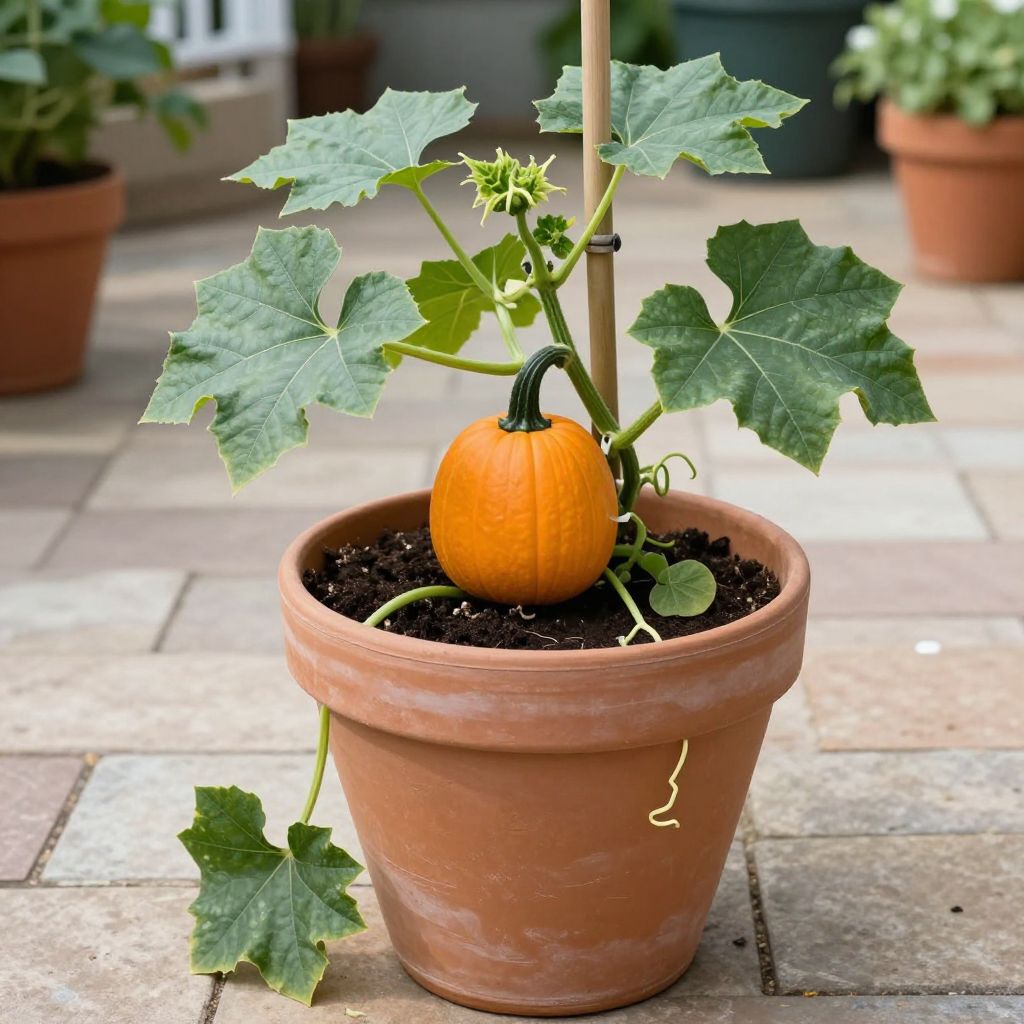
Can you grow pumpkins in a pot? Yes, you can—if you choose a large enough container, give the vine plenty of sun, and stay on top of watering and feeding. Container-grown pumpkins are very doable for small gardens, patios, and balconies, but they need more attention than pumpkins planted in the ground.
The key is matching the plant’s big appetite and sprawling habit with a sturdy pot, rich soil, and enough space for the vine to spread. With the right setup, you can grow smaller pumpkin varieties successfully and still harvest usable fruit.
Can You Grow Pumpkins In A Pot?
Yes, pumpkins can grow in a pot if the container is large, deep, and well-drained. Choose a compact or bush-type variety when possible, use fertile soil, and place the pot in full sun. Container pumpkins need frequent watering, regular feeding, and support for the vine’s growth.
What Size Pot Do Pumpkins Need?
Pumpkins are heavy feeders with extensive roots, so small pots are usually too limiting. A container that is at least 20 gallons is a practical minimum for one pumpkin plant, and larger is better if you have room.
Good container features
- Deep enough for roots: Aim for at least 18 inches deep.
- Wide enough for stability: A broad pot helps prevent tipping as the vine grows.
- Drainage holes: Essential to prevent soggy soil and root rot.
- Sturdy material: Plastic, resin, wood, or fabric grow bags can all work if they hold moisture reasonably well.
If you want to grow more than one plant, use separate containers. Crowding pumpkins in one pot usually leads to weak growth, poor pollination, and smaller harvests.
Best Pumpkin Varieties For Pots
Not every pumpkin variety is suited to container growing. Large vining types can be grown in pots, but they are much harder to manage and usually need more room than most home gardeners expect.
Look for compact or smaller-fruited types
- Small pumpkin varieties
- Bush or semi-bush types
- Varieties described as compact, patio, or container-friendly
Smaller-fruited pumpkins are generally easier to support on a patio or balcony. Even then, the plant still needs strong sunlight, ample nutrients, and room for the vine to trail out of the container.
How To Plant Pumpkins In A Pot
Start with a high-quality potting mix rather than garden soil. Potting mix drains better in containers and gives roots the air space they need, while garden soil can become too dense and compacted.
- Choose a large pot with drainage holes.
- Fill it with a rich, well-draining potting mix.
- Mix in compost if your potting mix is lean, but do not make the soil heavy or muddy.
- Plant seeds or a young transplant after the risk of cold weather has passed in your area.
- Water thoroughly after planting so the soil settles around the roots.
Seed or transplant?
Direct sowing is often easiest if your season is long enough, because pumpkins dislike root disturbance. If you use transplants, handle them gently and plant them at the same depth they were growing in their nursery container.
Sunlight, Temperature, And Placement
Pumpkins need full sun for strong growth and fruiting. In most climates, that means at least 6 to 8 hours of direct sunlight per day, with more sun usually giving better results.
Place the pot where the vine can spread without being constantly moved. A bright patio, open deck, or sunny driveway edge often works well. If the container gets hot in afternoon sun, dark pots may dry out faster, so monitor moisture closely.
Temperature matters
Pumpkins are warm-season plants and grow best in warm soil and air. Cold nights, chilly soil, and sudden temperature swings can slow growth and reduce flowering. If your area has a short growing season, start only when conditions are reliably warm.
Watering Pumpkins In Containers
Container pumpkins dry out much faster than in-ground plants. Consistent moisture is one of the most important parts of success, especially once the vine starts flowering and setting fruit.
- Water deeply until excess moisture drains from the bottom.
- Check the soil often, especially in hot or windy weather.
- Do not let the pot sit in standing water.
- Try to keep moisture even rather than letting the soil swing between very dry and very wet.
Uneven watering can cause stress, poor fruit development, and cracked pumpkins. If the top inch of soil feels dry, it is time to check deeper. In warm weather, potted pumpkins may need water far more often than garden plants.
Feeding Pumpkins In Pots
Pumpkins are hungry plants, and container-grown ones need regular nutrition because nutrients wash out of pots more quickly than from garden beds. Start with fertile potting mix, then feed as the plant grows.
What to use
- Compost mixed into the potting medium
- A balanced fertilizer early in growth
- A fertilizer that supports flowering and fruiting later, if needed
Avoid overfeeding with too much nitrogen, which can produce lush leaves but fewer flowers and fruit. If the plant is growing lots of vine and little else, the feeding balance may be too leaf-focused.
Training, Pruning, And Space Management
Even in a pot, pumpkins can sprawl. You can let the vine trail naturally, guide it around the patio, or train it carefully to reduce clutter.
Simple pruning tips
- Remove damaged or yellowing leaves.
- Keep the plant from crowding walkways.
- Limit the number of fruits if the pot and plant are small.
If the vine is trying to produce too many pumpkins for its container, the fruit may stay small or the plant may struggle to mature them. For best quality, it is often better to let a container plant carry fewer fruits and focus its energy there.
Pollination And Fruit Set
Pumpkins produce separate male and female flowers, and fruit depends on pollination. In a pot on a balcony or patio, pollinators may not always visit often enough, especially if the plant is isolated.
How to help pollination
- Watch for open male and female flowers in the morning.
- Use a small brush or cotton swab to transfer pollen from male flowers to female flowers.
- Repeat if needed over several mornings while flowers are open.
The female flower has a small swollen base that looks like a tiny pumpkin behind the bloom. If that swelling turns yellow and drops off, pollination may have failed or the plant may be under stress.
Common Problems When Growing Pumpkins In A Pot
Container pumpkins are manageable, but they can run into a few predictable issues. Catching them early makes a big difference.
1. Wilting in hot weather
Wilting can mean the plant needs water, but it can also happen when the pot overheats. Move the container if possible, mulch the surface lightly, and check moisture before watering again.
2. Yellow leaves
Yellowing may come from poor drainage, low nutrients, or natural aging of older leaves. If the soil stays wet for too long, improve drainage and reduce watering frequency.
3. Few flowers or no fruit
This often points to too little sun, too much nitrogen, or poor pollination. Improve light exposure, adjust feeding, and hand-pollinate if necessary.
4. Powdery mildew
This common fungal problem appears as a white, powdery coating on leaves. Give the plant more air circulation, avoid wetting the foliage late in the day, and remove badly affected leaves if needed.
5. Pests
Watch for aphids, squash bugs, and cucumber beetles. Check leaf undersides regularly, remove pests by hand when possible, and keep the plant healthy so it can recover from minor damage.
Harvesting Pumpkins Grown In Pots
Harvest timing depends on the variety and local weather, not the container itself. A pumpkin is usually ready when the skin is hard, the color is fully developed, and the stem begins to dry and cork over.
Use clean pruners or a sharp knife to cut the stem, leaving a short section attached if possible. Handle the fruit carefully, because bruising can shorten storage life.
Signs your pumpkin is ready
- Deep, mature color for the variety
- Hard rind that resists fingernail pressure
- Drying stem
- Vine beginning to decline naturally
Best Practices For Better Results
If you want the best chance of success, focus on the basics: big pot, strong sun, rich soil, even moisture, and regular feeding. Those five things matter far more than fancy extras.
- Use one plant per large container.
- Choose a smaller or compact pumpkin variety.
- Keep the soil evenly moist, not soggy.
- Feed consistently, but do not overdo nitrogen.
- Hand-pollinate if insect activity is low.
The biggest mistake is treating pumpkins like ordinary container flowers. They are vigorous vegetable plants with large roots, heavy fruit, and a strong appetite for light and nutrients.
Conclusion
So, can you grow pumpkins in a pot? Absolutely—if you give them enough room, sun, water, and care. Start with a large container, choose a compact variety if possible, and stay attentive through flowering and fruit set. If you want to try it this season, set up your pot first, then plant once your local weather is warm and settled.
For more container-growing help, you may also want to read about how to choose the right potting mix and growing vegetables in containers for small spaces.