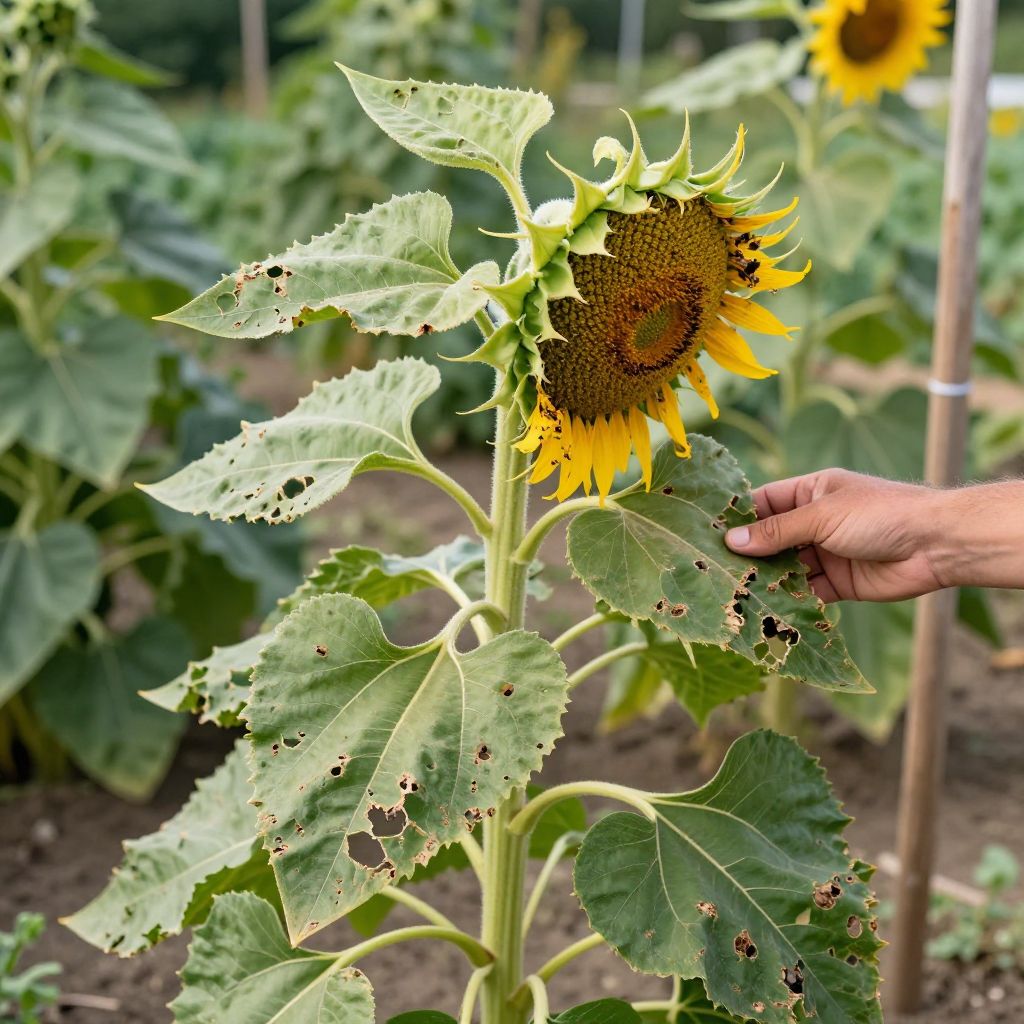
What eats sunflowers? If your sunflower leaves are disappearing, stems are chewed, or the buds never open, the culprit is usually an insect, bird, mammal, or disease problem rather than one single pest. The key is to look closely at the kind of damage, because different attackers leave very different clues.
With the right identification, you can protect young seedlings, keep mature plants healthy, and still enjoy flowers and seed heads. Sunflowers are generally easy to grow, but they are also attractive to wildlife and a handful of common garden pests.
What eats sunflowers?
Sunflowers are eaten by several pests and animals, including caterpillars, beetles, grasshoppers, slugs, deer, rabbits, squirrels, chipmunks, and birds. The most effective control depends on the damage pattern: holes in leaves, cut stems, missing seedlings, stripped buds, or seed heads that disappear before harvest.
How to tell what is damaging your sunflowers
Start by inspecting the plant at different times of day. Many pests feed at night or early morning, so the culprit may not be visible when you check.
Common damage clues
- Ragged holes in leaves: often caterpillars, beetles, or grasshoppers.
- Slime trails and irregular holes: usually slugs or snails.
- Seedlings cut off at the soil line: cutworms or sometimes slugs.
- Leaves stripped from the edges inward: deer, rabbits, or larger chewing insects.
- Missing seeds or torn heads: birds, squirrels, chipmunks, or mice.
- Yellowing, spotted, or distorted foliage: may point to disease, stress, or sap-feeding insects.
Check the plant in this order
- Look at the soil surface and stem base for chewing or cut stems.
- Inspect the undersides of leaves for eggs, larvae, or clusters of insects.
- Check buds and flower heads for hidden caterpillars or beetles.
- Examine nearby soil, mulch, and garden debris for slugs, snails, and cutworms.
- Look for tracks, droppings, or disturbed soil if mammals are involved.
Common pests and animals that eat sunflowers
Caterpillars
Caterpillars chew irregular holes in leaves and sometimes feed on buds and petals. They can be hard to spot because many blend in with the foliage.
If you find them, handpick small numbers or use a targeted biological control labeled for caterpillars if needed. Encourage beneficial insects by avoiding broad-spectrum sprays that also kill pollinators.
Beetles and grasshoppers
Beetles may skeletonize leaves, while grasshoppers chew large, ragged sections. Their feeding is often more noticeable in hot, dry weather.
For small plantings, handpicking in the early morning can help. In larger gardens, row covers can protect young sunflowers until they are tall enough to outgrow the damage.
Slugs and snails
Slugs and snails feed at night or in damp, shaded conditions. They leave shiny slime trails and irregular holes, especially on young plants.
Reduce hiding places by clearing weeds and debris, water in the morning so the soil surface dries by evening, and use traps or barriers where appropriate. Keep mulch a little back from the stem if slugs are a recurring issue.
Cutworms
Cutworms are a major problem for seedlings. They often sever young sunflower stems at ground level, leaving the top of the plant wilted or collapsed.
Protect seedlings with collars made from cardboard, plastic, or similar material pushed slightly into the soil. Check at night with a flashlight if you suspect cutworms are active.
Birds
Birds may peck seedlings, flowers, or ripening seed heads. They are especially interested in sunflower seeds as they mature.
Use netting, garden fleece, or lightweight row covers to protect seed heads if you want to harvest them. Secure coverings well so birds cannot slip underneath.
Squirrels, chipmunks, rabbits, and deer
These animals can cause severe damage, from nibbling young plants to stripping leaves and eating developing seed heads. Sunflowers are especially tempting when other food is scarce.
Physical barriers are usually the most reliable solution. Fencing is best for deer and rabbits, while cages, netting, or sturdy supports may help with squirrels and chipmunks around seed heads.
How to protect sunflowers from pests before damage starts
Healthy, well-placed sunflowers are less likely to suffer major losses. Strong growth helps plants recover from minor feeding and makes them less attractive to some pests.
Choose the right site
- Plant in full sun for strong stems and faster growth.
- Use well-drained soil so roots are not stressed by waterlogging.
- Avoid crowded planting, which traps moisture and hides pests.
- Keep the area weed-free to reduce shelter for insects and rodents.
Improve the soil without overdoing it
Sunflowers grow best in moderately fertile soil with good drainage. A little compost mixed into the planting area is usually enough to support healthy growth.
Too much nitrogen can create lush, soft growth that attracts aphids and some chewing pests, and it may make stems weaker. If your soil is already rich, avoid heavy feeding unless a soil test shows a need.
Use physical protection early
- Row covers: useful for seedlings and young plants, especially against insects and birds.
- Collars: helpful for cutworm prevention around transplants or direct-sown seedlings.
- Fencing: best for larger animals such as deer and rabbits.
- Netting or mesh: protects ripening seed heads from birds and squirrels.
Planting and care tips that reduce pest problems
Sunflowers are simple to grow, but a few care habits make them less vulnerable to damage. The goal is steady growth, not forced growth.
Watering
Water deeply when the soil begins to dry, especially while plants are establishing roots. Young plants need more consistent moisture than mature sunflowers, but soggy soil can weaken roots and invite disease.
Water at the base of the plant when possible. Wet foliage for long periods can encourage fungal problems, especially in humid weather.
Spacing
Give sunflowers enough room for air to move around the leaves. Good spacing helps foliage dry faster after rain and makes it easier to spot pests before they spread.
Staking and support
Tall sunflowers may need support in windy sites or when seed heads get heavy. A sturdy stake can prevent stems from snapping, especially if pests have already weakened the plant.
Deadheading and cleanup
If you are growing sunflowers mainly for flowers, removing spent blooms can keep the plant tidy. If you are growing for seed, leave the heads in place until mature, but protect them from birds and mammals.
At the end of the season, remove old stalks and debris if pest pressure has been high. This reduces hiding places for insects and rodents over winter.
Diseases and stress that can look like something is eating sunflowers
Not every damaged sunflower has been chewed. Some problems create holes, spots, or distorted growth that can be mistaken for pest damage.
Leaf spots and fungal issues
Fungal leaf spots can create brown or black lesions that eventually dry out and fall away, leaving holes in the leaf. If the damage starts as spots rather than clean chewing, disease may be the real issue.
Improve airflow, avoid overhead watering, and remove badly affected leaves if the problem is limited. Severe or recurring disease may require replacing the plant and improving garden sanitation.
Stress from drought or poor soil
Stressed sunflowers may have thin leaves, weak stems, or poor bud development. These plants are more likely to be attacked and less able to recover.
Check soil moisture, drainage, and fertility before assuming insects are the only problem. A healthy plant can often tolerate minor feeding with little long-term harm.
How to harvest sunflower heads before wildlife gets them
If your goal is seed harvest, timing matters. Birds, squirrels, and chipmunks often find ripening heads before you do.
Signs seeds are ready
- Backs of the flower heads turn yellow to brown.
- Petals dry and drop.
- Seeds look plump and firm.
- Some seeds may loosen easily when rubbed.
Harvesting tips
- Check heads regularly as they mature.
- Cover heads with mesh or paper bags if wildlife pressure is high.
- Cut the head with a short stem attached once seeds are mature.
- Dry the heads in a protected, airy place if needed before removing seeds.
When to take action and when to leave it alone
Not every chewed leaf needs immediate treatment. Mature sunflowers can usually tolerate some feeding, especially if the damage is light and the plant is still growing well.
Act quickly if seedlings are being cut down, if the growing point is damaged, or if birds and mammals are destroying buds and seed heads. For minor leaf chewing on established plants, monitoring and simple barriers may be enough.
Practical mistakes to avoid
- Using broad insecticides before identifying the pest.
- Watering late in the day and keeping foliage wet overnight.
- Planting too densely, which hides pests and slows drying.
- Ignoring the soil line, where cutworms and slugs often work.
- Assuming all damage is from insects when wildlife may be the real cause.
Quick troubleshooting guide
- Seedlings vanish overnight: check for cutworms, slugs, or rabbits.
- Leaves have holes but stems are intact: look for caterpillars, beetles, or grasshoppers.
- Plants are chewed from the top down: suspect deer or rabbits.
- Seed heads are stripped before harvest: use netting or bags against birds and squirrels.
- Leaves show spots that become holes: consider disease, not just pests.
To protect your sunflowers, inspect the damage closely, identify the pest or animal, and choose the simplest control that fits the problem. If you want to keep learning about healthy sunflower growth and garden protection, read more about sunflower care basics and natural ways to manage common garden pests.