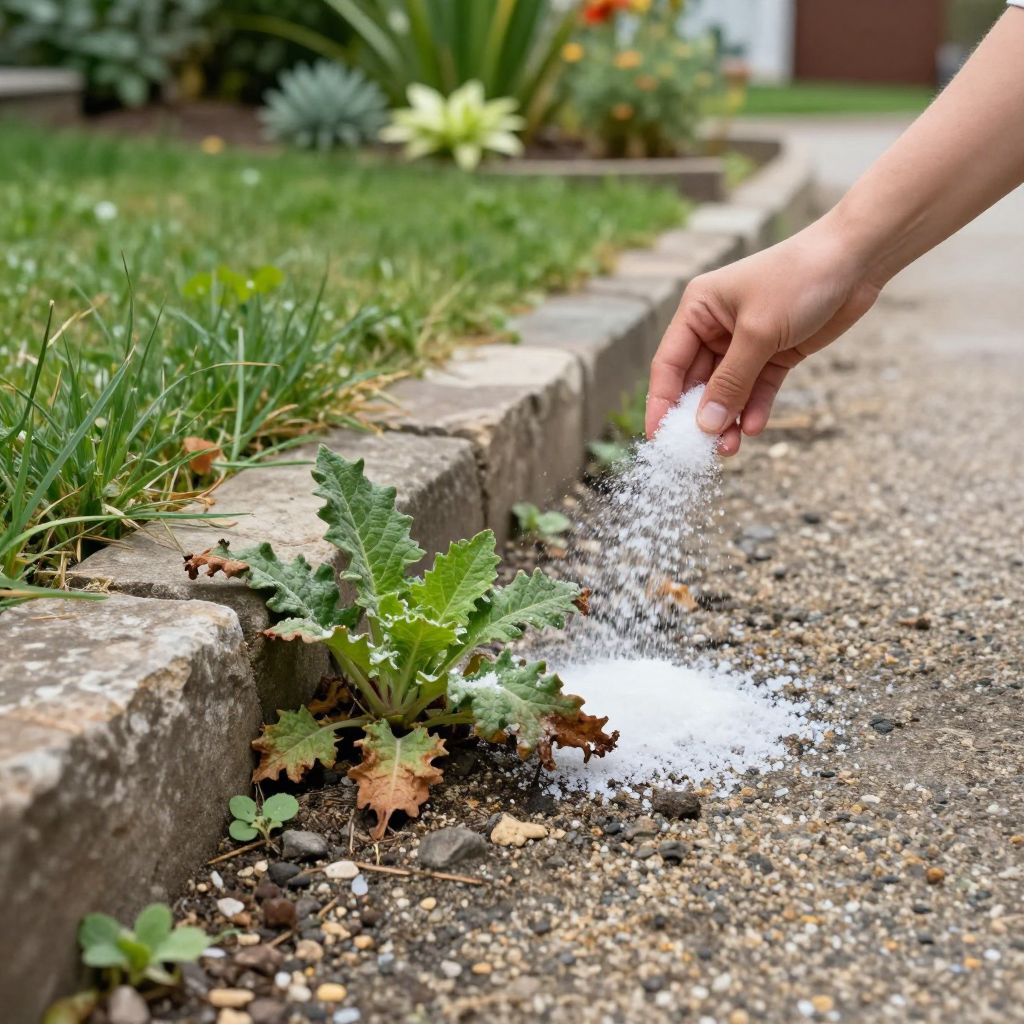
Does rock salt kill weeds? Yes, it can, but it does so by damaging the soil as well as the plant. Rock salt dehydrates weed roots and leaves, which may stop growth for a while, but it can also linger in the ground and make it hard for anything else to grow.
If you are trying to clear cracks, gravel, or a path, rock salt may seem like a quick fix. The problem is that it is not selective, and the effects can spread beyond the weed you meant to target.
Does rock salt kill weeds?
Rock salt can kill weeds by drawing moisture out of plant tissue and disrupting water uptake in the roots. It works best on small, actively growing weeds, but it can also harm nearby plants, soil structure, and future planting areas. Use it only where long-term soil damage is acceptable.
How rock salt affects weeds and soil
Rock salt is mostly sodium chloride. When you apply it to soil, the salt dissolves and creates a harsh environment that plants struggle to survive in.
Weeds may wilt, brown, and die back, but the salt does not stop at the weed. It can move with rain or watering into surrounding soil, where it may injure ornamentals, vegetables, turf, and shrubs.
What happens after application
- Leaves dry out because the plant cannot hold water properly.
- Roots are damaged and may stop absorbing moisture and nutrients.
- Soil salinity rises, making the area less suitable for future planting.
- Rain can spread salt beyond the original target zone.
Where rock salt may be used and where it should not
Rock salt is sometimes used in non-planting areas such as driveway cracks, gravel edges, and between paving stones. Even there, it should be used cautiously because runoff can affect nearby beds and lawns.
Do not use it in vegetable gardens, flower borders, around trees, or anywhere you want to grow plants later. If the area drains toward a lawn, border, or stormwater outlet, the risk of damage is even higher.
Better places to avoid it
- Raised beds and in-ground vegetable plots
- Flower beds and shrub borders
- Under trees and near roots
- Lawns and turf edges
- Areas with slopes or heavy rainfall runoff
How to use rock salt more safely, if you choose to use it
If you decide to use rock salt for weeds in a hardscape area, apply the smallest amount possible and keep it tightly contained. The goal is to treat a crack or isolated spot, not the surrounding landscape.
- Remove visible weeds first so the salt can contact the crown and roots more directly.
- Apply sparingly only to the crack, joint, or isolated patch.
- Avoid spreading salt onto adjacent soil, mulch, or plant roots.
- Keep children, pets, and desirable plants away from the treated area.
- Monitor the spot after rain, since runoff may carry salt elsewhere.
Important: More salt does not mean better weed control. Heavy application increases the chance of long-term soil damage without guaranteeing better results.
Common mistakes to avoid
Many gardeners use rock salt because they want a simple, low-effort solution. The most common problems happen when it is used too broadly or too often.
- Using it near plantings and then wondering why nearby flowers or shrubs decline.
- Applying it before rain, which can wash salt into unwanted areas.
- Expecting permanent control, when weeds may return from seeds or surviving roots.
- Using it in soil you may want to plant later, which can leave a lingering problem.
- Overapplying in cracks, where excess salt can seep under paving and into beds.
Safer weed-control alternatives for gardeners
If you want to control weeds without harming soil, there are better options for most home gardens and landscapes. The best choice depends on where the weeds are growing and whether you want to plant there later.
For cracks and hard surfaces
- Hand pulling when weeds are small and the soil is slightly moist.
- Boiling water for isolated weeds in non-planting cracks, used carefully to avoid splashes.
- Mechanical removal with a crack weeder, hoe, or stiff brush.
- Polymeric sand or joint maintenance to reduce spaces where weeds germinate.
For beds and borders
- Mulch to block light and reduce weed germination.
- Landscape fabric only where appropriate, and only if you can maintain it properly.
- Regular cultivation of tiny seedlings before roots establish.
- Dense planting with healthy groundcovers or shrubs to shade out weeds.
How to tell if rock salt has damaged soil
If you used rock salt and plants nearby begin to struggle, look for signs of salt injury rather than assuming disease or drought alone. Symptoms often appear after a dry spell followed by watering or rain.
- Leaf scorch or browning at the edges
- Wilting even when soil seems moist
- Stunted growth or poor regrowth
- Patchy dieback near treated areas
- White crusting on the soil surface in some cases
If the area is small, you may be able to dilute and flush some salt downward with deep watering, provided drainage is good and the runoff will not affect other plantings. In heavy clay soil or poorly drained sites, the salt may persist longer.
What to do if you overapplied it
- Stop adding salt immediately.
- Remove any visible residue if it can be done safely.
- Water deeply and slowly only if the area drains well.
- Keep sensitive plants out of the area until the soil has recovered.
- Test the soil if you plan to replant and the site has been heavily treated.
Can you plant after using rock salt?
Sometimes, but not always right away. The answer depends on how much salt was used, the rainfall or irrigation the area received afterward, and how well the soil drains.
In a small, isolated crack, the impact may be limited. In garden beds or planting strips, however, the soil may remain unsuitable for a long time, especially if repeated applications were made.
If you want to replant an area that has been salted, wait until you are confident the salt has dissipated. Watch for poor germination, scorched leaves, or weak root growth before introducing valuable plants.
Best long-term approach to weed control
Rock salt can kill weeds, but it is usually a short-term fix with long-term tradeoffs. For most gardeners, the best weed control comes from prevention, regular maintenance, and choosing methods that protect the soil.
Focus on removing weeds early, covering bare soil, and keeping hardscape joints filled and tidy. That approach takes a little more effort at first, but it preserves the planting area and reduces future problems.
If you want more practical garden problem-solving, read up on weed prevention in mulched beds and how to maintain cracks and paths without harming nearby plants.