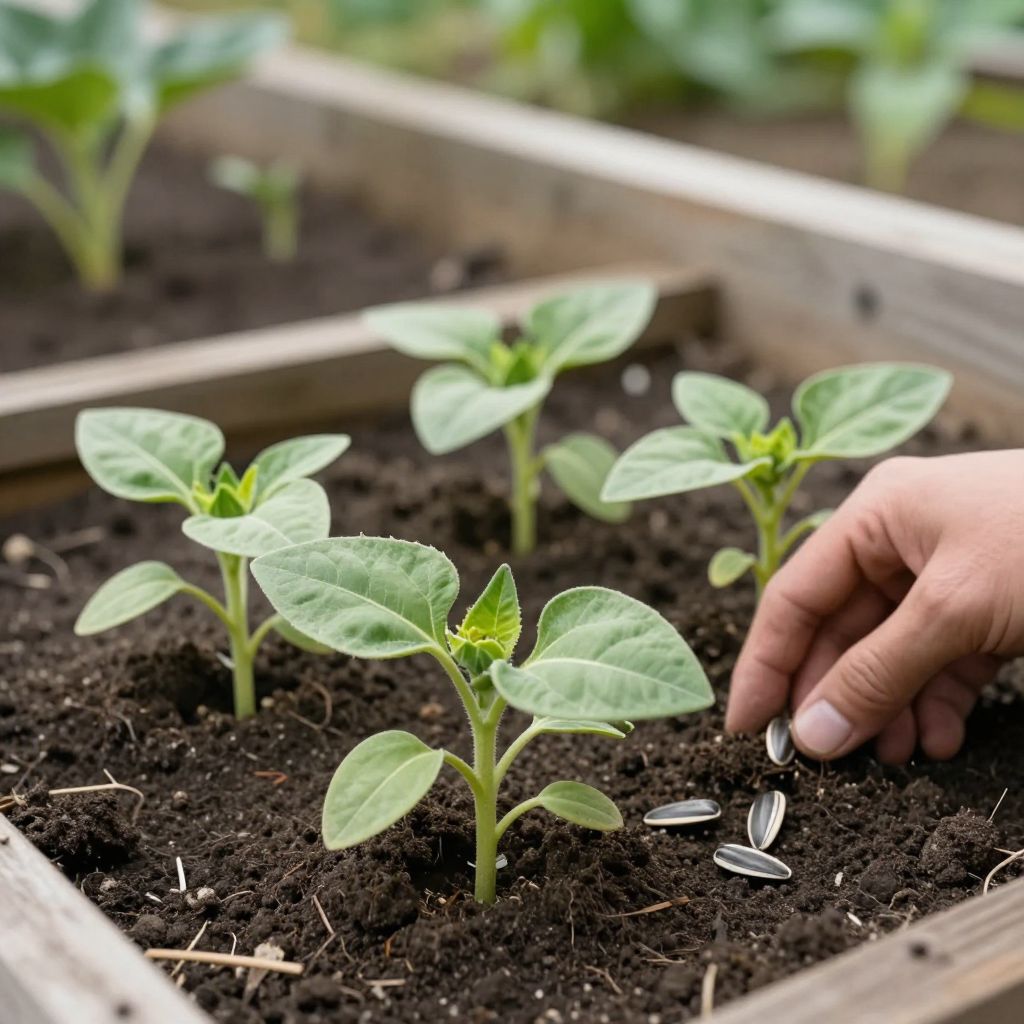
Wondering what do sunflower sprouts look like when they first emerge? The earliest sunflower seedlings are easy to miss if you’re expecting a tiny version of the mature plant. They usually appear as a pair of thick, oval seed leaves, then quickly develop a rougher, broader set of true leaves.
Knowing the difference helps you avoid pulling them as weeds, spot weak seedlings early, and give them the right care while they’re still tender. Here’s how to identify sunflower sprouts, grow them successfully, and troubleshoot the most common seedling problems.
What do sunflower sprouts look like?
Sunflower sprouts usually emerge with two smooth, oval seed leaves called cotyledons, often on a sturdy pale stem. Within days to a couple of weeks, the first true leaves appear above them: broader, slightly rough, and shaped more like a miniature sunflower leaf. Healthy sprouts stand upright and grow quickly.
How to identify sunflower seedlings at each stage
1. The first emergence
When sunflower seeds germinate, the sprout pushes through the soil with a hooked stem and two seed leaves. These first leaves are not the “real” leaves, but they are essential for early growth.
- Color: light green to yellow-green
- Shape: smooth, oval, or spoon-shaped
- Texture: soft and unwrinkled
- Stem: thick, pale, and upright
If the seedling is stretching thin and leaning, it may not be getting enough light.
2. The first true leaves
The next set of leaves is the best clue that you’re looking at a sunflower. These leaves are wider, slightly rough to the touch, and begin to show the familiar sunflower leaf shape.
- They are usually larger than the seed leaves
- The surface may feel a little fuzzy or coarse
- The edges may look lightly toothed or uneven
- They grow opposite each other at first, then alternate as the plant develops
3. Young plant stage
As the seedling grows, the stem thickens and the leaves become more triangular or heart-shaped, depending on the variety. At this stage, the plant starts looking unmistakably like a young sunflower rather than a generic sprout.
Tip: If you are unsure, gently rub one leaf. Sunflower leaves usually feel rougher than many common weeds or vegetable seedlings.
How to tell sunflower sprouts from common lookalikes
Many gardeners confuse sunflower seedlings with volunteer weeds or other broadleaf seedlings. The easiest way to tell is to look at the seed leaves first, then wait for the true leaves.
- Sunflower: two thick oval seed leaves, then rough true leaves
- Weed seedlings: often thinner stems, different leaf arrangement, or more delicate foliage
- Squash family seedlings: bigger, more rounded cotyledons and faster-spreading growth
- Beans: larger paired seed leaves and a climbing or vining habit later
If you planted sunflower seeds close together, the seedlings may look crowded at first. Thin them once they have a few true leaves so the strongest plant has room to develop.
What sunflower sprouts need to grow well
Sunflower seedlings are straightforward, but they need the right conditions early on. Good light, loose soil, and steady moisture make a big difference in whether the sprouts stay sturdy or become weak and floppy.
Light
Sunflowers need strong light from the start. Outdoors, choose a site with full sun, meaning at least 6 to 8 hours of direct sunlight a day in most climates.
Indoors, seedlings need a very bright windowsill or, better yet, a grow light placed close enough to prevent stretching. If the stems are long, pale, and weak, they are likely reaching for light.
Soil and drainage
Use loose, well-draining soil that does not stay soggy. Sunflower seeds germinate best in soil that is moist but not waterlogged.
- Outdoors: loosen compacted soil before sowing
- In containers: choose pots with drainage holes
- Avoid heavy, sticky soil that holds too much water
If your garden soil is dense clay, mix in compost to improve structure, but do not make the seedbed overly rich or muddy. Sunflowers prefer soil that drains well and allows roots to move downward easily.
Watering
Keep the soil evenly moist while the seeds are germinating. Once sprouts appear, water when the top layer of soil begins to dry, rather than keeping it constantly wet.
Important: Overwatering is one of the most common seedling mistakes. Too much moisture can lead to rot, damping-off, or weak roots.
How to plant sunflower seeds for healthy sprouts
Sunflowers are usually direct-sown outdoors because their roots dislike disturbance. You can start them in pots, but transplant carefully and only when the seedlings are still small.
- Choose a sunny location with well-drained soil.
- Plant seeds about 1 inch deep in prepared soil.
- Space seeds according to the mature size of the variety.
- Water gently after planting.
- Keep the soil lightly moist until germination.
In cooler weather, germination may take longer. In warmer soil, sprouts usually appear faster. Local temperature and soil conditions matter more than the calendar, so adjust your timing to your area.
Starting sunflowers in pots
If you start seeds indoors, use a deep pot or cell because sunflower roots grow quickly. A biodegradable pot can help reduce transplant shock, but only if it still drains well and does not stay soggy.
- Use a seed-starting mix or light potting mix
- Plant one seed per pot if possible
- Keep seedlings in strong light
- Harden them off before moving outdoors
Common problems with sunflower sprouts
Leggy, stretched seedlings
If your sunflower sprouts look tall, thin, and pale, they are not getting enough light. Move them to a sunnier spot or use a grow light closer to the seedlings.
Leggy seedlings are more likely to bend or break, so correct the light issue quickly.
Yellowing leaves
Yellow cotyledons can be normal as the seedling matures, but yellowing true leaves may signal too much water, poor drainage, or cold stress. Check the soil first before adding anything else.
Seedlings falling over
If stems collapse at the soil line, damping-off may be the cause. This fungal problem is more common in cool, wet, crowded conditions.
- Improve airflow
- Reduce watering
- Remove affected seedlings
- Use clean pots and fresh seed-starting mix next time
Chewed or missing sprouts
Birds, slugs, cutworms, and small mammals may damage young sunflower seedlings outdoors. If sprouts disappear overnight, inspect the area and protect new plantings with row cover, collars, or other physical barriers.
When to thin, transplant, or support young sunflowers
Once sunflower seedlings have several true leaves, thin them so each plant has enough space and light. Crowded seedlings compete for water and nutrients and often grow weaker stems.
If you started them in pots, transplant them while they are still small and before roots become tightly packed. Water them well after moving them, and protect them from strong wind for a few days.
Tall varieties may need a stake later in the season, especially in windy gardens or loose soil. It is easier to support a young plant early than to rescue a leaning one after it has grown large.
How to care for young sunflower plants
After the seedling stage, sunflower care is simple but important. The goal is steady growth without stress.
- Sun: full sun for best growth
- Water: deep, occasional watering rather than constant shallow watering
- Soil: well-drained and not overly rich
- Weeding: keep the area clear so seedlings do not compete
Mulch can help conserve moisture once the seedlings are larger, but keep mulch a little away from the stem so the base does not stay damp.
Harvesting and later growth
If you are growing sunflowers for blooms or seeds, healthy early sprouts set the stage for the rest of the season. Strong seedlings usually develop sturdier stems, better flower heads, and a more reliable growth habit.
For cut flowers, a strong early start is especially useful because it helps the plant produce straight stems. For seed production, consistent growth and full sun matter even more.
Quick checklist for healthy sunflower sprouts
- Two smooth seed leaves appear first
- True leaves are rougher and more sunflower-like
- Soil stays moist, not soggy
- Seedlings get strong light
- Crowded plants are thinned early
- Young plants are protected from pests and cold stress
Conclusion
Now that you know what do sunflower sprouts look like, you can spot them early, protect them from common problems, and help them grow into strong plants. Check your seedlings for the smooth cotyledons first, then watch for the rough true leaves that confirm you have sunflowers.
If you want to keep learning, read more about starting seeds indoors successfully and how to grow sunflowers in containers for more practical planting tips.