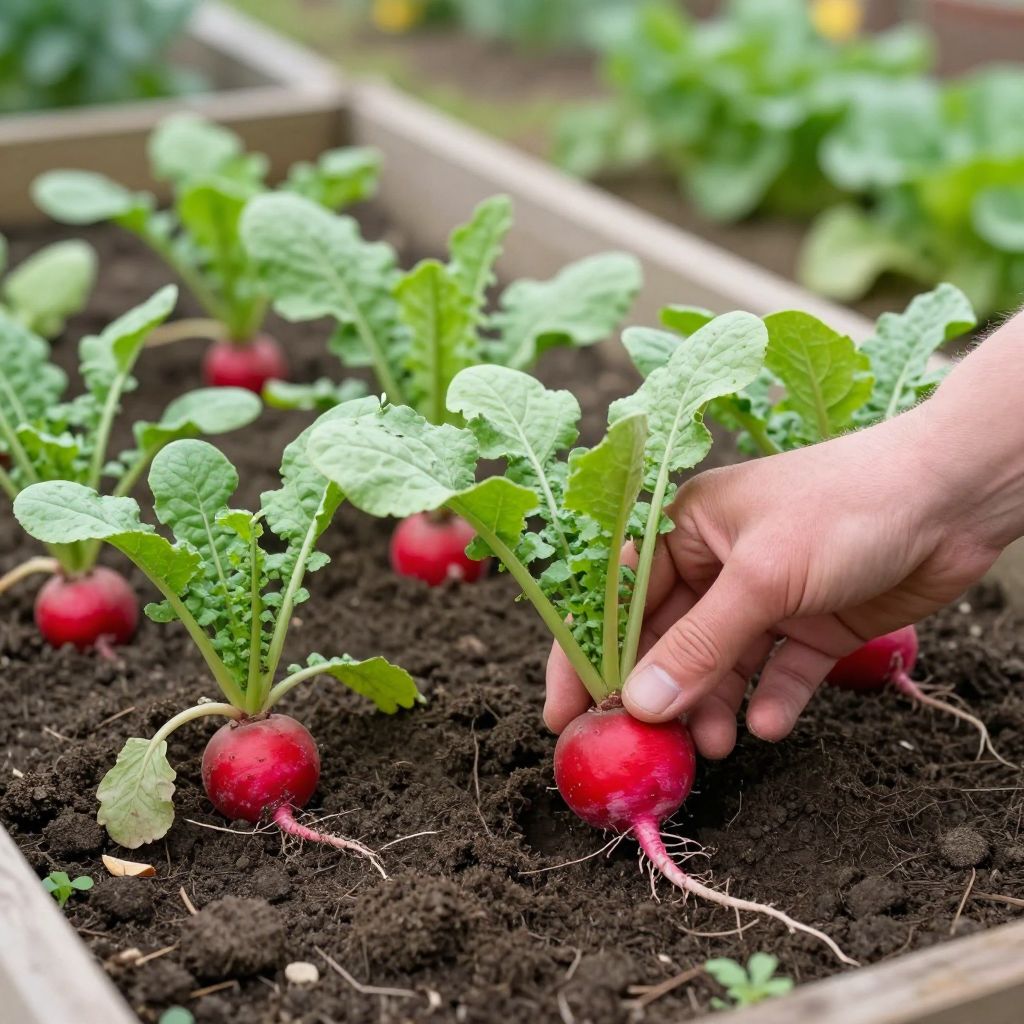
Wondering when are radishes ready to harvest? The good news is that radishes are one of the fastest crops you can grow, and they usually tell you when they’re ready. Most are harvested when the roots are small, firm, and brightly colored, before they become pithy or overly hot.
The exact timing depends on the variety, weather, soil, and how crowded the plants are. If you learn a few simple signs, you can harvest at the right moment and get crisp, tender roots instead of woody ones.
When are radishes ready to harvest?
Radishes are usually ready to harvest when the root shoulders are visible at the soil surface and the roots reach their mature size, often 3 to 8 weeks after sowing depending on the type. Check size, firmness, and flavor rather than relying only on the seed packet timeline, because temperature and growing conditions can speed up or slow down maturity.
How to tell radishes are ready
The easiest way to judge harvest time is to look at the root itself. A ready radish should feel firm, look plump, and be close to the size listed for that variety.
Visual signs to watch for
- Shoulders showing above the soil: Many radishes push their tops upward as they mature.
- Uniform root size: The root should look full and rounded, not thin or stringy.
- Healthy tops: Leaves are often still fresh and upright when the roots are at their best.
- Bright color: Red, pink, white, purple, or bicolor roots should look vivid, not dull or cracked.
Feel and flavor clues
Gently brush away a little soil and press the root with your fingers. A ready radish feels solid, not soft or spongy. If you taste one and it is crisp with a mild peppery bite, it is likely at peak quality.
If the flavor is extremely sharp, the roots may be stressed by heat or inconsistent watering. If they taste woody, hollow, or pithy, they were left too long in the ground.
Typical harvest times by radish type
Different radishes mature at different speeds. Fast spring radishes are usually the quickest, while larger or daikon types need more time and room to develop.
- Small round spring radishes: often about 20 to 30 days from sowing
- Longer salad or French breakfast types: often about 25 to 35 days
- Daikon and other large Asian radishes: often about 45 to 70 days or more
Use the seed packet as a starting point, then check the roots a few days before the earliest listed harvest time. In warm weather, radishes can mature very quickly, so inspect them often.
How to check radishes without ruining the crop
You do not need to pull every plant to see if they are ready. Sample one or two from different spots in the row or container, especially where growth seems fastest.
- Loosen the soil beside the plant with your fingers or a small hand fork.
- Brush away enough soil to see the top of the root.
- Compare the size to the expected mature size for that variety.
- Pull one radish if you are unsure, then taste it.
- Harvest the rest over the next few days if the flavor and size are right.
This method helps you avoid harvesting too early, but it also prevents overmaturity. Radishes can go from perfect to tough surprisingly fast, especially in warm weather.
What affects harvest timing?
Radishes are quick, but several growing conditions can change how fast they reach harvest size. If your crop is not behaving like the packet says, the reason is often in the soil or weather.
Temperature
Cool weather usually gives the best texture and flavor. Hot conditions can make radishes grow too fast, become pithy, or bolt before the roots size up.
If spring turns warm quickly, check your crop more often. In cooler seasons, radishes may take a little longer but often stay sweeter and crisper.
Soil quality
Loose, stone-free soil helps radishes swell evenly. Heavy clay, compacted beds, or debris in the soil can cause misshapen roots, slow growth, or splitting.
A bed amended with compost is helpful, but too much fresh nitrogen can encourage leafy tops with small roots. Aim for fertile soil that drains well and is easy for roots to expand through.
Watering consistency
Radishes need steady moisture to stay tender. Irregular watering can lead to cracked roots, tough texture, or overly sharp flavor.
Keep the soil evenly moist, not soggy. If the surface dries out completely and then gets soaked, the roots may split.
Spacing
Overcrowded radishes compete for water, light, and nutrients. Crowding often produces small roots that never size up properly.
Thin seedlings early so roots have room to develop. For many small radish types, spacing of about 1 to 2 inches is common, but always follow the variety’s guidance if it differs.
What happens if you leave radishes too long?
Overripe radishes are usually the biggest mistake gardeners make. Once past peak size, many varieties become woody, hollow, or overly pungent.
- Woody texture: The root becomes tough and dry.
- Pithiness: The inside turns spongy or hollow.
- Cracking: Growth spurts or excess water can split the skin.
- Bolting: The plant sends up a flower stalk, and root quality declines.
If you notice these signs, harvest immediately. Even if the roots are not perfect, they may still be usable in cooked dishes, though they are usually best when young.
How to harvest radishes properly
Harvesting is simple, but a gentle approach keeps the roots clean and undamaged. Pulling too hard can snap the tops off or bruise the root.
- Water lightly beforehand if the soil is dry, so roots pull more easily.
- Grasp the leaves close to the crown.
- Pull steadily upward while supporting the soil if needed.
- Use a hand fork or trowel for stubborn roots in compacted soil.
- Shake off loose soil and trim the tops if you are storing them.
Harvest in the morning if possible, when plants are cool and crisp. That often gives you the best texture and storage life.
Can you harvest radishes in stages?
Yes. Radishes do not all mature at the same time, especially in mixed plantings or uneven soil. You can harvest the largest roots first and let the smaller ones continue growing for a few more days.
This staggered harvest works especially well with spring radishes. Just keep checking every couple of days, because a small root can reach peak size quickly once it starts swelling.
Growing tips that improve harvest quality
If you want better harvests, focus on the conditions that produce fast, even root growth. Radishes are simple, but they respond quickly to good care.
Give them full sun or light shade
Most radishes grow best with at least 6 hours of sun, though light shade can help in warmer climates. Too much shade can slow root development and leave you with more leaves than roots.
Keep the soil loose
Prepare the bed by removing stones and breaking up clods. A fine, crumbly seedbed helps roots form evenly and makes harvest easier.
Thin seedlings early
Thinning may feel wasteful, but it is one of the best ways to get usable roots. Crowded seedlings stay small and often never size up properly.
Harvest on time
Radishes are not a crop to “wait and see” with for too long. Once they reach mature size, plan to harvest within a few days for the best texture.
Common problems and what to do
Radishes are all leaves and tiny roots
This usually means the plants are overcrowded, shaded, or given too much nitrogen. Thin them, improve light, and avoid overfeeding with nitrogen-heavy fertilizer.
Roots are cracked
Cracking often follows uneven watering or sudden heavy rain after a dry spell. Keep moisture steadier and harvest promptly once the roots are ready.
Roots are hot or bitter
Heat stress, old age, and drought can all increase pungency. Try growing in cooler weather and harvest sooner next time.
Plants bolted
Bolting means the plant has shifted to flowering, often because of heat or stress. Once this happens, the roots usually lose quality quickly, so harvest what you can right away.
Storing radishes after harvest
For the best crunch, use radishes soon after picking. If you need to store them, remove the leafy tops first so they do not draw moisture from the roots.
- Store unwashed roots in a perforated bag or container in the refrigerator.
- Keep them cool and slightly humid, not wet.
- Use leafy tops quickly, since they wilt faster than the roots.
If the roots start to soften, they are still often fine for soups or cooked dishes, but fresh eating quality declines quickly.
Final takeaway
When are radishes ready to harvest? Usually when they are firm, full-sized for the variety, and still crisp, often just a few weeks after sowing. Check them early, sample one if needed, and harvest promptly once they reach peak size. If you want to improve your next crop, focus on loose soil, even moisture, and timely thinning.
For more practical help with root crops, you may also want to read about how to thin seedlings for better harvests and vegetable garden soil preparation.