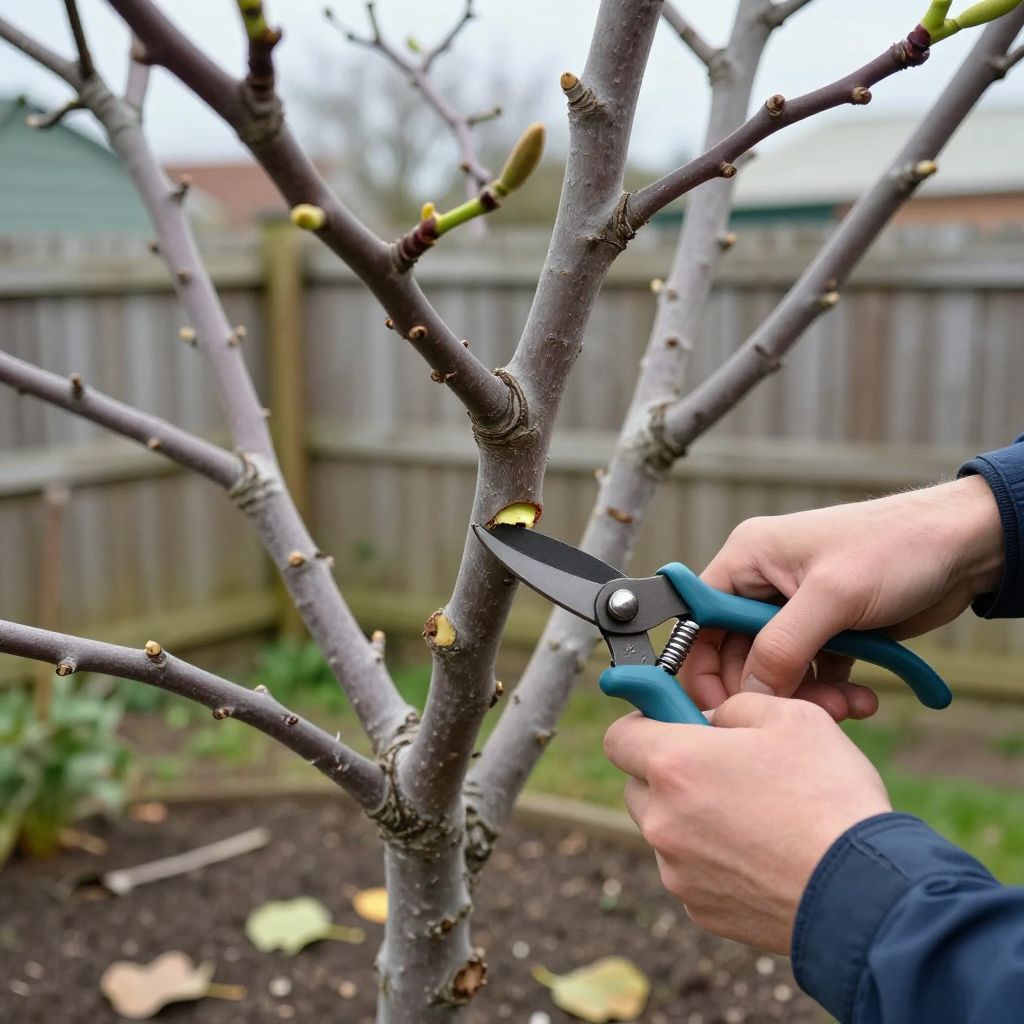
If you’re wondering when to prune fig trees, the short answer is: prune during the dormant season in late winter or very early spring in most climates, before new growth starts. Light shaping can also be done in summer if needed, but heavy pruning is best avoided when the tree is actively growing or fruiting.
The right timing depends on your climate, tree age, and whether your fig is grown in the ground or in a container. A well-timed prune helps control size, improve airflow, and encourage healthy new shoots without setting the tree back.
When to prune fig trees?
Prune fig trees in late winter to early spring while the tree is dormant, but before buds swell and new growth begins. In mild climates, this is usually the safest time for structural pruning. If a fig is damaged, crowded, or too large, you can also remove small problem shoots in summer, but avoid major cuts then.
Why timing matters for fig pruning
Fig trees respond strongly to pruning. Cut at the wrong time, and you may reduce fruiting, stress the tree, or trigger weak, leafy growth.
Figs often set fruit on new growth, but the tree still needs enough mature wood and stored energy to support that flush. Pruning during dormancy helps the tree recover quickly once growth resumes.
Best seasonal window
- Late winter: Ideal in many regions, once the coldest weather has passed.
- Very early spring: Good if you need to wait until the risk of hard frost is lower.
- Summer: Only for light correction, removing suckers, crossing branches, or damaged wood.
- Fall: Usually not recommended, because fresh cuts may be more vulnerable to cold damage and disease.
How to tell if your fig is ready to prune
Look for a dormant tree with no active flush of new leaves. The branches should be easier to see, which makes it simpler to choose what to keep and what to remove.
If your area still gets hard freezes, wait until the worst cold has passed. If you prune too early in a cold climate, tender cut ends can be damaged by frost.
Signs it’s the right time
- The tree has dropped its leaves or is clearly dormant.
- Buds are still tight, not actively opening.
- Weather is settling into a milder stretch.
- You can see the branch structure clearly.
How much should you prune a fig tree?
How much to prune depends on the tree’s age and your goal. Young figs need shaping, while older trees usually need thinning, height control, and removal of weak or crowded growth.
Do not remove too much at once. A heavy cut can cause overly vigorous regrowth and reduce fruiting wood. As a general rule, make gradual changes rather than trying to “reset” the tree in one season.
For young fig trees
Focus on building a strong framework. Remove damaged stems, low growth that crowds the center, and any branches that compete with the main structure.
- Choose a few strong scaffold branches.
- Keep the center open enough for light and air.
- Cut back overly long shoots to encourage branching.
For mature fig trees
Use selective pruning to maintain size and productivity. Remove dead wood, inward-growing branches, and shoots that rub against each other.
- Thin crowded branches to improve airflow.
- Shorten long shoots that are making the tree too tall or wide.
- Remove suckers from the base if they are draining energy from the main plant.
Step-by-step pruning tips for fig trees
Good pruning is more about careful cuts than dramatic cuts. Take your time and step back often to check the shape of the tree.
- Start by removing dead, broken, or diseased wood.
- Cut out branches that cross, rub, or grow inward.
- Remove suckers from the base and any weak shoots from the trunk.
- Shorten overly long branches to a healthy outward-facing bud or side shoot.
- Keep the canopy open so sunlight can reach the interior.
- Step back and check for balance before making more cuts.
Where to make the cut
Make clean cuts just above a bud or side branch, without leaving a long stub. Stubs can die back and become entry points for disease. Avoid cutting too close, which can damage the bud.
Pruning figs in different climates
Local weather changes the best timing. A fig in a warm coastal garden may be pruned earlier than one in a colder inland area.
Cold-winter climates
Wait until late winter or early spring, after the harshest freezes are over. In these regions, pruning too early can expose fresh cuts to winter injury.
Mild-winter climates
You have a wider pruning window, but late winter is still the best all-around choice. If the tree grows vigorously, you may also do light summer cleanup.
Container-grown figs
Potted figs are easier to manage, and pruning can help keep them compact. Because containers dry out and cool down faster than garden soil, avoid heavy pruning just before a cold snap or during extreme heat.
Common pruning mistakes to avoid
Fig trees are forgiving, but a few mistakes can reduce fruiting or create an awkward shape.
- Pruning too late in spring, after growth has already started strongly.
- Removing too much wood in one season.
- Leaving stubs that die back and invite problems.
- Ignoring the tree’s shape and ending up with a dense, shaded center.
- Pruning during wet weather when disease pressure may be higher.
What to do after pruning
After pruning, the tree needs steady care, not extra fuss. Water normally according to your soil and weather, and avoid overfeeding unless your plant is clearly hungry and your soil is poor.
Keep an eye on new shoots. If the tree responds with too much leafy growth and little fruit, the next pruning should be lighter.
Tool care
Use sharp, clean pruners or loppers for smooth cuts. Wipe blades between cuts if you remove diseased wood, and clean your tools after finishing. Clean tools help prevent spreading problems from one branch to another.
How pruning affects fruiting
Fig trees can fruit on new growth, but pruning changes how the tree allocates energy. Heavy winter pruning may push vigorous leafy growth, while moderate pruning often gives a better balance of growth and fruit.
If your tree is already producing well, keep pruning conservative. If it is overgrown, shaded, or difficult to harvest, selective thinning can improve both fruit quality and access.
When not to prune fig trees
There are a few times when pruning is usually a bad idea. Avoid major cuts when the tree is actively pushing growth, during extreme heat, or right before severe cold.
- Do not do major pruning in late fall.
- Avoid heavy pruning during midsummer unless the tree truly needs it.
- Do not prune a stressed tree unless you need to remove dead or damaged wood.
Quick pruning checklist
- Prune in late winter or early spring in most climates.
- Remove dead, damaged, and crowded branches first.
- Keep the canopy open for light and airflow.
- Make clean cuts just above buds or side branches.
- Limit heavy pruning to what the tree really needs.
Conclusion
The best answer to when to prune fig trees is simple: prune while the tree is dormant, usually in late winter or very early spring, and keep summer pruning light. Start with dead or crowded wood, shape the canopy gradually, and let the tree recover naturally as growth resumes.
If you want to keep learning about fig care, it’s worth reading more about fig tree growing conditions, container care, and how to harvest ripe figs at the right stage.