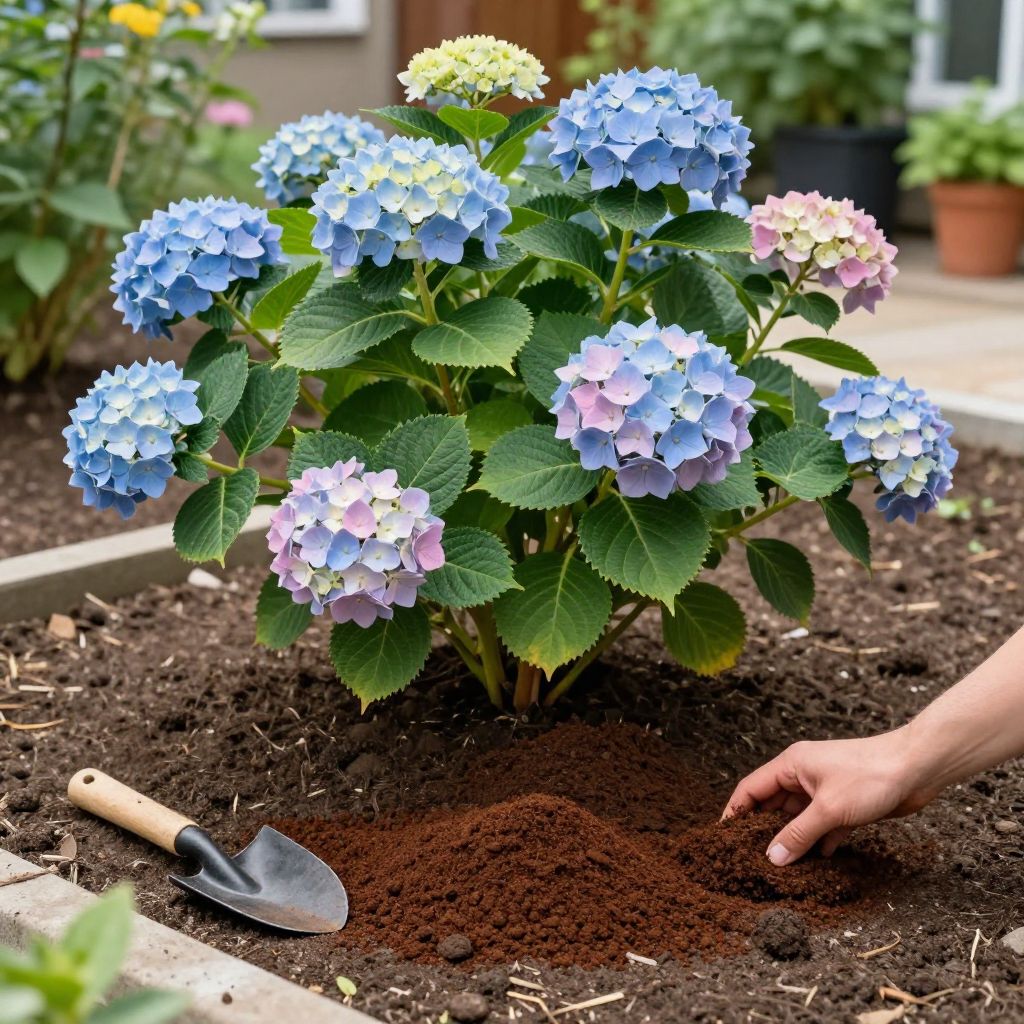
Are coffee grounds good for hydrangeas? They can be, but only when you use them the right way. Coffee grounds are not a magic fertilizer, and they will not reliably turn every hydrangea blue, but they can help improve soil structure and add a small amount of organic matter.
The key is moderation. Used incorrectly, coffee grounds can compact, mold, or upset the balance of your soil, especially around young plants or in heavy clay. Used properly, they can be a useful part of a broader hydrangea care routine.
Are Coffee Grounds Good For Hydrangeas?
Yes, coffee grounds can be helpful for hydrangeas when added sparingly and mixed into compost or soil, not piled on top. They contribute organic matter and may slightly acidify soil over time, but they are not a strong fertilizer and should not be relied on to change flower color or replace regular care.
What Coffee Grounds Actually Do in the Garden
Used coffee grounds are a mild organic amendment, not a complete plant food. They contain small amounts of nitrogen and other nutrients, but the real benefit for hydrangeas is usually the way they support soil health when composted or blended into garden beds.
Potential benefits for hydrangeas
- Add organic matter to improve soil texture over time.
- Support beneficial soil life when used in compost.
- May help slightly acidify soil, depending on how they are applied and what your soil is already like.
- Can be a useful way to recycle a small household waste stream.
What coffee grounds do not do
- They do not instantly make hydrangeas blue.
- They do not replace balanced fertilizer.
- They do not fix poor drainage.
- They are not helpful in large thick layers on the soil surface.
Will Coffee Grounds Change Hydrangea Flower Color?
Sometimes, but not reliably. Hydrangea flower color is influenced mainly by the plant type and the soil chemistry, especially pH and aluminum availability. Coffee grounds may nudge soil in a more acidic direction over time, but they are not a dependable color-changing shortcut.
Why color changes are complicated
Bigleaf hydrangeas, especially Hydrangea macrophylla, are the ones gardeners usually think of when discussing blue or pink flowers. Even then, color depends on the cultivar and the soil, so one garden may respond differently from another.
- Blue flowers are more likely in acidic soil with available aluminum.
- Pink flowers are more common in less acidic or more alkaline soil.
- White hydrangeas usually do not change color much based on soil pH.
If you want to influence color, test your soil first. Without knowing your pH, adding coffee grounds is guesswork.
How to Use Coffee Grounds Around Hydrangeas
The safest approach is to use coffee grounds as a minor soil amendment, not as a mulch layer. A thin, well-mixed application is far better than a thick blanket that can shed water or form a crust.
Best ways to apply them
- Compost them first whenever possible. This is the simplest and safest method.
- Mix a small amount into finished compost before spreading it around the plant.
- Work a light layer into the top inch or two of soil if the bed is already healthy and well-drained.
- Water afterward so the grounds do not sit dry and clumpy on the surface.
How much is enough?
Use coffee grounds lightly. A thin sprinkling mixed into compost or soil is usually enough for home garden use. If you can still clearly see a thick layer of grounds, you are probably using too much.
As a rule of thumb, think in terms of small additions over time, not big one-time applications. Hydrangeas respond better to steady soil improvement than to sudden changes.
When Coffee Grounds Can Cause Problems
Coffee grounds are not always beneficial. In the wrong conditions, they can create more trouble than they solve, especially in beds that already stay wet or compacted.
Common mistakes to avoid
- Applying a thick layer directly around the base of the plant.
- Using grounds on already soggy soil, where they can stay wet too long.
- Expecting grounds alone to correct poor drainage or nutrient deficiencies.
- Using fresh grounds heavily in containers without mixing them into a balanced potting mix or compost.
Signs you may have overdone it
- The soil surface forms a crust.
- Water runs off instead of soaking in.
- The bed smells sour or stays overly damp.
- New growth looks weak even though you are “feeding” the plant.
If you see these signs, gently remove excess grounds from the surface and loosen the topsoil. Then switch to compost or leaf mold instead of more coffee grounds.
Hydrangea Soil Needs: What Matters More Than Coffee Grounds
Healthy hydrangeas depend more on the right soil structure, moisture balance, and light than on any single amendment. Coffee grounds can support those conditions, but they cannot replace them.
Soil and drainage
Hydrangeas generally do best in soil that holds moisture but still drains well. Heavy clay can suffocate roots, while very sandy soil may dry too quickly. If your soil is poor, focus first on adding compost and improving structure.
Watering
Hydrangeas like consistent moisture, especially during hot weather and while establishing. Water deeply when the top layer of soil begins to dry, but avoid keeping the root zone waterlogged.
Sunlight
Most hydrangeas bloom best with morning sun and afternoon shade, though some types tolerate more sun in cooler climates. Too much shade can reduce flowering, while harsh afternoon sun can stress the plant and increase water demand.
How to Use Coffee Grounds in Containers
Potted hydrangeas need extra caution because containers dry out and compact more quickly than garden beds. Coffee grounds can be used, but only in very small amounts and preferably after composting.
Container tips
- Use a high-quality potting mix with good drainage holes.
- Mix in a small amount of finished compost rather than raw grounds.
- Do not let grounds form a crust on top of the potting mix.
- Check moisture often, since containers can swing from too wet to too dry quickly.
If your potted hydrangea is struggling, the issue is more likely drainage, root crowding, or inconsistent watering than a lack of coffee grounds.
Better Alternatives If You Want Healthier Hydrangeas
If your goal is stronger growth and better blooms, several amendments are usually more useful than coffee grounds alone. These options improve soil more predictably and are easier to manage.
Good options for most hydrangeas
- Finished compost for broad soil improvement.
- Leaf mold to boost moisture retention and soil structure.
- Well-rotted manure, used carefully and only if appropriate for your soil.
- Mulch such as shredded bark or pine fines to conserve moisture and moderate temperature.
Mulch is especially helpful. A 2- to 3-inch layer kept a few inches away from the stems can reduce water stress and help roots stay cooler.
Pruning, Feeding, and General Care Tips
Coffee grounds are only one small part of hydrangea care. The plant will perform better if you match pruning and feeding to the type of hydrangea you are growing.
Pruning basics
Pruning depends on whether your hydrangea blooms on old wood, new wood, or both. If you are not sure which type you have, avoid heavy pruning until you identify it, because removing the wrong stems can reduce flowering.
Feeding basics
Use a balanced, slow-release fertilizer if your soil test or plant growth suggests a need. Overfertilizing can lead to lush leaves but fewer flowers. Coffee grounds should never be treated as a full fertilizer program.
Pest and disease awareness
- Watch for powdery mildew in crowded, shaded, or poorly ventilated spots.
- Check for leaf spots, especially in wet weather.
- Look for aphids or other soft-bodied pests on tender growth.
Healthy spacing, good airflow, and even moisture usually do more for disease prevention than any soil amendment.
Simple Step-by-Step: Using Coffee Grounds Safely
- Collect used coffee grounds and let them dry briefly so they do not clump.
- Mix them into compost, or blend a small amount into existing garden compost.
- Spread the finished compost around the hydrangea root zone.
- Keep the material away from the main stems.
- Water lightly if the soil is dry.
- Watch the plant for a few weeks before adding more.
This slow approach is safer than trying to “correct” the soil all at once.
Frequently Asked Practical Questions
Can I put coffee grounds directly on hydrangeas?
You can, but it is usually better not to. Direct application in a thick layer can compact and repel water. Composting them first is the safer choice.
Do coffee grounds make hydrangeas bloom more?
Not by themselves. Better blooms usually come from the right light, consistent moisture, suitable soil, and proper pruning for the type of hydrangea.
Are coffee grounds good for all hydrangeas?
They can be used around most hydrangeas in moderation, but the response will vary with soil type, climate, and the plant’s overall health. They are a supplement, not a solution.
Conclusion: Use Coffee Grounds as a Small Helper, Not the Main Strategy
So, are coffee grounds good for hydrangeas? Yes, if you use them lightly, preferably composted, and as part of a broader soil-care routine. Focus first on drainage, moisture, light, and the right pruning approach for your hydrangea type.
If you want to improve your plant today, add a thin layer of finished compost or mulch, then test your soil before making bigger changes. For more practical hydrangea care, you may also want to read about how to grow hydrangeas in the garden and how to adjust soil pH for flowering shrubs.