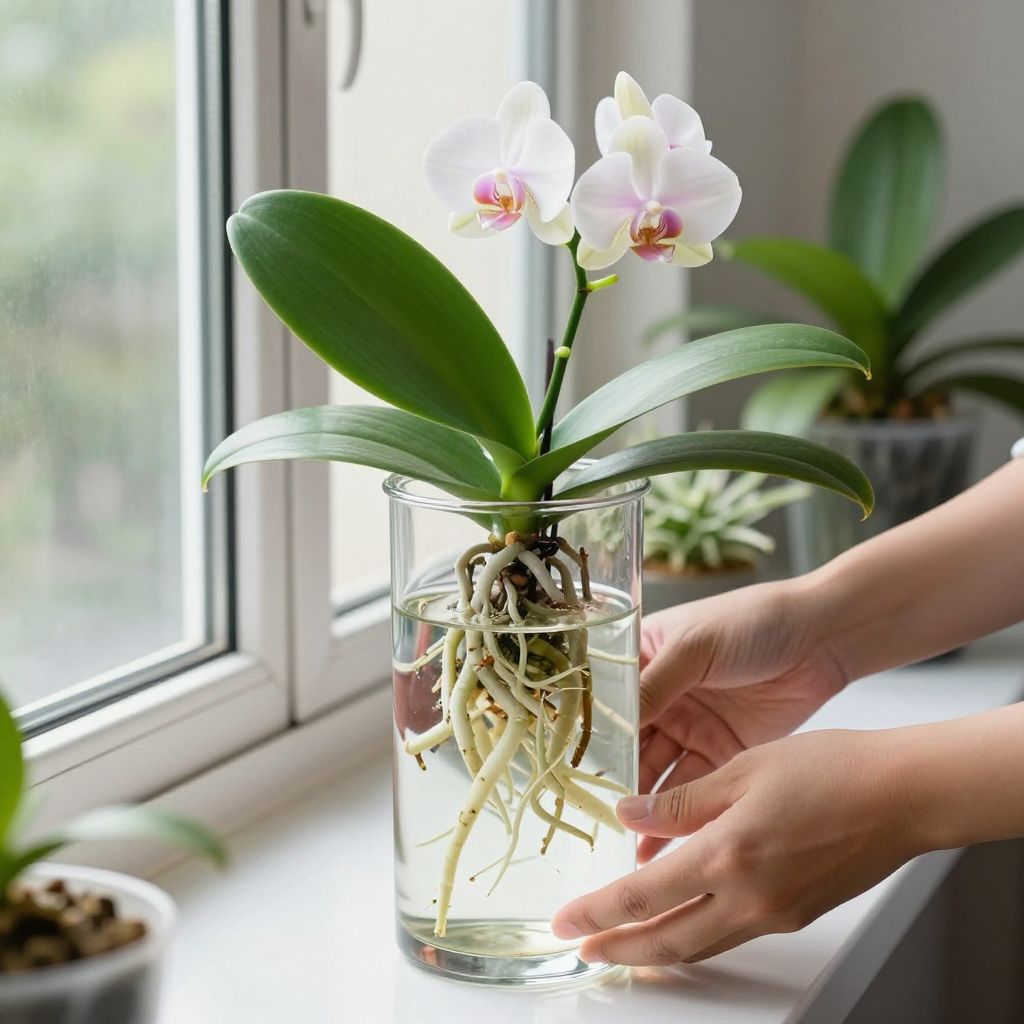
Can you grow orchids in water? Yes, some orchids can survive and even grow in water culture, but it is not the easiest or most reliable method for most home gardeners. Orchids are epiphytes in nature, so they like plenty of air around their roots, not constant sogginess.
If you want to try water growing, the key is to keep the roots hydrated without drowning them. The method works best for healthy orchids with strong roots, careful monitoring, and a willingness to adjust if the plant shows stress.
Can you grow orchids in water?
Yes, orchids can be grown in water using semi-hydroponic or full water culture methods, but success depends on the orchid type, root health, and your care routine. Most orchids do better in a breathable potting mix, while water culture works best as a controlled experiment for rescuing or acclimating a plant.
How orchids grow in nature
Most popular orchids, especially Phalaenopsis, are epiphytes. In the wild, they anchor to trees, where roots dry quickly after rain and get lots of air circulation.
That is why orchids often struggle in ordinary water. Their roots need moisture, but they also need oxygen. If roots stay submerged too long, they can rot.
Why water culture is different from potting mix
- Potting mix gives roots air pockets and drains quickly.
- Water culture replaces mix with a carefully managed water system.
- Too much water can cause root loss, leaf decline, and fungal problems.
- Too little water can dehydrate roots and stall growth.
Which orchids are most likely to adapt?
Some orchids adjust better than others. The easiest candidates are often mature, healthy plants with firm roots, especially common houseplant orchids like Phalaenopsis.
Orchids with delicate or highly specialized root systems may be less forgiving. If you are unsure, start with a plant that is already strong rather than trying to convert a stressed orchid.
Good candidates for water growing
- Phalaenopsis orchids with healthy, plump roots
- Plants recovering from root damage after overwatering
- Orchids that have been repotted recently and are stable
Less suitable candidates
- Orchids with very few roots left
- Plants already showing severe leaf wrinkling or crown rot
- Orchids that need a very dry rest period
How to grow orchids in water step by step
If you want to try water culture, begin with a clean plant and a clean container. The goal is to hydrate the roots while preventing rot and stagnation.
- Remove the orchid from its pot and gently wash away all bark, moss, or old mix from the roots.
- Inspect the roots. Healthy roots are firm and green, silver, or white depending on moisture. Trim away mushy, hollow, or black roots with sterilized scissors.
- Choose a clear container with enough room for the roots to spread. Glass or plastic works, as long as it is easy to clean.
- Add water carefully. In full water culture, roots may be soaked for part of the day and then drained. In semi-hydroponics, the water level stays below the crown and only part of the root zone stays moist.
- Keep the crown dry. Water trapped in the crown can cause rot, especially in Phalaenopsis.
- Refresh the water regularly and rinse the container to reduce algae and bacterial buildup.
Two common water-growing approaches
- Full water culture: roots are soaked, then drained and allowed to dry partially before the next soak.
- Semi-hydroponic culture: the orchid grows in an inert medium, such as LECA, with a small reservoir of water at the bottom.
Semi-hydroponics is often easier for beginners because it gives roots more consistent moisture while still leaving air space. Full water culture can work, but it usually needs closer attention.
Best light, temperature, and humidity for water-grown orchids
Water culture does not change the orchid’s basic needs. You still need to provide bright, indirect light, moderate warmth, and good humidity with air movement.
Light
Most indoor orchids do best near an east- or south-facing window with filtered light. Avoid harsh midday sun, which can overheat the leaves and water-filled container.
Temperature
Typical indoor temperatures are fine for many orchids, especially Phalaenopsis. Avoid cold drafts, heating vents, and sudden temperature swings.
Humidity and airflow
Orchids like humidity, but stagnant air invites disease. A small fan on low speed or a naturally airy room helps keep roots and leaves healthier.
Water quality matters more than many gardeners realize
Orchid roots are sensitive to mineral buildup and poor water quality. If your tap water is very hard, heavily chlorinated, or leaves crusty deposits, the plant may struggle over time.
Rainwater, distilled water, or filtered water is often gentler for water-grown orchids. If you use tap water, flush the container regularly to reduce salt buildup.
Signs the water is causing trouble
- White crust on the container or roots
- Brown root tips after a period of healthy growth
- Declining leaves despite adequate light
- Algae growth inside a clear container
How to feed orchids grown in water
Orchids in water still need nutrients, because water alone does not supply enough minerals for long-term growth. Use a fertilizer made for orchids or a balanced houseplant fertilizer at a reduced strength, following the label carefully.
Because roots are directly exposed, overfertilizing is easier in water than in bark mix. It is usually safer to feed lightly and rinse the container periodically than to apply strong fertilizer solutions.
Practical feeding tips
- Feed only when the plant is actively growing and looks stable.
- Use a diluted solution rather than a heavy dose.
- Rinse the roots and container occasionally to prevent salt buildup.
- Pause feeding if roots look burned, shriveled, or brown at the tips.
Common problems when growing orchids in water
Most failures come from keeping roots too wet, not cleaning the container, or moving the plant too quickly from bark to water. Watch the plant closely during the first few weeks.
Root rot
Soft, brown, or foul-smelling roots usually mean the plant is staying wet too long. Remove damaged roots, improve drainage or drying time, and reduce the amount of water the roots sit in.
Algae and slime
Clear containers let you see the roots, but they also let light reach the water. That can encourage algae. Clean the container often and keep water fresh.
Yellowing leaves
A yellow lower leaf can be normal aging, but several yellowing leaves may signal root loss, poor light, or stress from conversion to water culture.
Wrinkled leaves
Wrinkling usually means the roots are not taking up enough water. Check for dead roots, too much drying time, or a container setup that is not keeping the root zone evenly hydrated.
When to prune and inspect your orchid
Pruning is limited, but it is important to remove dead or diseased tissue. Use sterilized scissors or pruners so you do not spread infection.
- Trim only dead, mushy, or hollow roots.
- Remove spent flower spikes if they are dry and brown.
- Leave healthy green spikes alone if the plant is still blooming or producing side growth.
Do not cut healthy roots just because they look different after moving into water. Orchid roots can be green when wet and silver when dry, which is normal.
Should you switch an orchid from bark to water?
You can, but the transition is the hardest part. Orchids often lose some roots while adapting, so it is best to make the change only if the plant is otherwise healthy and you are prepared to monitor it closely.
If your orchid is already stressed, it may be safer to repot it into fresh orchid bark or sphagnum moss first. That gives it a chance to recover before you experiment with water culture.
Good reasons to try water culture
- You want a cleaner, more visible root system
- The orchid has suffered from old, broken-down potting mix
- You enjoy close monitoring and frequent care
Good reasons to stay with bark
- You prefer a lower-maintenance method
- Your home is dry and you cannot monitor water levels often
- The orchid is already weak or recovering slowly
Is water growing better than traditional orchid mix?
Not usually. For most home gardeners, a well-draining orchid mix is more forgiving and easier to manage. Water culture can work, but it demands more attention to root health, cleanliness, and water quality.
If your main goal is a healthy blooming orchid, the safest path is often a breathable pot with orchid bark and regular but careful watering. If your goal is experimentation, water culture can be worth trying on one plant first.
Conclusion: start small and watch the roots
Can you grow orchids in water? Yes, but success depends on choosing the right plant, keeping the crown dry, and balancing moisture with air. Start with one healthy orchid, use clean water and a clean container, and check the roots often for early signs of stress.
If you want to keep learning, compare water culture with traditional orchid care so you can choose the method that best fits your home, light levels, and time for maintenance.