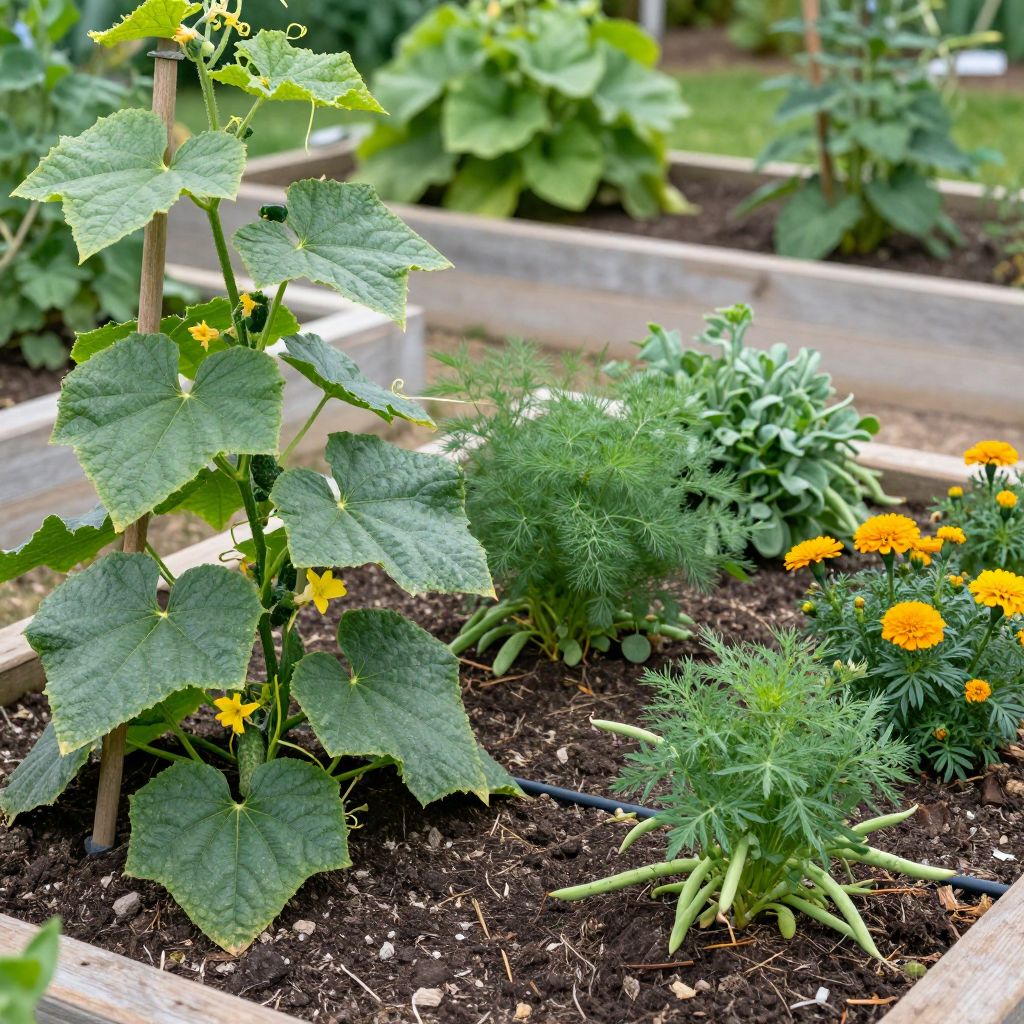
What can you plant with cucumbers? The best companions are crops that share similar sun, water, and soil needs without crowding the vines. Good choices can help you use space efficiently, attract beneficial insects, and reduce pest pressure.
Not every plant is a good neighbor, though. Cucumbers grow fast, spread wide, and need consistent moisture, so the right companions are those that won’t compete too heavily for light, nutrients, or root space.
What can you plant with cucumbers?
Plant cucumbers with crops that like warm weather, regular watering, and full sun, such as beans, peas, lettuce, radishes, dill, nasturtiums, and marigolds. These companions can fit between vines, mature quickly, or help with pest management. Avoid planting them too close to potatoes, aromatic herbs that spread aggressively, or anything that will shade cucumbers heavily.
Best companion plants for cucumbers
1. Beans and peas
Beans and peas are classic companions because they can fit into the same garden bed without taking over the cucumber root zone. Bush beans are usually easier than pole beans, which may compete for trellis space.
- Bush beans work well along bed edges.
- Peas are useful in cooler weather before cucumber vines take off.
- Both can help you use space efficiently in a small garden.
Keep in mind that peas prefer cooler conditions, so they are often a spring companion rather than a summer partner in hot climates.
2. Lettuce and other quick greens
Lettuce, spinach, and similar leafy greens are good early companions because they mature before cucumber vines fully sprawl. They can also benefit from a little afternoon shade once summer heat arrives.
- Plant greens on the sunny side of the bed if cucumbers are trellised.
- Harvest them early so they do not get shaded out.
- Use them as a short-term filler crop between cucumber plants.
This pairing works especially well in raised beds where vertical cucumber growth leaves room below.
3. Radishes
Radishes are one of the easiest plants to tuck near cucumbers because they grow quickly and are harvested before vines become crowded. They also help you make use of bare soil while cucumbers are still young.
Because radishes mature fast, they are a practical choice for succession planting around cucumber rows.
4. Dill
Dill is a popular cucumber companion because it can attract beneficial insects such as hoverflies and parasitic wasps, which may help keep pest populations in check. It also fits well in a mixed vegetable bed if you manage its size.
- Plant dill where it will not shade young cucumber seedlings.
- Allow some plants to flower if you want pollinator support.
- Thin crowded dill so it does not become lanky and weak.
Be careful not to let dill dominate the bed; a few well-placed plants are usually enough.
5. Nasturtiums
Nasturtiums can be useful around cucumbers as a low-growing companion and trap crop for aphids in some gardens. Their flowers also attract pollinators, which matters because cucumbers need good pollination for fruit set.
Use them at the bed edge or near trellised cucumbers so they do not compete for space.
6. Marigolds
Marigolds are often planted near cucumbers because they add color and may help confuse some pests. While they are not a cure-all, they are a tidy companion that fits well in vegetable borders.
- Choose compact varieties for small beds.
- Plant them where they receive full sun.
- Keep them from crowding cucumber stems.
7. Corn and sunflowers, with caution
Tall plants like corn and sunflowers can sometimes be used as living supports or windbreaks, but they are not ideal in every garden. They can shade cucumbers too much and compete for water if planted too close.
If you try this combination, place cucumbers on the south side in the Northern Hemisphere so they still get enough light.
Plants to avoid near cucumbers
Some plants create more problems than benefits. The biggest issues are shade, root competition, and shared pest or disease pressure.
- Potatoes can increase disease risk and compete heavily underground.
- Strongly spreading herbs may crowd cucumber roots and reduce airflow.
- Large, dense crops can shade cucumbers and reduce flowering.
- Plants with very different water needs can make bed care harder.
If you are unsure, ask whether the companion has similar light and moisture needs and whether it will stay compact enough for the season.
How to plan a cucumber companion planting bed
Use vertical space
Trellised cucumbers are much easier to companion plant than sprawling ones. A trellis lifts vines off the soil, improves airflow, and leaves room for shorter crops underneath or beside them.
For most home gardens, a simple A-frame, cattle panel, or sturdy netting trellis works well.
Leave enough room
Cucumbers need space for roots, leaves, and harvesting access. Crowding them too closely with companions can lead to mildew, poor fruit set, and hidden pests.
- Keep companions at the bed edge or between young cucumber plants only if they are small and quick-maturing.
- Do not let companion plants block airflow around the base.
- Thin extra seedlings early rather than waiting for the bed to fill in.
Match water needs
Cucumbers produce best with even moisture, especially once flowering and fruiting begin. Choose companions that tolerate regular watering rather than plants that prefer dry soil.
Mulch helps both cucumbers and nearby companions by holding moisture and reducing weed pressure.
Soil, sun, and spacing for healthy cucumber companions
Cucumbers and most of their best companions do well in full sun and fertile, well-drained soil. A bed with plenty of organic matter supports steady growth without waterlogging the roots.
Soil preparation
- Work in compost before planting to improve structure and moisture retention.
- Make sure the bed drains well after rain or watering.
- Avoid overly rich soil that produces lots of leaves but fewer flowers.
Sunlight
Cucumbers need strong light, and companion plants should not steal it. In hot regions, a little afternoon shade for low greens can be helpful, but cucumbers themselves still need several hours of direct sun.
Spacing tips
Spacing depends on the cucumber type, whether you are growing vertically, and how vigorous your companions are. As a rule, keep the strongest companions farther from the main cucumber stems and use smaller plants as fillers.
How to plant cucumbers with companions step by step
- Choose the main cucumber layout first. Decide whether you are growing on the ground or on a trellis.
- Prepare the bed. Add compost and loosen the soil so roots can spread easily.
- Install support early. Put trellises in place before vines grow, not after.
- Plant cucumbers and companions by size. Put larger or longer-lived plants at the edges and quick crops in open gaps.
- Mulch lightly. Leave a little space around stems to reduce rot.
- Water deeply. Keep moisture even, especially while seedlings are establishing.
- Thin and prune as needed. Remove crowded seedlings and damaged leaves to improve airflow.
Common mistakes when planting with cucumbers
- Overcrowding the bed. This is the most common mistake and often leads to disease.
- Choosing tall companions in the wrong place. Shade can reduce flowering and fruiting.
- Letting vines sprawl through everything. It becomes hard to water, weed, or harvest.
- Ignoring airflow. Damp, crowded foliage invites powdery mildew and other fungal problems.
- Mixing plants with very different water needs. One crop will usually suffer.
Pests and diseases to watch for
Companion planting can help a little, but it does not replace good garden hygiene. Cucumbers are still vulnerable to pests and foliar diseases, especially in warm, humid weather.
Common pest issues
- Aphids on tender growth
- Cucumber beetles on leaves and flowers
- Spider mites in hot, dry conditions
Check leaf undersides regularly. Early detection is much easier than trying to save a heavily infested plant later.
Common disease issues
- Powdery mildew
- Downy mildew
- Root rot in poorly drained soil
To reduce disease pressure, water at the soil line, avoid wetting leaves late in the day, and keep the canopy open with sensible spacing.
Best companion choices by garden style
For small raised beds
Choose compact companions such as radishes, lettuce, marigolds, and a few dill plants. Trellis the cucumbers so the bed stays usable.
For in-ground rows
Bush beans, nasturtiums, and quick greens work well along the edges. Leave enough room to walk and harvest without crushing vines.
For containers
Container cucumbers are best paired with very small companions or none at all, because the root space is limited. If you do companion plant in a pot, keep it simple and avoid crowding.
Harvesting and maintenance tips
Once cucumbers begin producing, harvest often. Regular picking encourages more fruit and prevents oversized cucumbers from weighing down the vine.
- Check plants every one to two days during peak harvest.
- Remove yellowing leaves near the base to improve airflow.
- Keep weeds out so companion plants do not have to compete for moisture and nutrients.
If a companion plant starts to dominate the space, remove it rather than letting it compromise the cucumber crop.
Conclusion
If you are wondering what can you plant with cucumbers, start with simple, compatible companions like beans, lettuce, radishes, dill, nasturtiums, and marigolds. The key is not just choosing the right plants, but placing them so cucumbers still get sun, airflow, and steady moisture. Plan your bed around the cucumber vines first, then add companions that stay compact and useful.
For more practical vegetable-growing help, you may also want to read about how to trellis cucumbers for better airflow and harvests and the best vegetables to grow in a raised bed.