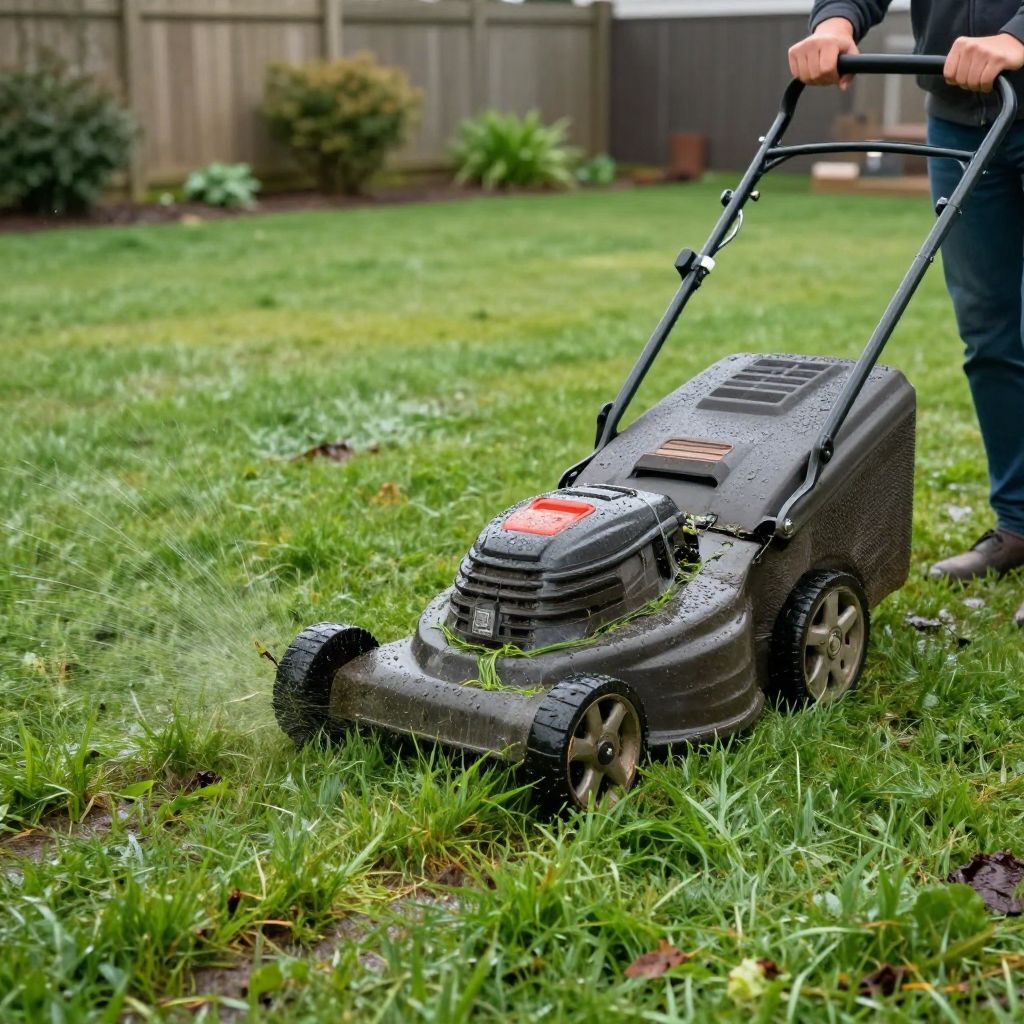
Cutting grass when wet is one of the most common lawn-care questions, especially after rain or heavy dew. The short answer is that you can mow in some damp conditions, but it is usually better to wait until the grass dries enough for a clean cut.
Wet mowing can damage turf, clog your mower, and leave the lawn looking uneven. If you have to mow anyway, the goal is to reduce stress on the grass, protect your equipment, and avoid creating ruts, disease spread, or a messy finish.
Can you cut grass when wet?
Yes, but only when the lawn is merely damp and the soil is firm enough to support you and the mower. If the grass is dripping, the ground squishes underfoot, or the mower leaves tracks, wait. Wet mowing is more likely to tear blades, clog the deck, and compact soil, especially on clay or soft ground.
Why wet grass is harder to mow
Grass blades bend and cling together when wet, so the mower blade often pushes them over instead of cutting cleanly. This can leave an uneven finish, missed tufts, and shredded tips that turn brown.
Wet soil is another problem. A mower rolling over soft ground can compact the root zone, reduce air movement in the soil, and leave visible ruts. On slopes, wet mowing also increases the risk of slipping.
Common problems caused by mowing wet grass
- Clumping: wet clippings stick under the deck and drop in piles on the lawn.
- Uneven cutting: blades bend, so the mower misses patches.
- Rutting: wheels sink into soft soil and leave tracks.
- Disease spread: wet conditions can help move fungal spores from one area to another.
- Safety issues: slippery grass and unstable footing make mowing riskier.
When is it okay to mow wet grass?
It is usually safest to mow only after the surface moisture has dried and the soil is no longer sticky. Morning dew often disappears by late morning or midday, depending on sun, wind, and humidity. If you can walk across the lawn without muddy footprints or squashing the turf flat, conditions are better.
Light dew is different from soaked grass after rain. A slightly damp lawn may be manageable, but a saturated lawn is best left alone until it dries.
A quick test before you mow
- Walk across the lawn and look for footprints or water shining on the blades.
- Lift a handful of grass. If it clumps together and drips, wait.
- Check the soil near the surface. If it feels soft or sticky, the mower may rut it.
- Try a small test pass in an out-of-the-way area before mowing the whole lawn.
How to mow wet grass more safely
If you cannot wait and the lawn only needs a light trim, take extra care. The aim is to reduce strain on the mower and avoid tearing the turf.
Best practices for cutting grass when wet
- Use a sharp blade. A dull blade tears wet grass more badly than a sharp one.
- Raise the cutting height. Taking off less grass reduces clogging and stress.
- Mow slowly. A slower pace helps the blade cut instead of pushing the grass over.
- Clear the deck often. Stop and remove wet buildup if clippings start to collect.
- Use a side discharge if appropriate. Bagging wet grass can clog more quickly, though mulching wet grass is often difficult too.
- Avoid tight turns. Wet turf is easier to tear, especially when turning the mower sharply.
What to avoid
- Do not mow when the ground is saturated or muddy.
- Do not scalp the lawn to “catch up” after rain.
- Do not force a clogged mower to keep running without clearing it.
- Do not mow steep slopes if footing feels unstable.
How mower type affects wet mowing
Different mowers handle damp grass differently. The best choice depends on your lawn size, grass type, and how wet the turf is.
Rotary mowers
Most home lawns are cut with rotary mowers. They can handle light moisture, but they are more likely to leave clumps in wet conditions. A sharp, balanced blade makes a big difference.
Reel mowers
Reel mowers can give a very clean cut on fine turf, but wet grass may still bend before the blades catch it. They work best when the grass is only slightly damp and kept at a regular height.
Ride-on mowers
Ride-on mowers can compact soft soil more easily because they are heavier. If the lawn is wet, watch for wheel tracks and avoid mowing until the soil firms up.
How to reduce lawn damage after rain
If you must mow after wet weather, your lawn will recover better when you minimize stress before and after cutting. A few simple habits help protect the turf.
Before mowing
- Remove sticks, stones, and debris that may be hidden in the grass.
- Empty the bag or collection system so it does not overload with wet clippings.
- Check the mower blade for sharpness and balance.
- Choose a day with some breeze or sunlight if possible.
After mowing
- Rake or blow off clumps of clippings so they do not smother the grass.
- Let the lawn dry before walking on it heavily.
- Watch for brown, shredded tips; these often improve as the grass grows out.
- If tracks formed, avoid repeated traffic in the same areas until the soil firms up.
Does wet mowing spread lawn disease?
It can. Many turf diseases are favored by prolonged leaf wetness, poor airflow, and stressed grass. Mowing wet grass does not automatically cause disease, but it can move infected clippings and bruised tissue around the lawn.
If your lawn already has fungal spots, patchy browning, or slimy growth, avoid mowing until conditions improve. Clean the mower deck and blade afterward so you do not carry problems from one area to another.
Signs your lawn should not be mowed yet
- Water is still sitting on the blades of grass.
- The soil feels spongy or muddy underfoot.
- The mower leaves deep wheel marks.
- Grass is laying flat from rain and not springing back.
- You see active disease symptoms, such as spots, patches, or moldy growth.
How to handle clippings from wet grass
Wet clippings are heavier and stickier than dry ones. They can smother the lawn if left in thick piles, but you do not always need to bag them if the layer is light and evenly spread.
If clumps are visible after mowing, break them up with a rake or leaf blower. Thick piles should be removed, especially on short turf or newly established lawns.
Bagging vs mulching wet clippings
- Bagging: useful if the grass is long or very wet, but the mower may clog faster.
- Mulching: works best when the grass is only slightly damp and cut regularly.
- Leaving clippings: fine only when they are thinly scattered and not forming mats.
Special care for new lawns and stressed turf
Newly seeded, recently sodded, or drought-stressed lawns are more vulnerable to damage from wet mowing. Their roots are less established, so wheel pressure and tearing can do more harm.
If the lawn is young, wait longer than you would for a mature lawn. When you do mow, use a higher setting and remove only the top portion of the grass. Avoid repeated passes over the same area.
Practical mowing tips for different conditions
After light dew
Light dew usually dries fairly quickly. If the lawn is otherwise healthy and the soil is firm, mowing later in the day is often the easiest solution.
After steady rain
Wait until both the grass and the top layer of soil have dried. If you can squeeze water from the turf or see standing water in low spots, do not mow yet.
In humid weather
Humidity can keep grass damp for much longer, even without rain. In these conditions, mow when the sun and airflow have had time to dry the lawn, and avoid cutting late in the day if the grass will stay wet overnight.
On heavy clay soil
Clay soils compact and rut more easily when wet. Be especially cautious and wait longer before mowing than you would on sandy or loamy soil.
Simple decision guide
- Mow now if the grass is only lightly damp, the soil is firm, and the mower can cut cleanly.
- Wait a few hours if the blades are wet but the lawn is likely to dry soon.
- Postpone mowing if the lawn is dripping, muddy, or showing signs of disease or soft ground.
Conclusion: the safest approach
Cutting grass when wet is possible, but it is rarely the best choice unless the lawn is only slightly damp and the soil is firm. For the healthiest lawn, wait for dry conditions whenever you can, mow with a sharp blade, and take off only a little growth at a time.
If you want to improve your mowing routine further, it can help to read more about lawn mowing height and blade care and how to keep a healthy lawn in wet weather.