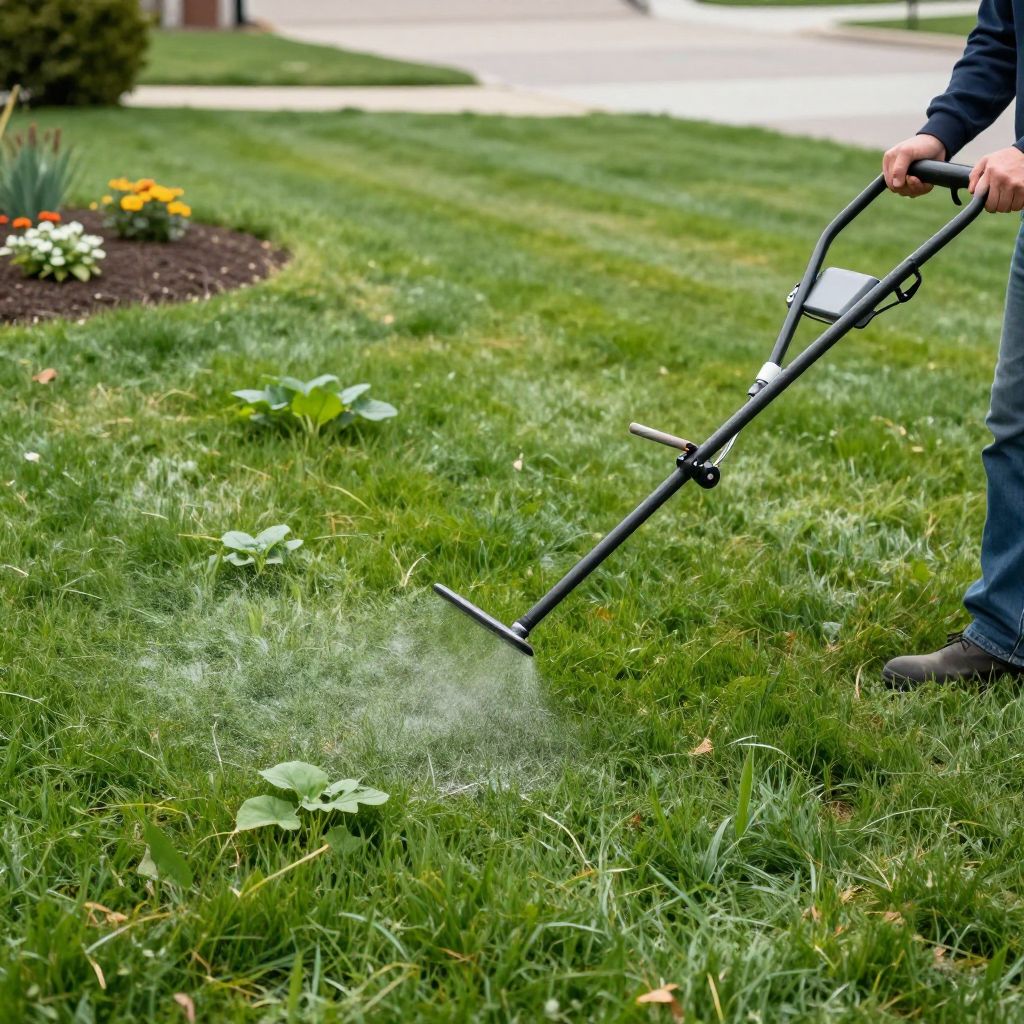
Wondering when to apply Scotts Weed and Feed so it actually works? Timing matters because this product only performs well when weeds are actively growing and your lawn is in the right condition. Apply it at the wrong time, and you may waste the treatment or stress the grass.
The best application window depends on your grass type, season, and local weather. A little planning helps you target weeds effectively while protecting your lawn from heat, drought, or frost stress.
When to apply Scotts Weed and Feed?
Apply Scotts Weed and Feed when your lawn is actively growing, weeds are small and actively growing, and temperatures are mild. For many lawns, that means spring or fall, not during heat waves, drought, or when grass is dormant. Always follow the product label and local lawn conditions.
How Scotts Weed and Feed works
Scotts Weed and Feed combines a lawn fertilizer with a broadleaf weed killer. It is designed for turfgrass lawns, not garden beds, and it works best on common broadleaf weeds such as dandelion, clover, and plantain when they are young and growing.
The fertilizer portion encourages grass growth, while the weed-control portion is absorbed through the leaves of susceptible weeds. That is why timing, moisture, and proper mowing matter so much.
Why timing matters
- Weeds must be actively growing for the herbicide to move through the plant.
- Grass should also be actively growing so it can recover and fill in thin areas.
- Extreme heat, drought, or cold can reduce effectiveness and increase lawn stress.
Best seasonal timing for most lawns
In many regions, the best time to apply Scotts Weed and Feed is in spring or fall, depending on your grass type and weed pressure. Cool-season lawns often respond best in spring and early fall, while warm-season lawns usually do better in late spring through early summer once they are fully green and growing.
Cool-season grasses
Examples include Kentucky bluegrass, perennial ryegrass, and tall fescue. These grasses usually grow most strongly in spring and fall, so those seasons are often the safest and most effective times to treat weeds.
- Apply in spring after the lawn has greened up and is actively growing.
- Fall can be especially useful for weeds that survive summer and return in cooler weather.
- Avoid applications during summer heat or drought stress if possible.
Warm-season grasses
Examples include bermudagrass, zoysiagrass, St. Augustinegrass, and centipedegrass. These lawns usually respond best after full spring green-up, when the grass is actively growing and daytime temperatures are warm but not extreme.
- Wait until the lawn has fully emerged from dormancy.
- Apply when weeds are young and visible.
- Avoid treating during peak summer heat or when the lawn is stressed by drought.
Weather and lawn conditions to check first
Before you apply, look at the forecast and your lawn’s condition. A healthy, actively growing lawn gives you better results and less risk of injury to turf.
Good conditions for application
- Temperatures are moderate, not hot or freezing.
- The lawn is dry enough to walk on, but weeds are not drought-stressed.
- No heavy rain is expected immediately after application.
- The grass is actively growing and has been mowed recently enough for good coverage.
Conditions to avoid
- Heat stress or drought stress
- Frost or near-frost conditions
- Newly seeded lawns, unless the label specifically allows it
- Recently sodded or newly established turf that has not rooted in
- Windy days that may cause uneven spreading
Important: Do not assume all lawns can be treated the same way. Some grass species and some newly seeded lawns are sensitive to weed-and-feed products, so the label matters.
How to apply Scotts Weed and Feed correctly
Good application technique is just as important as timing. Uneven spreading can leave streaks, miss weeds, or burn spots in the lawn.
- Mow the lawn a few days before application if needed, but do not scalp it.
- Check the product label for your grass type and any restrictions.
- Use a spreader calibrated for the product you bought.
- Apply evenly across the lawn, overlapping slightly to avoid missed strips.
- Keep people and pets off the treated area until the label says it is safe.
- Water only if the product label instructs you to, or if your local conditions require it for activation.
Spreader tips
Use a broadcast or rotary spreader for larger lawns and a drop spreader for more precise application near edges. Calibrate the spreader before use so you do not overapply, especially along driveways, sidewalks, and planting beds.
Common mistakes to avoid
Many lawn problems after weed-and-feed treatments come from timing errors, not the product itself. Avoid these common issues to get better results.
- Applying to a stressed lawn during heat, drought, or dormancy.
- Using it on the wrong grass type or on a newly seeded lawn.
- Applying before weeds are actively growing.
- Spreading too heavily in one area and too lightly in another.
- Mowing too soon before or after treatment if the label advises otherwise.
- Expecting it to control mature, tough weeds in one pass.
What to expect after application
Weed control is not instant. Some weeds begin to curl or discolor within days, while others take longer. Fertilizer response also depends on soil fertility, moisture, and temperature.
Typical follow-up care
- Keep the lawn watered according to local weather and grass needs, but do not overwater.
- Wait before mowing if the label recommends it.
- Watch for missed patches or surviving weeds that may need spot treatment later.
- Do not reseed immediately unless the product label allows it and the waiting period has passed.
If weeds remain after treatment, they may be too mature, the timing may have been off, or the weed species may not be controlled by the product. In that case, hand removal or a targeted spot treatment may be more effective than repeating a full-lawn application too soon.
Special situations: new lawns, thin lawns, and problem weeds
Newly seeded lawns
Most weed-and-feed products are not suitable for freshly seeded lawns because the herbicide can interfere with seedling establishment. If you recently seeded, focus on watering, mowing at the right height, and letting the grass fill in before using a weed-control product.
Thin or patchy lawns
Weed and feed can help a thin lawn recover if the grass is actively growing, but it will not fix poor soil, compaction, shade, or drainage problems. If weeds keep returning, improve the lawn conditions first with aeration, overseeding, compost topdressing, or better mowing habits.
Persistent weeds
Some weeds, especially mature perennial weeds, may need repeated control over time. For best results:
- Treat weeds when they are young.
- Improve turf density so weeds have less room to return.
- Use hand pulling or spot treatment for isolated escapes.
How to decide if now is the right time
Use this quick checklist before you apply Scotts Weed and Feed:
- My grass is actively growing.
- Weeds are visible and still young.
- The weather is mild, not extreme.
- The lawn is not drought-stressed or dormant.
- My grass type is listed as compatible on the label.
- I am not treating a newly seeded area.
If you cannot check all of those boxes, wait. In lawn care, a few extra days or weeks often leads to a better result than rushing the application.
Final advice for better lawn results
The best answer to when to apply Scotts Weed and Feed is simple: apply it when your lawn and weeds are both actively growing and the weather is cooperative. For most home lawns, that means spring or fall, but your grass type and local climate should guide the final decision.
Before you spread anything, read the label carefully, confirm your grass type, and choose a calm day with mild conditions. If you want to improve your lawn further, consider reading more about how to mow grass at the right height and how to overseed a thin lawn for stronger, denser turf.