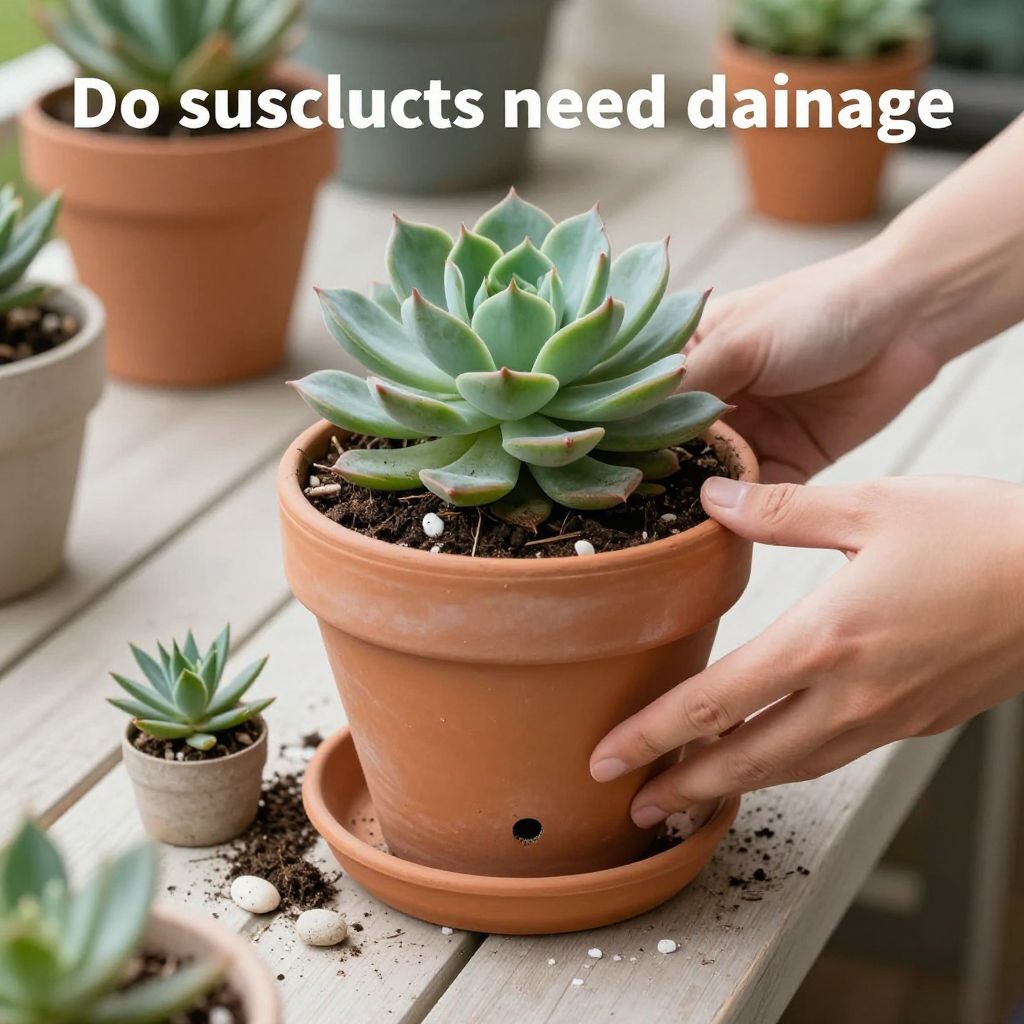
Do succulents need drainage? Yes—most succulents grow best in pots and garden beds where excess water can move away quickly. Their roots are adapted to dry conditions, and standing water around the root zone is one of the fastest ways to cause rot.
That does not mean every succulent must have a hole in the bottom of its container, but it does mean you need a system that prevents soggy soil. The right pot, soil mix, watering method, and light level all work together to keep succulents healthy.
Do succulents need drainage?
In most cases, yes. Succulents need fast-draining soil and a container or planting site that does not hold water for long. Drainage protects the roots from staying wet too long, which can lead to soft leaves, root rot, fungus gnats, and plant decline. Good drainage matters more than frequent watering.
Why drainage matters so much for succulents
Succulents store water in their leaves, stems, or roots, so they are built to handle dry spells better than wet feet. When soil stays saturated, roots cannot get enough oxygen and begin to break down.
Once root rot starts, the plant often shows symptoms above the soil line, such as shriveling, yellowing, or leaves dropping even though the soil is wet. By the time you notice, the damage may already be serious.
Signs your succulent is not getting proper drainage
- Soil stays wet for several days after watering
- Leaves feel mushy, translucent, or blackened
- Lower leaves drop while the plant looks swollen or soft
- The stem becomes brown, soft, or hollow near the base
- You notice a sour smell from the potting mix
What kind of drainage do succulents need?
Succulents need water to move through the pot or soil quickly enough that the root zone dries between waterings. The best setup is a container with a drainage hole and a gritty, airy mix made for cacti and succulents. If planting in the ground, the soil should be loose and well amended for drainage.
Best pot choices
- Terracotta or unglazed clay dries faster than plastic and helps reduce overwatering risk.
- Plastic pots can work if you water carefully and the mix drains well.
- Always prefer a pot with a drainage hole for beginners.
- Use a saucer only to catch runoff, and empty it after watering.
Best soil mix
Standard potting soil usually holds too much moisture for succulents on its own. A good succulent mix should be loose, chunky, and quick to drain.
- Use a commercial cactus/succulent mix, or
- Blend regular potting mix with inorganic drainage materials such as pumice, perlite, or coarse sand
A common starting point is roughly equal parts potting mix and drainage material, but adjust based on your climate and how quickly your pots dry. In humid or low-light conditions, a grittier mix is often safer.
Can succulents grow in pots without drainage holes?
They can, but it is riskier. A pot without a drainage hole traps extra water at the bottom, so you must water very carefully and use a very fast-draining mix. For most gardeners, this is not the easiest or safest option.
If you want to use a decorative pot without a hole, place a nursery pot with drainage inside it. That gives you the look you want while keeping the roots protected.
If you must use a pot without a hole
- Choose a small succulent in a nursery pot that fits inside the decorative container.
- Remove the inner pot after watering so excess water can drain away.
- Never let water collect in the bottom of the outer pot.
- Water sparingly and only when the mix is fully dry.
How to plant succulents for better drainage
Planting correctly matters as much as the pot itself. Even a drainage hole will not save a succulent if the soil is dense and compacted.
- Choose a pot with a drainage hole that is only slightly larger than the root ball.
- Fill the bottom with a well-draining succulent mix.
- Set the plant at the same depth it was growing before.
- Backfill gently and avoid packing the soil tightly.
- Wait a few days before watering if the roots were disturbed or damaged.
Do not add a thick layer of gravel at the bottom of the pot. That old advice does not improve drainage the way many people expect, and it can actually keep water sitting higher in the potting mix.
How often should you water succulents?
There is no universal schedule. Water based on soil dryness, pot size, light, temperature, humidity, and the plant’s growth rate. A succulent in bright light and a porous pot may dry quickly, while one in shade or a large container may stay damp much longer.
A better rule is to water thoroughly, then wait until the mix is completely dry before watering again. In many homes, that may mean every 1 to 3 weeks, but your conditions may be faster or slower.
Simple watering method
- Check the soil with your finger or a wooden skewer.
- If it still feels cool or damp, wait.
- When dry, water until it runs from the drainage hole.
- Empty the saucer after 10 to 15 minutes.
For indoor succulents, less light usually means slower drying and less frequent watering. Outdoors, heat, wind, and sun can dry pots much faster.
Indoor vs. outdoor drainage needs
Indoor succulents often struggle more with drainage because light levels are lower and air movement is limited. That means the soil dries more slowly, so overwatering becomes easier to do.
Outdoor succulents may face heavy rain, poor native soil, or cold, wet winters. In those situations, drainage in the planting site is just as important as in a pot.
Indoor growing tips
- Place succulents near the brightest window you have.
- Use a gritty mix and a pot with a hole.
- Rotate the pot occasionally so growth stays even.
- Do not mist the leaves as a substitute for watering.
Outdoor growing tips
- Plant in raised beds, rock gardens, or mounded soil where possible.
- Avoid low spots where water collects after rain.
- Improve heavy clay soil with coarse mineral amendments and raised planting areas.
- Protect tender succulents from prolonged cold rain if your climate is wet.
Common drainage mistakes to avoid
- Using a pot without a hole and watering like a normal houseplant
- Keeping succulents in dense all-purpose potting soil
- Watering on a fixed schedule instead of checking the soil
- Letting pots sit in water-filled saucers
- Overpotting small plants in containers that stay wet too long
- Placing succulents in low light, where soil dries slowly
How to tell if your succulent is too wet or too dry
Both underwatering and overwatering can cause shriveled leaves, so look at the whole plant and the soil together. A thirsty succulent usually looks firm but slightly wrinkled, while an overwatered one often feels soft, pale, or mushy.
More likely underwatered
- Leaves are wrinkled or thin
- Soil is bone dry and pulls away from the pot
- Plant looks firm but less plump than usual
More likely overwatered
- Leaves are soft, translucent, or falling off easily
- Stem base is brown or mushy
- Soil stays damp for a long time
What to do if your succulent has poor drainage
If you suspect the roots are staying wet too long, act quickly. Early correction can save the plant.
- Stop watering immediately.
- Remove the plant from the pot if the soil is soggy or smells sour.
- Inspect the roots and trim away any black, mushy sections with clean scissors.
- Let the plant and roots air-dry briefly before repotting.
- Repot into a dry, gritty mix in a container with drainage.
If the stem is badly rotted, take healthy leaves or stem sections for propagation as a backup. Some succulents root readily from cuttings, which can help you save part of the plant even if the original is failing.
Drainage and propagation
Cuttings and offsets also need well-draining conditions. Freshly cut material is especially vulnerable to rot, so the rooting medium should be airy rather than wet.
- Allow cut ends to callus before planting, if the species requires it.
- Use a lightly moist, gritty mix rather than wet soil.
- Keep newly potted cuttings in bright, indirect light until roots form.
- Water sparingly until you see new growth.
When a little extra drainage is helpful
Some succulents tolerate slightly more moisture than others, but even those plants still dislike stagnant water. If you garden in a humid climate, have heavy soil, or tend to water generously, prioritize faster drainage and brighter light to balance moisture levels.
In very dry, hot climates, pots may dry extremely fast, so you may need a mix that drains quickly but still holds a little moisture. The goal is not “no water retention,” but a healthy balance between moisture and air around the roots.
Conclusion: the safest rule for succulent care
When you ask, “Do succulents need drainage?” the practical answer is yes—always aim for fast-draining soil and a setup that lets excess water escape. Use a pot with a drainage hole, water only when the mix is dry, and adjust for your light, temperature, and climate.
If you want to keep learning, a good next step is to read more about succulent soil mixes, indoor light levels, and how to repot succulents without damaging the roots.