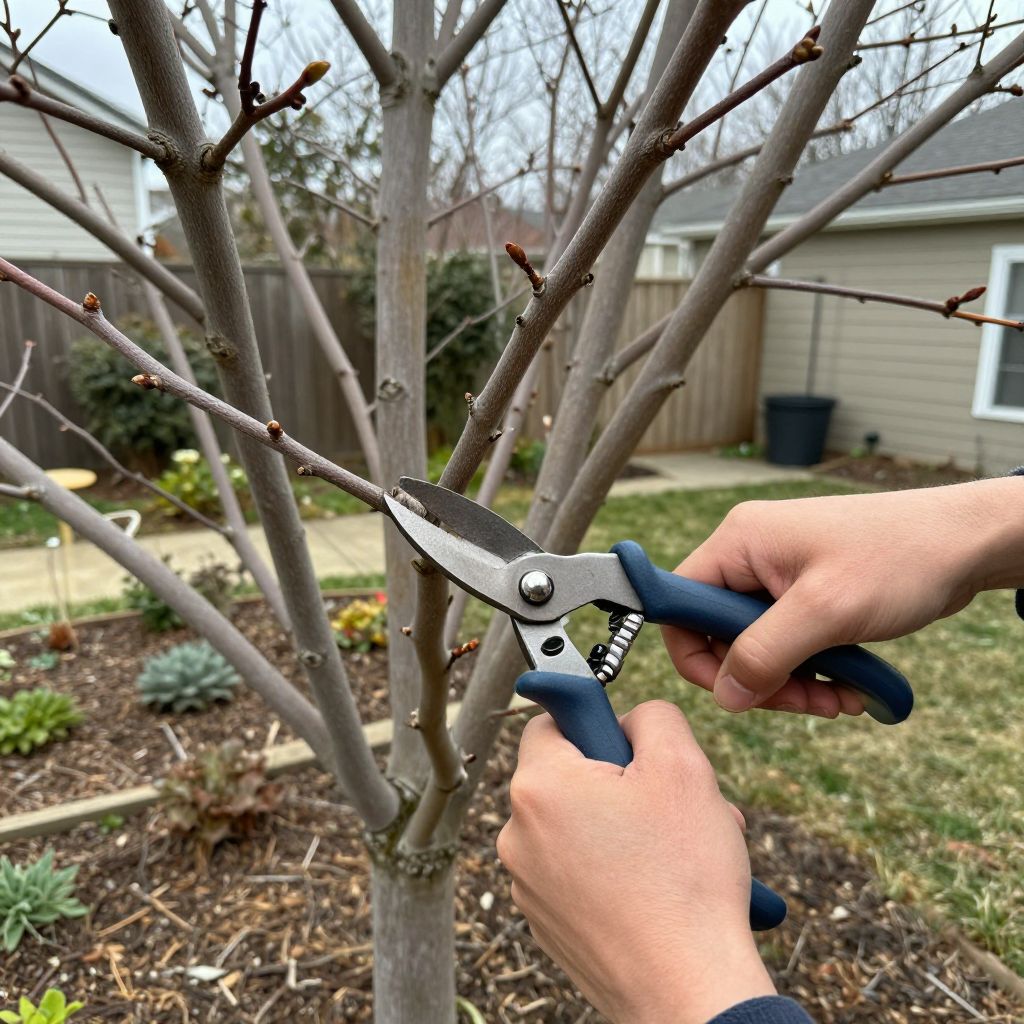
If you’re wondering when do you trim crepe myrtles, the safest answer is late winter to very early spring, while the plant is dormant and before new growth starts. That timing lets you see the branch structure clearly and reduces stress on the tree.
Crepe myrtles respond best to light, selective pruning rather than hard cutting. The goal is to improve shape, remove damaged wood, and keep the plant healthy without encouraging weak, awkward regrowth.
When do you trim crepe myrtles?
Trim crepe myrtles in late winter or very early spring, after the coldest weather has passed but before buds break. In most climates, that means roughly February to March, though timing should follow your local weather. Avoid pruning in fall, and never wait until the tree is fully leafed out if you want clean cuts and an easy view of the structure.
Why timing matters for crepe myrtle pruning
Pruning at the right time helps the tree recover quickly and keeps the natural flowering habit intact. Crepe myrtles bloom on new growth, so late-winter pruning can shape the plant without sacrificing the season’s flowers.
What happens if you trim too early or too late?
- Too early in fall: fresh cuts may stimulate tender new growth that can be damaged by frost.
- Too late in spring: you may remove developing buds and make the tree look uneven during active growth.
- During summer: heavy pruning can stress the plant and often leads to weak, fast regrowth.
If you live in a mild-winter region, you may be able to prune a little earlier than gardeners in colder areas. If your area gets late freezes, wait until the risk of hard frost has mostly passed.
How much should you trim?
Most crepe myrtles need only selective pruning. Remove crossing branches, dead wood, suckers, and any stems that spoil the plant’s shape. If the tree is overgrown, thin it gradually rather than cutting it back severely all at once.
Best pruning approach for healthy growth
- Start by removing dead, damaged, or diseased wood.
- Cut out branches that rub, cross, or grow inward.
- Remove suckers from the base and any shoots below the main canopy.
- Thin crowded stems to improve airflow and light penetration.
- Make clean cuts just outside the branch collar, not flush with the trunk.
Avoid topping crepe myrtles. Cutting large branches back to stubs, often called “crepe murder,” creates weak growth, poor structure, and more maintenance later.
What to do if your crepe myrtle is overgrown
If the tree has been neglected, don’t try to fix everything in one season. A gradual renovation is usually safer and produces a better-looking plant.
Step-by-step renovation plan
- Remove the worst crossing or crowded stems first.
- Keep the strongest, best-placed trunks or main branches.
- Shorten only what is necessary to restore balance.
- Repeat light corrective pruning each late winter for a few years.
This slower method helps the tree maintain a natural vase or multi-stem form, depending on how it was trained.
Seasonal care around pruning time
Pruning works best when the rest of the growing conditions are right. Crepe myrtles do well in full sun, well-drained soil, and moderate fertility. Excess shade or overly rich soil can lead to fewer flowers and more leafy growth.
Growing conditions that support good flowering
- Sunlight: at least 6 hours of direct sun is best.
- Soil: average garden soil is usually fine if drainage is good.
- Drainage: avoid soggy sites, which can weaken roots.
- Mulch: a 2- to 3-inch layer helps conserve moisture and protect roots, but keep it away from the trunk.
After pruning, water deeply if the soil is dry, especially for young or newly planted trees. Established crepe myrtles are fairly drought-tolerant, but they still flower better with consistent moisture during dry spells.
Tools and technique for clean cuts
Use sharp, clean pruning tools so cuts heal well and disease risk stays low. The right tool depends on branch size.
Useful tools
- Hand pruners for small stems
- Loppers for medium branches
- Pruning saw for larger limbs
- Rubbing alcohol or disinfectant for cleaning blades between cuts if disease is present
Make cuts at a slight angle when needed, but focus more on cutting in the right place than on the angle itself. The important point is to avoid leaving long stubs or cutting into the trunk tissue.
Common mistakes to avoid
Most pruning problems with crepe myrtles come from cutting too much or at the wrong time. A few simple habits will keep the plant healthier and easier to manage.
- Do not top the tree. This weakens structure and ruins the natural form.
- Do not prune in late fall. Fresh growth may be damaged by cold weather.
- Do not remove too many branches at once. Heavy pruning can trigger excessive, weak shoots.
- Do not ignore suckers. They can drain energy from the main plant.
- Do not leave stubs. They can die back and invite problems.
What about deadheading and summer cleanup?
You can remove spent flower clusters in summer if you want a tidier look, but this is optional. Light cleanup is fine, yet major pruning should still wait until late winter or very early spring.
If you notice broken limbs after storms, remove only the damaged wood as soon as practical. That kind of corrective pruning is different from shaping and can be done when needed.
Pests, diseases, and pruning-related issues
Healthy pruning can help reduce some problems by improving airflow, but it won’t fix every issue. Crepe myrtles can sometimes develop powdery mildew, aphids, or sooty mold, especially when crowded or stressed.
How pruning helps
- Improves air circulation through the canopy
- Removes diseased or damaged wood
- Makes it easier to spot pests early
If you see powdery white coating on leaves, sticky residue, or distorted new growth, inspect the plant closely. Good sunlight, proper spacing, and avoiding excessive nitrogen often matter more than heavy pruning.
Can you prune young crepe myrtles differently?
Yes. Young plants benefit most from training, not drastic cutting. In the first few years, focus on building a strong framework with a few well-spaced trunks or a single trunk, depending on the style you want.
For young plants
- Remove weak or poorly placed shoots.
- Keep the strongest central structure.
- Do only light shaping until the plant is established.
Once the tree has matured, annual light pruning is usually enough to maintain shape and flowering.
Quick answer: the best pruning window
For most gardeners, the best time to trim crepe myrtles is late winter to very early spring, just before new growth begins. Keep pruning light, remove only what is necessary, and avoid topping. That approach supports strong structure, better blooms, and a healthier tree over time.
If you want to keep learning about shrub and tree maintenance, look for more guidance on seasonal pruning, mulching, and choosing the right planting site for flowering landscape plants.