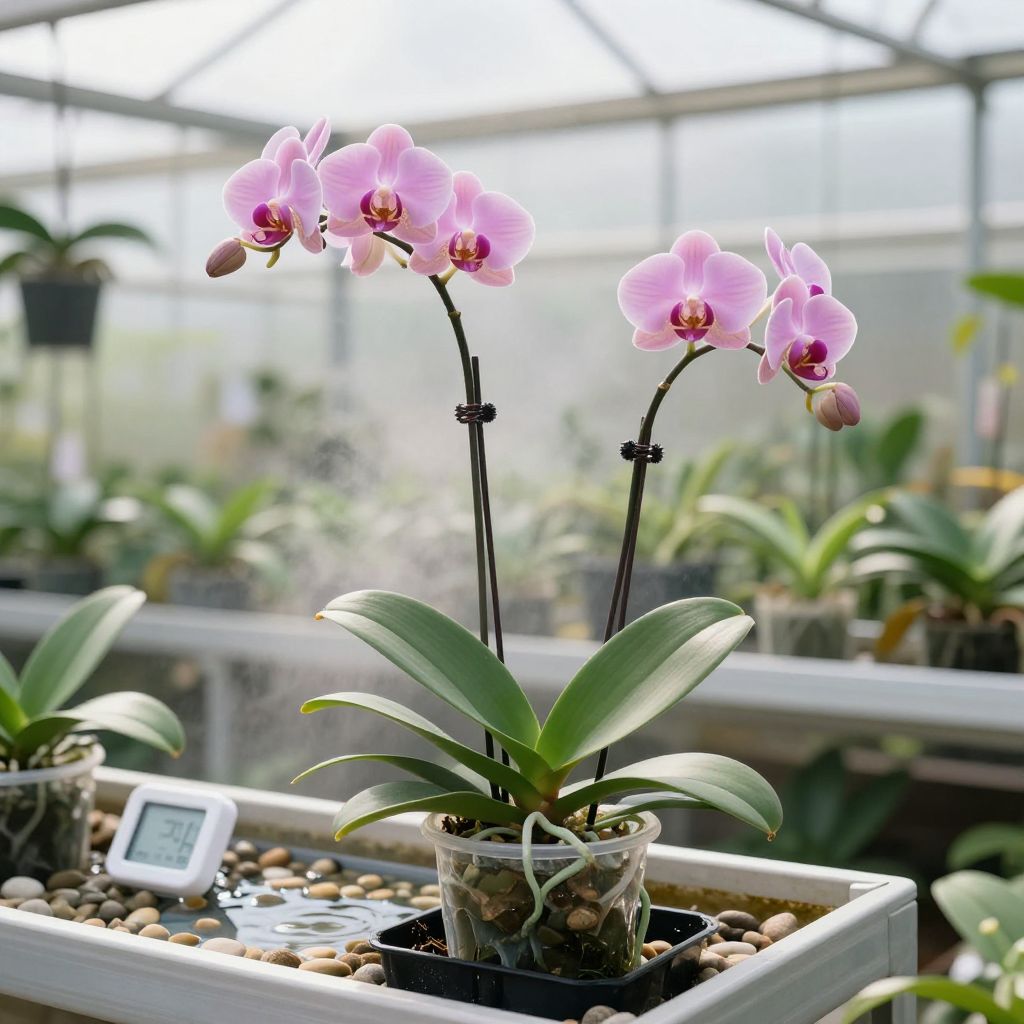
Do orchids like humidity? Yes—most orchids do best when the air stays moderately to fairly humid, because their roots and leaves are adapted to tropical or subtropical conditions. But they do not want soggy air, stagnant rooms, or constantly wet roots. The goal is steady moisture in the air with excellent airflow around the plant.
If your orchid is struggling with shriveled leaves, crispy tips, or buds that drop before opening, humidity may be part of the problem. The right level depends on the orchid type, your home, and the season, so the best approach is to match humidity to the plant’s needs and your growing space.
Do orchids like humidity?
Most orchids prefer moderate humidity, usually around 40% to 70%, with good air movement. Many common house orchids, such as Phalaenopsis, appreciate the higher end of that range, while still needing roots to dry slightly between waterings. Low humidity can cause dehydration, but excessive humidity without airflow can invite rot and disease.
Why humidity matters for orchids
Orchids absorb moisture not only through their roots but also through the surrounding air. In their natural habitats, many grow in warm, humid forests where moisture is available but never stagnant.
What humidity does for the plant
- Helps reduce water loss from leaves and roots
- Supports plumper leaves and more stable growth
- Can improve bud development and flowering quality
- Helps aerial roots stay healthy and active
When humidity is too low, orchids may use water faster than their roots can supply it. When humidity is too high and the air is still, fungal and bacterial problems become more likely.
How much humidity do orchids need?
There is no single perfect number for every orchid, but these general ranges are useful:
- 40% to 50%: workable for many orchids if watering and airflow are managed well
- 50% to 70%: often ideal for many popular house orchids
- Above 70%: can be fine in greenhouses or very airy setups, but airflow becomes essential
Use a small hygrometer if you are unsure. Indoor humidity often changes a lot between winter and summer, or between heated rooms and bathrooms.
Different orchids, different needs
Some orchids naturally prefer more humidity than others. For example, many Phalaenopsis orchids do well in average home humidity if they are watered correctly, while some thin-leaved or mount-grown orchids prefer a moister atmosphere. Always check the needs of your specific orchid if you know its name.
Signs your orchid needs more humidity
Low humidity often shows up gradually. Look for these clues:
- Wrinkled or leathery leaves
- Dry, shriveled pseudobulbs on orchids that have them
- Leaf tips turning brown and crispy
- Flower buds drying up or dropping before opening
- Aerial roots becoming silvery and brittle very quickly
These symptoms can also come from poor watering, root damage, or heat stress, so check the whole growing setup before assuming humidity is the only issue.
Signs humidity is too high
Too much humidity is less common indoors, but it can happen in enclosed terrariums, poorly ventilated rooms, or crowded plant shelves. Watch for:
- Soft, mushy roots
- Black spots or spreading leaf lesions
- Mold on bark or moss
- Persistent wetness on leaves or in the crown
- Yellowing from rot rather than natural aging
High humidity is only helpful when air moves freely. Without airflow, moisture lingers on leaves and in the potting mix, which is exactly what many orchids dislike.
How to raise humidity for orchids indoors
If your home is dry, especially in winter, you can improve conditions without overwatering the plant. The best method depends on your space and how many orchids you grow.
Practical humidity-boosting methods
- Use a humidity tray with pebbles and water beneath the pot, making sure the pot sits above the water line.
- Group plants together so they create a slightly moister microclimate.
- Run a humidifier near your orchid collection if your indoor air is very dry.
- Place orchids in naturally humid rooms such as bright bathrooms or kitchens, if the light is sufficient.
- Use a well-ventilated orchid cabinet or shelf if you grow many orchids and need more control.
Do not mist orchids as your main humidity strategy. Misting can briefly raise moisture around the plant, but it often dries too quickly to help much, and repeated wet leaves can encourage spotting or rot.
Humidity and airflow: the balance that matters most
Orchids need a balance of moisture and movement. In nature, humid air is usually moving, not trapped. Indoors, that means you should pair humidity with some air circulation.
Good airflow helps prevent problems
- Use a small fan on a low setting nearby, not blowing directly at the plant
- Leave space between pots so leaves can dry
- Avoid crowding orchids tightly in a closed container unless it is designed for that purpose
- Open windows when weather allows, while avoiding cold drafts
If you increase humidity but ignore airflow, you may solve one problem and create another. The healthiest orchids usually grow in moist air that dries the leaves and roots between waterings.
Watering, potting mix, and humidity work together
Humidity does not replace proper watering. Orchids in bark or other airy mixes still need a wet-dry cycle, though the exact timing depends on temperature, pot size, light, and humidity level.
Use the right potting mix
Most common house orchids are grown in a loose orchid mix, not regular garden soil. A typical mix may include bark, perlite, charcoal, sphagnum moss, or similar airy materials. The goal is drainage and root oxygen, not moisture retention like standard potting soil.
- Bark-based mixes dry faster and suit growers who water regularly
- Sphagnum moss holds more moisture and can help in drier homes, but it must not stay soggy
- Heavy soil or compost usually suffocates orchid roots and should be avoided for most orchids
In a humid home, you may need a faster-draining mix. In a dry home, a slightly more moisture-retentive mix may help, but only if you can still avoid staying wet too long.
Light, temperature, and humidity: the full growing picture
Humidity works best when the rest of the environment is suitable. Orchids in low light or cool, damp conditions can struggle even if humidity is high.
Keep these conditions in mind
- Light: bright, indirect light is best for many orchids
- Temperature: most common orchids prefer warm to intermediate indoor temperatures
- Air movement: helps prevent disease and supports healthy transpiration
If your orchid is getting enough humidity but still looks weak, check whether it is receiving too little light or sitting in a potting mix that stays wet too long.
Common humidity mistakes to avoid
Many orchid problems come from trying to “fix” humidity in the wrong way. These are the most common mistakes:
- Overmisting instead of improving the room’s actual humidity
- Letting pots sit in water on a tray, which can rot roots
- Using no airflow in a humid room
- Keeping orchids in dense soil that holds too much water
- Assuming all orchids need the same conditions
If you are unsure, make one change at a time. That makes it easier to see what is helping and what is not.
Troubleshooting orchid humidity problems
If your orchid looks stressed, use this simple approach to narrow down the cause.
- Check the roots. Healthy roots are firm and usually green or silvery depending on moisture level.
- Check the potting mix. If it stays wet for many days, humidity may not be the real issue.
- Check the leaves. Wrinkles and limpness often point to dehydration or root loss.
- Check the room. Dry heat vents, cold windows, and stagnant air all affect orchids.
- Adjust one factor at a time. Add airflow, change watering habits, or increase humidity gradually.
Orchids recover best when their roots are healthy. If roots are damaged, improving humidity alone will not solve the problem.
Outdoor orchids and seasonal humidity
Some orchids can be grown outdoors in suitable climates, but your local weather matters more than a calendar. Outdoor humidity may be naturally higher, yet temperature swings, wind, and rain can create new challenges.
Seasonal care tips
- In dry seasons: monitor moisture more closely and consider supplemental humidity for potted orchids
- In rainy seasons: protect orchids from prolonged wetness and ensure strong airflow
- In hot weather: higher humidity can help, but shade and water management are still important
- In cool weather: avoid damp, chilly conditions that encourage rot
If you move orchids outdoors for summer, acclimate them gradually to brighter light and changing humidity so they do not get stressed.
Simple humidity checklist for healthy orchids
Before you change anything, run through this quick checklist:
- Is the orchid in a free-draining orchid mix?
- Is the pot draining well?
- Is the room bright, but not harshly sunny?
- Is there some air movement?
- Is humidity moderate rather than extreme?
- Are the roots healthy?
If you can answer yes to most of these, your orchid is probably close to the conditions it wants.
Conclusion: give orchids moisture in the air, not wet roots
So, do orchids like humidity? Yes, most do—but they like it as part of a balanced growing environment, not as a substitute for proper drainage and airflow. Aim for moderate humidity, watch the roots, and adjust based on your home’s conditions.
If you want to improve your orchid care next, read more about orchid potting mix, watering technique, and light levels so you can match all three to your plant’s needs.