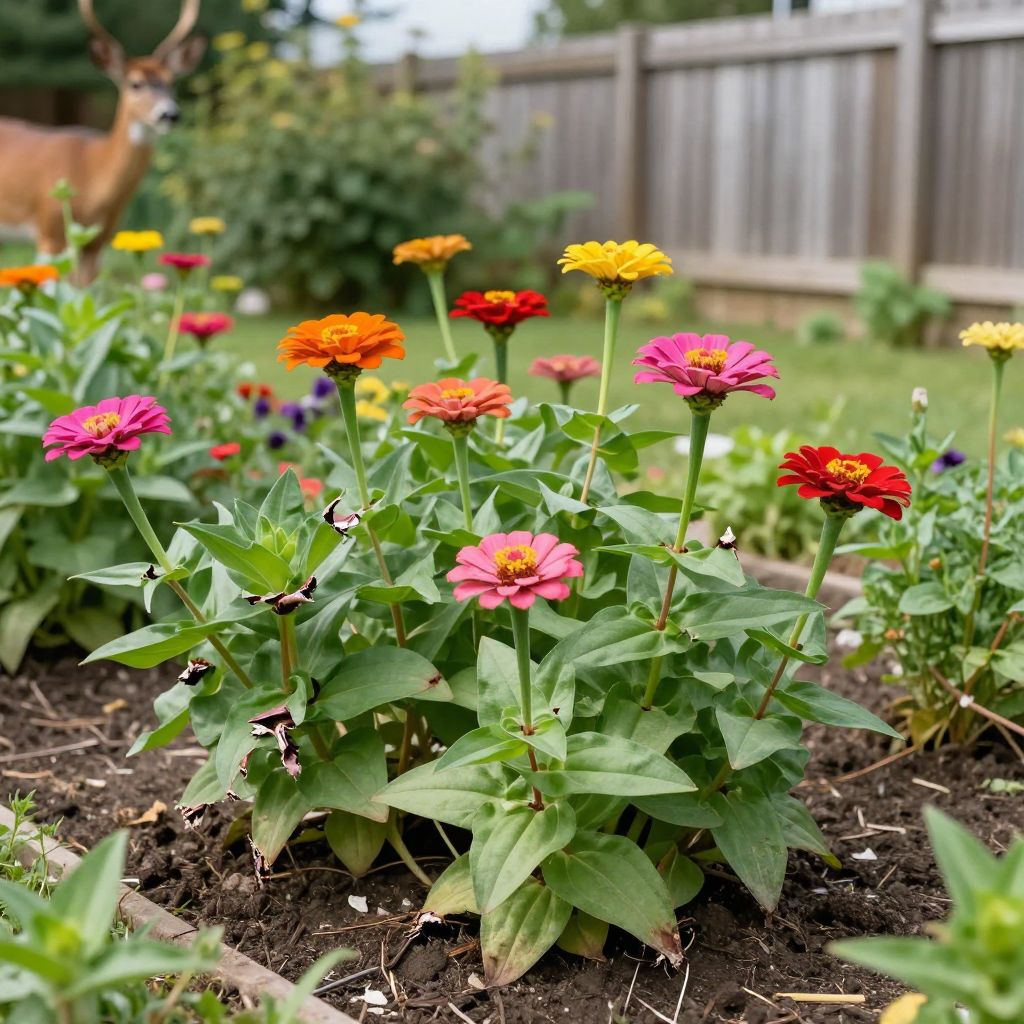
Are zinnias deer resistant? If deer browse your garden, that’s an important question before you fill beds and borders with these bright annuals. Zinnias are often considered deer resistant, but they are not deer-proof.
In many gardens, deer will leave zinnias alone when there are tastier plants nearby. In hungry conditions, though, deer may sample the flowers, buds, or foliage, so it helps to understand when zinnias are likely to be ignored and how to protect them.
Are zinnias deer resistant?
Zinnias are generally considered moderately deer resistant, not fully deer-proof. Their rough, slightly fuzzy leaves and strong scent can make them less appealing than tender, fragrant, or highly palatable plants, but deer may still eat them if food is scarce or pressure is high.
Why deer usually avoid zinnias
Deer tend to choose plants that are soft, highly nutritious, and easy to browse. Zinnias do not usually rank high on that list, which is why many gardeners report little damage.
Traits that can discourage browsing
- Texture: Zinnia foliage can feel coarse compared with tender ornamentals.
- Scent: The foliage has a noticeable smell that some deer dislike.
- Flower structure: Mature blooms are not as tempting as leafy vegetables or soft new growth.
Even so, deer behavior changes with season, population pressure, and what else is available. A plant that is ignored in one yard may be nipped in another.
When deer are most likely to eat zinnias
- During drought or late summer when natural forage is limited
- In gardens near woods, fields, or known deer trails
- When zinnias are young and tender
- When deer have already become comfortable feeding in your landscape
How to grow zinnias so they stay healthy and less tempting
Healthy zinnias recover better from minor browsing and are more likely to keep blooming. Give them full sun, good airflow, and soil that drains well. Strong, vigorous plants are less stressed and often more resilient in deer-prone gardens.
Best planting conditions
- Sunlight: Full sun is best for strong stems and abundant blooms.
- Soil: Fertile, well-drained soil helps prevent weak growth and disease.
- Drainage: Avoid soggy beds, which can encourage root problems.
- Airflow: Space plants so leaves dry quickly after rain or watering.
If your soil is heavy clay, work in compost to improve structure and drainage. If your soil is very sandy, compost helps it hold moisture and nutrients longer.
Planting tips for better results
- Choose a sunny site with room for mature plants.
- Prepare the bed with compost if the soil is poor or compacted.
- Sow seeds or transplant young plants after frost danger has passed in your area.
- Water deeply after planting, then keep the soil evenly moist until established.
- Mulch lightly to conserve moisture, but keep mulch away from stems.
How to protect zinnias from deer
If deer are active in your area, assume they may eventually sample zinnias and plan ahead. The best protection combines several methods rather than relying on one.
Practical deer-control methods
- Physical barriers: Fencing is the most reliable option, especially where deer pressure is high.
- Row covers or netting: Useful for young plants, though less practical once zinnias are tall and flowering.
- Plant placement: Put zinnias closer to the house, patio, or other high-traffic areas if possible.
- Companion planting: Deer-resistant plants nearby may help reduce browsing pressure, though they will not guarantee protection.
- Repellents: Commercial deer repellents can help, especially when reapplied after rain and used consistently.
Important: Repellents work best as part of a routine. Deer often adapt quickly if the product is not refreshed or if the garden is easy to reach.
What not to rely on
- One-time spraying at planting
- Scare devices that are never moved
- Assuming “deer resistant” means “safe from deer”
- Overfertilizing, which can create lush growth that is more attractive to browsing animals
Common zinnia problems that can make deer damage worse
Sometimes gardeners mistake poor growth or pest damage for deer browsing. Knowing the difference helps you fix the real issue and keep plants blooming.
Signs deer are the culprit
- Cleanly nipped stems or flower heads
- Leaves and buds removed from the top of the plant
- Damage higher than rabbit browsing would usually reach
- Plants flattened or trampled in addition to eaten foliage
Other issues that weaken zinnias
- Powdery mildew: Common in humid weather or crowded plantings; leaves may look dusty white.
- Aphids: Small insects that cluster on tender growth and can distort new leaves.
- Caterpillars and beetles: May chew holes in foliage or buds.
- Overwatering: Can lead to weak roots and fewer flowers.
Weak, stressed zinnias are more likely to be browsed because they are less vigorous and may not rebound as quickly. Good care is part of deer management.
Watering, pruning, and maintenance for healthier blooms
Zinnias do best with consistent care, especially while they are young. Once established, they prefer deep watering when the soil begins to dry rather than constant shallow watering.
Watering guidance
- Water at the base of the plant to keep foliage drier.
- Water deeply enough to moisten the root zone, then let the top layer dry slightly before watering again.
- Adjust for weather, soil type, and plant size rather than following a fixed schedule.
In hot, windy, or sandy conditions, zinnias may need water more often. In cool weather or heavier soil, they usually need less.
Pruning and deadheading
- Pinch young plants if you want bushier growth.
- Remove spent flowers regularly to encourage more blooms.
- Cut damaged stems back to healthy growth after deer nibbling or storm damage.
Deadheading also helps keep the plant focused on new flowers instead of seed production. For cut flowers, harvest stems frequently to keep plants productive.
Choosing zinnias for a deer-prone garden
Most common garden zinnias, including bedding types and taller cut-flower varieties, are grown for color and easy care rather than deer resistance. That means selection matters less than site conditions and protection strategy.
What to look for when buying plants or seed
- Strong stems and healthy leaves
- Varieties suited to your garden size and climate
- Plants with no signs of mildew, insect damage, or stress
- Seed from a reliable source if starting from scratch
If deer pressure is severe, consider using zinnias as part of a mixed planting rather than as the only focal plant. That way, a little browsing will not ruin the whole display.
Best ways to use zinnias in the landscape
Zinnias shine in borders, cutting gardens, pollinator beds, and containers. They are especially useful where you want long-lasting color through warm weather.
Landscape placement ideas
- Plant them near entrances or patios where you can monitor deer activity.
- Use them in raised beds if drainage is poor in the ground.
- Mix them with other annuals that have different textures and growth habits.
- Grow them in containers on a deck or porch if deer pressure is intense.
Containers can help reduce deer damage, but they are not foolproof if deer can reach them. Place pots where browsing is less likely and keep them watered consistently in hot weather.
Troubleshooting: what to do if deer eat your zinnias
If deer have already started browsing, act quickly. The sooner you respond, the more likely you are to save the display and prevent repeated damage.
- Check whether the damage is from deer, rabbits, insects, or disease.
- Remove broken stems and spent flower heads with clean pruners.
- Install a barrier or apply a deer repellent right away.
- Water and feed plants lightly if they are stressed, but do not overfertilize.
- Monitor new growth closely for repeat browsing.
If deer keep returning, switch from short-term fixes to a stronger long-term strategy such as fencing, better placement, or a combination of repellents and physical protection.
Conclusion
So, are zinnias deer resistant? Yes, usually to a degree, but not enough to count on in every garden. They are a good choice for many deer-prone landscapes, especially when you pair them with smart planting, regular care, and protection during periods of heavy browsing.
If you want to improve your odds, start by planting zinnias in full sun with well-drained soil, then add a deer deterrent plan before the deer discover them. For more ideas on managing browsing pressure, you may also find this guide helpful: what to feed deer.