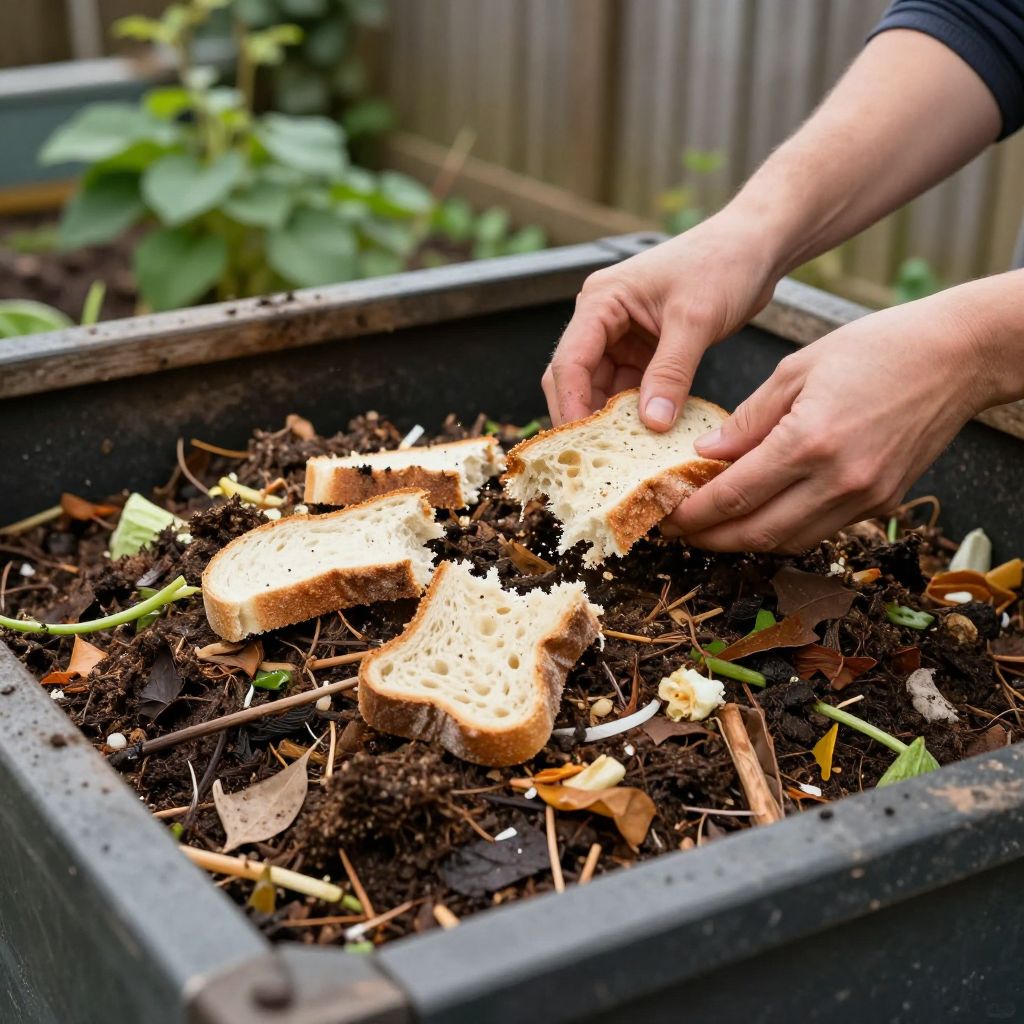
Can you compost bread? Yes, you can compost bread in a home compost pile or bin, as long as you add it carefully and balance it with plenty of dry, carbon-rich materials. Bread breaks down well because it is organic matter, but it can also attract pests, create odors, or turn slimy if you add too much at once.
The key is to treat bread like a small kitchen scrap, not a bulk compost ingredient. With the right placement, moisture balance, and covering materials, bread can fit into a healthy compost system without causing trouble.
Can you compost bread?
Yes, bread is compostable, including plain bread, crusts, stale slices, and small amounts of baked goods. The best results come from tearing it into pieces, burying it in the center of the pile, and covering it with browns such as dry leaves, shredded paper, or straw so it decomposes quickly and does not attract pests.
Why bread can be composted
Bread is made from plant-based ingredients that microorganisms can break down. In a compost pile, fungi, bacteria, and other decomposers turn it into humus when there is enough air, moisture, and a good mix of carbon and nitrogen.
Because bread is soft and porous, it usually decomposes faster than woody yard waste. That said, it can compact easily, especially if it is damp, which is why placement matters.
What makes bread compost-friendly
- It is biodegradable and breaks down naturally.
- It adds a small amount of nitrogen and organic matter.
- It helps diversify the food scraps in a balanced compost pile.
What can go wrong
- Pests may be drawn to exposed bread.
- Large clumps can become soggy and anaerobic.
- Mold growth can look alarming, though it is usually part of decomposition.
How to compost bread the right way
To compost bread successfully, add it in moderation and mix it with dry, carbon-rich materials. A compost pile that is too wet or too rich in food scraps can smell sour and slow down, while a balanced pile stays earthy and active.
- Tear bread into smaller pieces so microbes can reach it faster.
- Remove anything that may not compost well, such as large amounts of butter, oil, or heavy fillings.
- Place the bread in the middle of the pile or bin, not on top.
- Cover it immediately with browns like dry leaves, shredded cardboard, or straw.
- Turn the pile when needed to keep air moving through the material.
Best composting setup for bread
Bread works best in a hot, active compost pile or a well-managed enclosed bin. Open piles can still work, but they are more likely to attract rodents, raccoons, flies, and ants if food scraps are left exposed.
- Hot compost piles handle bread well because heat speeds decomposition and reduces odors.
- Closed bins or tumblers help keep pests out and are a good choice for small yards.
- Worm bins can accept small amounts of plain bread, but only sparingly and only if the bin is already healthy and not too wet.
How much bread is too much?
Small amounts are fine, but bread should never make up a large share of your compost. Too much bread can mat together, reduce airflow, and create a sticky layer that slows the whole pile.
A good rule is to treat bread as an occasional addition rather than a regular bulk ingredient. If you have several stale loaves, spread them out over multiple additions and mix them with plenty of dry browns each time.
Use this simple balance
- Add bread in small handfuls or torn pieces.
- Pair each kitchen scrap addition with at least an equal volume of browns.
- If the pile looks wet or dense, add more dry leaves, paper, or shredded cardboard.
What types of bread can go in compost?
Most plain bread products can be composted, including sandwich bread, baguettes, rolls, bagels, and crusts. The simpler the ingredient list, the easier it is to manage in compost.
Usually okay in moderation
- Plain bread and crusts
- Stale bread
- Croutons made without heavy oil or seasoning
- Small amounts of plain baked goods
Use caution or avoid
- Bread with large amounts of butter, oil, cheese, or meat
- Heavily frosted pastries or sugary baked goods in large amounts
- Moldy bread if your compost pile is cool, weak, or likely to attract pests
Moldy bread is not usually a problem in an active compost pile, but if your setup is small, slow, or near wildlife, it is better to bury it deeply and cover it well. If you cannot do that, dispose of it another way rather than leaving it exposed.
Common problems when composting bread
Pests and wildlife
Uncovered bread is one of the easiest scraps for animals to find. Rodents, raccoons, and birds may dig into a pile that smells like food.
Fix: bury bread in the center of the pile, use a lidded bin, and always cover food scraps with browns.
Bad smells
If bread gets soggy and compacted, the pile may start to smell sour or rotten. That usually means there is not enough air or too much moisture.
Fix: turn the pile, add dry carbon materials, and avoid adding more wet kitchen scraps until the texture improves.
Mold and sliminess
White mold on bread is normal in compost, but thick, wet clumps can slow decomposition. The goal is not to eliminate mold; it is to keep the pile balanced so the mold and microbes can work efficiently.
Fix: break the bread apart, mix it with dry materials, and keep the pile airy rather than packed down.
Slow breakdown
Large pieces of bread can sit for a while if the pile is too dry, too cold, or not turned often enough. Composting slows naturally in cool weather, especially in winter.
Fix: chop or tear bread into smaller pieces, keep the pile slightly damp like a wrung-out sponge, and turn it when practical.
Composting bread in different systems
Outdoor compost piles
Outdoor piles are the easiest place for bread if you have enough yard space and can manage the pile well. The main challenge is preventing pests and keeping the pile balanced through changing weather.
In rainy periods, add extra browns to prevent sogginess. In dry weather, moisten the pile lightly if decomposition slows.
Compost bins and tumblers
Enclosed bins and tumblers are often the best choice for bread because they reduce pest access and help you control moisture. They also make it easier to mix food scraps evenly with browns.
Do not overload a tumbler with bread alone. The material still needs enough structure from leaves, paper, or other coarse browns to keep air moving.
Worm bins
Worms can eat small amounts of plain bread, but bread is best used sparingly in vermicomposting. Too much can sour the bin or encourage fruit flies.
If you use bread in a worm bin, feed only a little at a time, bury it under bedding, and avoid oily or heavily processed bread products.
Seasonal and climate considerations
Your local climate affects how bread breaks down. Warm temperatures speed decomposition, while cold weather slows microbial activity and may leave bread in the pile longer than expected.
In hot weather, bread can sour quickly if the pile is too wet. In cool weather, it may sit longer and attract pests if not buried well. Adjust by changing how much you add and how often you turn the pile.
- Warm climates: add smaller amounts and monitor moisture closely.
- Cool climates: chop scraps smaller and use a well-insulated, active pile if possible.
- Wet climates: add extra browns and protect the pile from heavy rain.
- Dry climates: moisten the pile lightly so bread can break down instead of drying out.
What to do if you already added too much bread
If your pile has too much bread, do not panic. Compost is forgiving, and the fix is usually to restore balance.
- Break up any clumps of bread.
- Mix in a generous amount of dry leaves, shredded cardboard, or straw.
- Turn the pile to add air.
- Stop adding more food scraps until the pile looks less wet and dense.
- Check for pests and cover the pile more securely if needed.
If the pile has become slimy and foul-smelling, it may need a larger correction with much more dry material than you first think. Compost should smell earthy, not sour.
When bread should not go in the compost
There are a few situations where bread is a poor choice for composting. If you are dealing with a tiny indoor bin, a wildlife-prone yard, or a pile that already struggles with odor and moisture, bread may create more problems than it solves.
- Skip bread if your compost system is open and unprotected from animals.
- Avoid it if your pile is already too wet or compacted.
- Do not add large amounts of oily, cheesy, or meat-filled bread products.
In those cases, focus on improving the compost system first. A healthier pile will handle bread much more easily later.
Conclusion
Can you compost bread? Yes, and it can be a useful kitchen scrap when you add it in small amounts, bury it well, and keep your compost balanced with plenty of browns. Tear it up, cover it, and monitor moisture and pests so the pile stays active and healthy.
If you want to improve your composting results, consider reading more about how to balance green and brown compost materials and simple ways to keep a backyard compost pile pest-free.