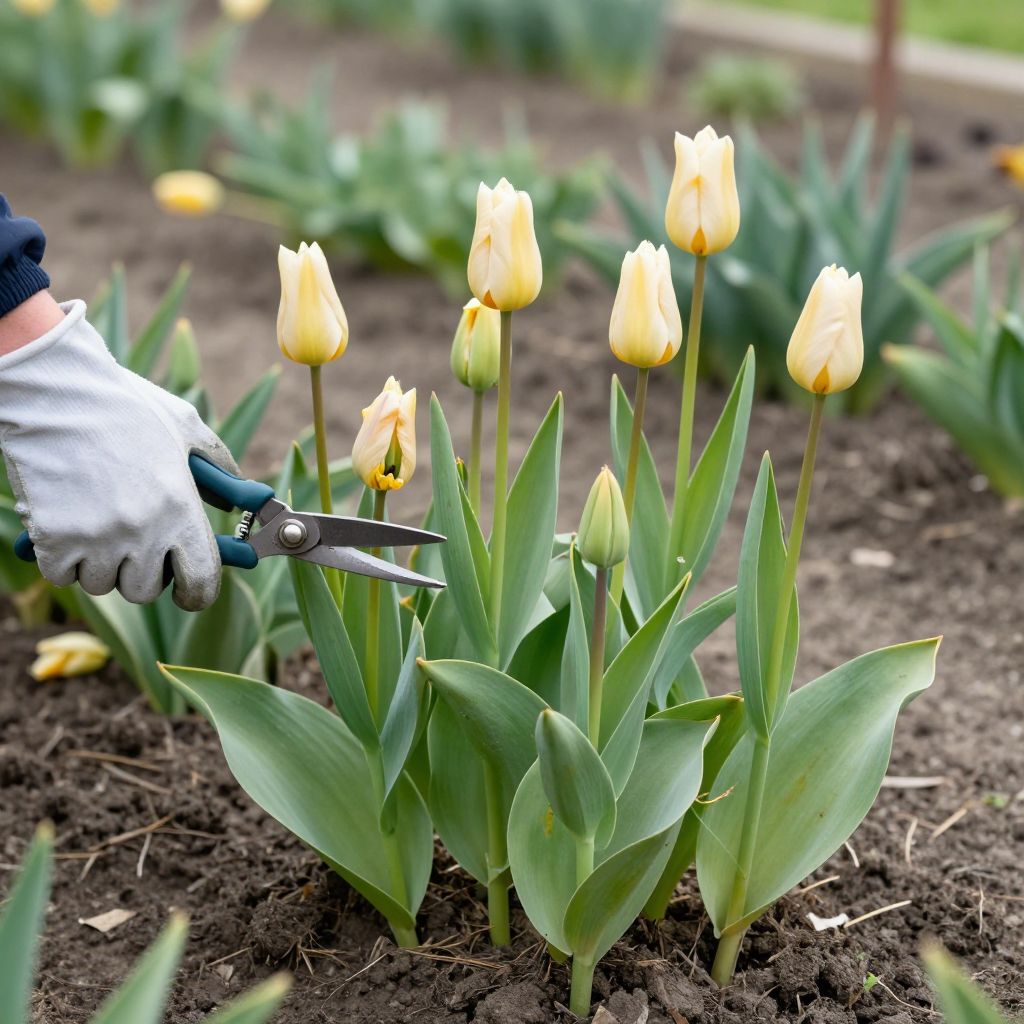
Wondering when to cut back tulips without harming next spring’s bloom? The timing matters more than many gardeners realize. Cut too early, and you can weaken the bulb; cut too late, and the garden can look untidy or invite disease.
The good news is that tulips are forgiving if you follow the plant’s natural cycle. With a little patience and the right cleanup steps, you can keep bulbs healthy, support strong flowering, and make your spring beds look better year after year.
When to cut back tulips?
Cut back tulips only after the flowers fade, and remove the spent bloom right away to stop seed production. Keep the leaves in place until they turn yellow or brown and come away easily, because the foliage is feeding next year’s bulb. In most gardens, that means waiting several weeks after flowering.
Why timing matters for tulip care
Tulips store energy in their bulbs after blooming. The leaves continue photosynthesizing and sending sugars back underground, which helps the bulb recharge for next spring.
If you remove green foliage too soon, the bulb may be smaller and produce fewer flowers the following year. If you leave the dead flower head on, the plant may put energy into making seed instead of rebuilding the bulb.
Deadhead first, cut back later
There are really two different cleanup jobs with tulips:
- Deadheading: removing the faded flower head after blooming.
- Cutting back foliage: removing leaves after they have yellowed and declined naturally.
That distinction is the key to healthy tulips.
What to do right after tulips finish blooming
As soon as petals drop, snip off the spent flower head. This prevents the plant from wasting energy on seed formation.
- Use clean, sharp pruners or scissors.
- Cut the flower stem just below the faded bloom.
- Leave the stem and leaves intact.
You can also remove the swollen seed pod if one starts to form. The goal is to keep the bulb focused on storing energy, not making seeds.
Should you cut the stem too?
Usually, yes, but only the flower portion. Leave as much green stem and foliage as possible until the leaves naturally fade. The green parts are still working for the bulb.
When is the right time to cut back tulip leaves?
Wait until the foliage turns yellow, then tan or brown, and begins to collapse. At that point, the leaves are no longer doing much for the bulb, and you can cut them back at ground level.
In many climates, this happens about 4 to 6 weeks after bloom, but weather, variety, and growing conditions can shift the timing. Cooler springs may slow the process, while hot, dry weather can speed it up.
Signs the leaves are ready
- The leaves have lost most of their green color.
- The foliage feels limp and papery.
- The plant pulls away easily without resistance.
- The bed looks messy, but the bulb has already finished feeding itself.
If the leaves are still green, leave them alone.
How to cut back tulips safely
Once the foliage has fully faded, trim it close to the soil surface. You do not need to dig up the bulb unless you are relocating it, dividing it, or your climate requires lifting tender bulbs.
- Choose a dry day if possible.
- Use clean pruners, garden scissors, or hand snips.
- Cut the dead foliage at or just above soil level.
- Remove any fallen debris from the bed.
Always clean your tools first if you are cutting back plants with signs of disease. This helps reduce the spread of fungal problems.
What not to do when cutting back tulips
A few common mistakes can reduce bloom quality or create problems in the bed.
- Do not braid or tie the leaves. This can reduce light capture and slow bulb recharge.
- Do not mow tulip foliage while it is still green.
- Do not cut everything down immediately after flowering.
- Do not leave diseased foliage on the ground if you suspect rot or leaf spot.
If you want a neater look while the leaves fade, plant tulips among perennials that will emerge later and help hide the aging foliage.
How to care for tulips after blooming
Post-bloom care helps bulbs recover. The goal is to keep the plant healthy until the leaves finish their job.
Sunlight
Tulips bloom best in full sun, though they can tolerate light shade in some climates. After flowering, keep them in as much light as possible so the leaves can recharge the bulb efficiently.
Watering
Water only as needed. Tulips prefer moist, well-drained soil during active growth, but soggy conditions can rot bulbs. After bloom, let rainfall do the work unless your soil is very dry.
If you irrigate nearby beds, avoid overwatering the fading tulip foliage. Excess moisture around bulbs is a common cause of decline.
Soil and drainage
Tulips perform best in loose, well-drained soil. Heavy clay or persistently wet ground can shorten bulb life and reduce flowering.
If your soil stays wet, improve drainage with compost, raised beds, or better site selection rather than watering more often.
Should you fertilize after tulips bloom?
Many gardeners like to feed bulbs lightly after flowering, especially in poor soil. A balanced bulb fertilizer or a topdressing of compost can support recovery, but avoid overdoing it.
More important than a heavy feeding is good foliage retention, sunlight, and drainage. Overfertilizing can push weak, leafy growth instead of stronger bulbs.
Do tulips come back every year?
Some tulips perennialize well, while others perform best for one strong season and then gradually decline. This depends on the type of tulip, your climate, soil, and summer conditions.
If your tulips bloom well one year but weaken later, it is often not because you cut them back incorrectly. It may be due to heat, poor drainage, crowding, or a variety that does not reliably return in your region.
How to improve repeat blooming
- Leave foliage until fully yellow.
- Plant in a sunny, well-drained site.
- Avoid summer irrigation around dormant bulbs.
- Lift and replant bulbs if the bed becomes overcrowded.
- Replace weak performers with fresh bulbs in fall if needed.
What about tulips in pots?
Container-grown tulips need the same basic timing: deadhead after flowering, then leave the leaves until they fade naturally. The main difference is that pots dry out faster and can overheat more quickly than garden beds.
Keep the pot in bright light while the foliage is green, and water lightly only when the mix begins to dry. Once the leaves are done, you can cut them back and decide whether to store the bulbs, replant them, or compost them if they are spent.
Common tulip problems after flowering
Leaves turn yellow too fast
This can happen after a hot spell, drought, or poor root establishment. If the foliage dies back unusually early, the bulb may not have stored as much energy as usual.
Bulbs fail to bloom next year
Possible causes include cutting foliage too soon, too much shade, crowded bulbs, poor drainage, or a variety that is not long-lived in your climate. Review site conditions before assuming the cutting-back timing was the only issue.
Mold or rot appears on fading leaves
Remove affected foliage promptly and discard it, especially if you see soft tissue, gray mold, or spotting. Keep the area tidy and avoid overhead watering.
Simple seasonal checklist for tulip cleanup
- Deadhead spent flowers as soon as petals drop.
- Leave green leaves in place.
- Water only if the soil is drying out excessively.
- Watch for yellowing foliage over the next few weeks.
- Cut back leaves only when they are fully faded.
- Clean up debris and keep the bed well drained.
Final takeaway
When to cut back tulips comes down to one rule: remove the spent bloom right away, but wait to cut foliage until it has yellowed and finished feeding the bulb. If you follow that timing, you give your tulips the best chance to return strong next season.
For more seasonal bulb care, you may also want to read about spring bulb maintenance and how to plant tulip bulbs for better blooms.