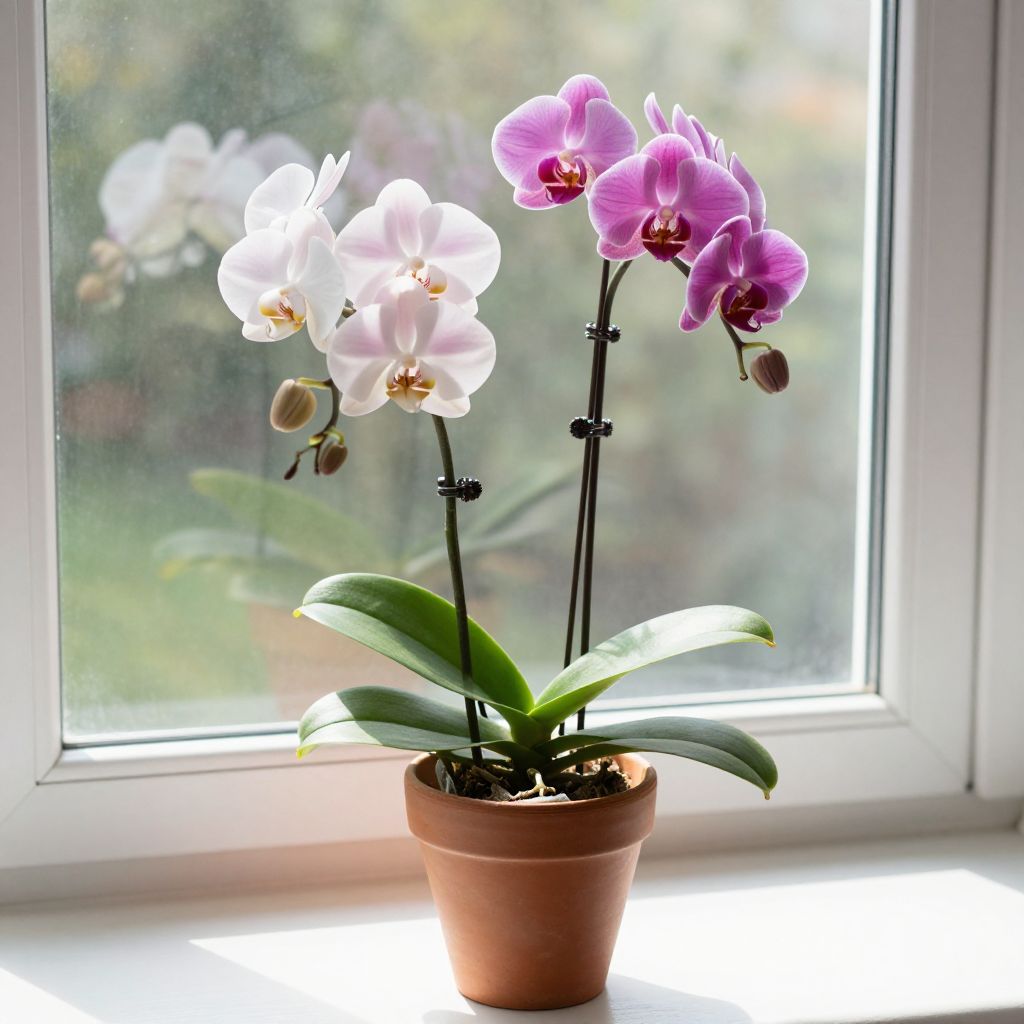
What color are orchids? If you’re shopping for one or trying to identify a plant you already own, the answer is simpler than many people expect: orchids come in a huge range of colors, from white and green to yellow, pink, purple, red, orange, and even blue-tinted or heavily patterned blooms. The exact shade depends on the species, hybrid, and growing conditions.
For gardeners, color is only part of the story. Healthy orchids also need the right light, potting mix, and watering routine to keep those flowers looking their best and to encourage reblooming.
What color are orchids?
Orchids can be nearly any flower color except true black and true blue in a natural, stable sense. Most garden orchids bloom in white, pink, purple, yellow, red, orange, or green, often with spots, stripes, throats, or lip markings. Many popular houseplant orchids, especially Phalaenopsis, are bred in an especially wide range of colors.
Why orchid flower color varies so much
Orchid color is shaped by genetics first, then by flower age and growing conditions. Breeders have crossed orchids for decades to create brighter, larger, longer-lasting, and more unusual blooms.
Common color groups you’ll see
- White — clean, classic, and often long-lasting.
- Pink — from soft blush to magenta.
- Purple and lavender — very common in many hybrids.
- Yellow — often warm, buttery, or golden tones.
- Red and burgundy — usually deeper in hybrid orchids.
- Orange and peach — less common, but widely available in hybrids.
- Green — subtle, elegant, and sometimes easy to miss in low light.
- Striped, spotted, or speckled — especially common in Cattleya, Oncidium, and some Phalaenopsis.
About blue and black orchids
When you see a bright blue orchid, it is often dyed or specially treated rather than naturally blue. True black orchids are usually very dark purple, maroon, or brown-black in appearance. If you want a long-term color, choose a naturally colored hybrid rather than relying on dyed blooms.
How to choose orchid color for your home or garden
Pick orchid color the same way you’d choose any flowering plant: match the flower to the space, light, and care you can provide. Color is personal, but plant health matters more than a rare shade.
For indoor growing
- White or pale blooms brighten darker rooms.
- Pink and purple orchids are easy to find and suit most interiors.
- Yellow and orange orchids add warmth near windows with bright, indirect light.
For outdoor growing
If you grow orchids outdoors in a suitable climate, choose colors that stand out against your landscape. White and yellow blooms show well in shady courtyards, while deeper pinks and purples can look dramatic against foliage or bark.
What color are orchids when they are healthy?
Healthy orchids usually show clear, even petal color for the type and variety you bought. Faded, washed-out, or patchy flowers can be normal as blooms age, but poor color may also point to too much sun, stress from temperature swings, or weak plant health.
Signs the color is normal
- Flowers match the plant tag or recent bloom history.
- Petals are firm, not limp or translucent.
- Color is even across most blooms.
- Older flowers may fade slightly before dropping.
Signs something may be wrong
- Bleached patches on petals from harsh sun.
- Brown edges or scorched spots.
- Blooms opening smaller or paler than expected after stress.
- Flowers dropping quickly because of heat, cold, or dry air.
Light, temperature, and color quality
Light has a big effect on how orchid flowers look. Too little light can produce weak blooms, while too much direct sun can fade or scorch petals and leaves.
Getting the light right
Most common orchids grown indoors prefer bright, indirect light. An east window is often ideal, while a south or west window may need a sheer curtain or slight setback from the glass.
- Too little light: flowers may be fewer, smaller, or duller.
- Too much direct sun: petals can bleach, and leaves may yellow or burn.
- Balanced light: supports strong color and better reblooming.
Temperature effects
Cool nights and warm days help many orchids set buds, but sudden temperature changes can cause bud drop. Keep orchids away from heating vents, cold drafts, and hot windowsills that overheat in the afternoon.
How to care for orchids so the color lasts longer
Flower color is genetic, but bloom quality depends on care. Good watering, drainage, and airflow help flowers last longer and keep the plant strong for future blooms.
Watering basics
Water orchids when the potting mix is approaching dryness, not on a fixed calendar. The right timing depends on pot size, potting medium, temperature, humidity, and season.
- Check the potting mix with your finger or a wooden skewer.
- Water thoroughly until excess drains out.
- Empty decorative cachepots and saucers so roots do not sit in water.
- Let the mix breathe before watering again.
Overwatering is one of the fastest ways to lose orchid roots and flower quality. Orchids need moisture, but they also need air around the roots.
Potting mix and drainage
Most orchids do not grow well in regular garden soil. They usually need a chunky orchid mix made for airflow and drainage, often containing bark, sphagnum moss, perlite, charcoal, or similar materials depending on the plant type.
- Use a pot with drainage holes.
- Choose a mix suited to the orchid you own.
- Repot when the mix breaks down, stays soggy, or smells sour.
Humidity and air movement
Orchids often bloom best with moderate humidity and gentle air movement. Dry indoor air can shorten flower life, while stagnant air can invite fungal problems.
- Group plants together to raise local humidity slightly.
- Use a pebble tray if your home is very dry, but keep the pot above the waterline.
- Provide gentle airflow with an open room or small fan nearby, not direct blasting air.
Do orchid colors change as the flowers age?
Yes, many orchids change color slightly as the bloom matures. This is normal and does not always mean the plant is unhealthy. Some flowers deepen in tone, while others fade toward lighter shades before dropping.
What to expect
- White orchids may develop a cream tint as they age.
- Pink or purple blooms may soften in color over time.
- Spotted or patterned flowers can look more muted late in bloom.
If the change happens very quickly, check for excess sun, heat stress, or dehydration.
Pruning and after-bloom care
Once flowers fade, the plant’s energy shifts from blooming to recovery and root growth. Good after-bloom care helps the orchid produce strong new growth and, eventually, more flowers.
What to do after flowering
- Remove spent flowers that are brown or papery.
- Check the flower spike before cutting it.
- Keep leaves clean and dust-free.
- Resume normal care rather than forcing the plant to bloom again immediately.
For many Phalaenopsis orchids, growers often trim the spike above a node if it is still green, or cut it near the base if it has turned brown. Other orchid types respond differently, so identify your plant before pruning.
Common pests and diseases that affect bloom color
Orchid flowers can look dull or damaged when the plant is stressed by pests or disease. Catching problems early helps protect both the plant and its blooms.
Watch for these issues
- Mealybugs — white cottony clusters in leaf joints or on spikes.
- Scale — small brown or tan bumps on stems and leaves.
- Spider mites — fine stippling and webbing, especially in dry air.
- Botrytis — small spots on petals, often in cool, damp conditions.
- Root rot — soft roots and declining flowers from poor drainage.
Practical fixes
- Isolate the plant if pests are present.
- Remove badly damaged flowers and leaves.
- Improve airflow and avoid wetting blooms late in the day.
- Repot if the mix is decomposed or the roots are failing.
Propagation and color consistency
If you want the same flower color again, propagation method matters. Seed-grown orchids often vary widely, while division and clonal propagation usually preserve the parent plant’s bloom color and pattern more closely.
What home gardeners should know
- Division keeps the same flower traits in many sympodial orchids.
- Keikis on some orchids can produce similar blooms to the parent plant.
- Seed propagation is not a reliable way to duplicate flower color at home.
If color is important to you, buy a labeled plant from a reputable grower and keep the tag for future reference.
Quick troubleshooting for orchid color problems
If your orchid blooms are not the color you expected, start with the simplest explanations first. Many issues are related to light, age, or plant stress rather than a serious disease.
- Flowers are paler than expected: move the plant to brighter indirect light and check whether the blooms are aging naturally.
- Petals look bleached: reduce direct sun exposure.
- Blooms are dropping early: check for temperature swings, dry air, or inconsistent watering.
- New flowers differ from the tag: confirm the plant was not dyed or mislabeled.
Conclusion: enjoy the color, support the plant
Orchids can be white, pink, purple, yellow, red, orange, green, patterned, or sometimes artificially dyed in vivid shades. The best way to keep those colors looking their best is to give the plant bright indirect light, excellent drainage, careful watering, and stable conditions. If you’re unsure about your orchid’s color or care, start by identifying the type and adjusting one factor at a time.
For more practical plant care, you may also enjoy reading about orchid care basics and growing healthy indoor houseplants.