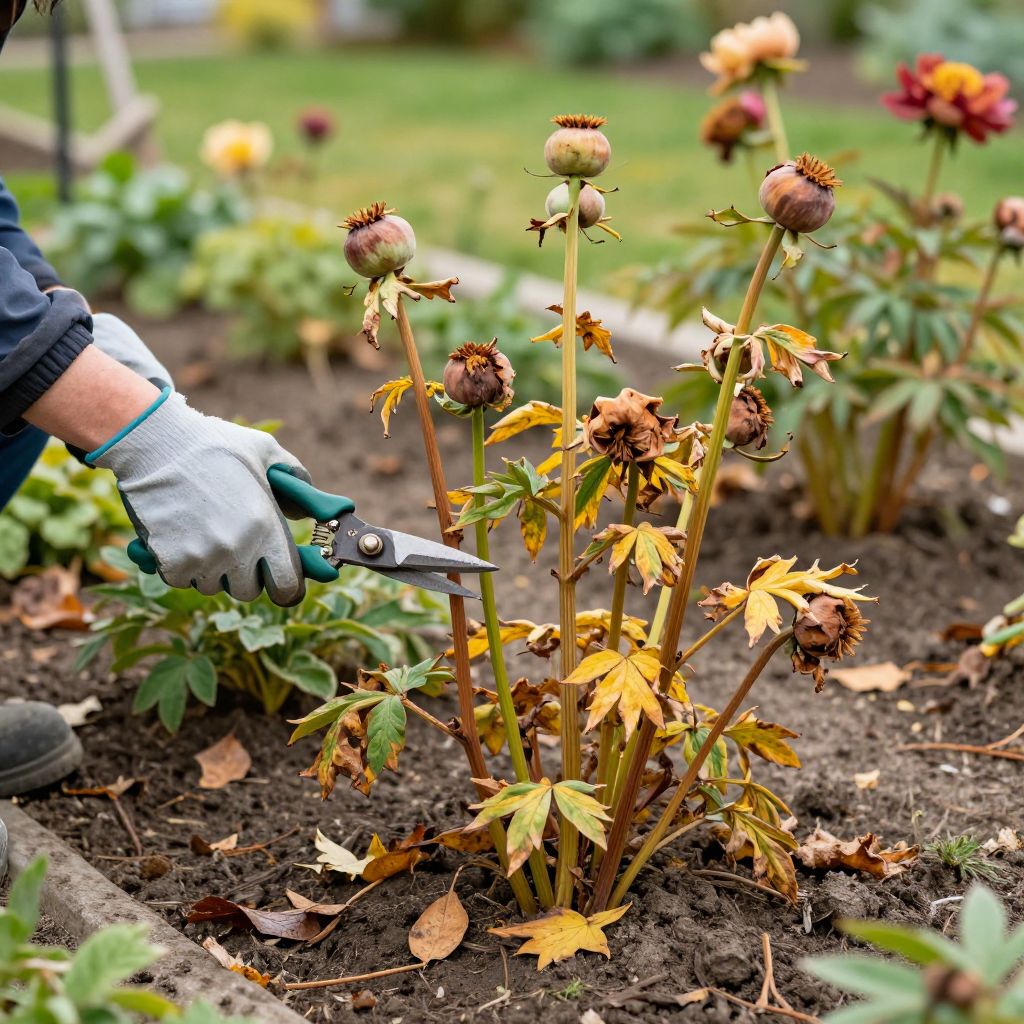
Wondering when to cut peonies back without harming next year’s blooms? The short answer is to wait until the foliage has died back naturally in fall, then cut stems to the ground. Peonies need their leaves for as long as possible after flowering so they can recharge the roots for next season.
Timing matters because peonies store energy in their crown and roots, not in the stems you see above ground. Cut them too early and you can weaken the plant; cut them at the right time and you help reduce disease and keep the bed tidy.
When To Cut Peonies Back?
Cut herbaceous peonies back in late fall, after the foliage has yellowed, browned, or been killed by frost. In many gardens this is after the first hard frost, but the best timing is when the leaves are no longer actively feeding the plant. Trim stems to just above soil level and remove all debris.
Why Timing Matters for Peonies
Peony leaves are not just filler after bloom. They keep photosynthesizing through summer and early fall, sending energy into the roots for next year’s flowers.
If you cut them down while the foliage is still green, you may get fewer blooms, weaker stems, or a slower recovery the following season. Waiting also helps the plant finish its natural cycle.
What happens if you cut peonies back too early?
- The plant has less time to store energy.
- Next year’s flowering may be reduced.
- Young or stressed plants can be set back more noticeably.
Why cut them back at all?
- It removes diseased or damaged foliage.
- It reduces overwintering sites for fungal problems.
- It keeps the garden bed cleaner and easier to maintain.
How to Tell It’s Time
Look for foliage that is yellowing, browning, or collapsing after frost. That is your signal that the plant has finished gathering energy for the year.
If the leaves are still mostly green and upright, leave them alone. A few blemished leaves are normal, but healthy green foliage should stay in place until late season.
Signs your peony is ready to cut back
- Leaves have turned yellow, tan, or brown.
- Stems are flopping or drying out.
- Frost has blackened the foliage.
- There are no active new shoots at the base.
Step-by-Step: How to Cut Peonies Back
- Choose a dry day if possible. Wet foliage can spread disease more easily.
- Use clean, sharp pruners or garden shears.
- Cut herbaceous peony stems down to about 1 to 2 inches above the soil.
- Collect every stem, leaf, and fallen petal from the bed.
- Dispose of diseased foliage in the trash if disease has been a problem.
- Clean your tools after pruning, especially if you saw spots, mold, or wilted stems.
Do not leave peony debris on the soil as mulch. Old foliage can harbor disease spores and pests, especially in damp climates.
Different Types of Peonies Need Different Care
Herbaceous peonies
These are the most common garden peonies. They die back to the ground each winter, so you cut them back completely in fall after the foliage declines.
Tree peonies
Tree peonies have woody stems that stay above ground year-round. Do not cut them to the ground like herbaceous peonies. They usually need only light cleanup, such as removing dead, damaged, or crossing stems after flowering or in late winter, depending on the plant.
Intersectional or Itoh peonies
These hybrids behave more like herbaceous peonies in winter. Their top growth dies back, so you can cut them down after frost once the foliage has finished its season.
What to Do Before Winter
After cutting back herbaceous peonies, a light cleanup is usually enough. Peonies are hardy plants, and they do not need heavy winter protection in most established garden beds.
If your soil drains poorly, avoid piling on thick mulch right against the crown. Excess moisture around the base can encourage rot.
Helpful fall cleanup checklist
- Remove all peony foliage from the bed.
- Check for signs of fungal leaf spot or botrytis.
- Keep the crown at soil level, not buried too deeply.
- Refresh the bed with a thin layer of compost only if needed and if the crown is not covered.
Growing Conditions That Help Peonies Thrive
Good growing conditions make pruning and seasonal care easier because healthy peonies are less prone to disease and stress.
Sunlight
Peonies bloom best in full sun in most climates. In hotter regions, a little afternoon shade can help protect flowers and foliage from stress.
Soil and drainage
Peonies prefer fertile, well-drained soil. Heavy, soggy soil can cause crown rot and weak growth. If your soil stays wet, improve drainage with compost and careful site selection rather than overwatering.
Watering
Water deeply during dry spells, especially for newly planted peonies and young plants. Established peonies are fairly drought-tolerant, but they still perform better with consistent moisture during active growth and bud formation.
Spacing and airflow
Give peonies enough room so air can move between plants. Good airflow helps foliage dry faster after rain and lowers disease pressure.
Common Mistakes to Avoid
- Cutting too early while leaves are still green.
- Leaving diseased foliage in the bed over winter.
- Cutting tree peonies to the ground by mistake.
- Using dull tools that crush stems instead of making clean cuts.
- Mulching too heavily over the crown.
Another common mistake is assuming all peonies should be treated the same. Herbaceous, tree, and Itoh peonies have different growth habits, so identify your plant before you prune.
Peony Pests and Diseases to Watch For
Peonies are generally reliable, but they can develop fungal issues in wet weather or crowded beds. The most common trouble is botrytis blight, which can affect buds, stems, and leaves.
Signs to look for
- Brown or black spots on leaves
- Stems that collapse near the base
- Gray mold on buds or stems
- Leaves that wilt unexpectedly despite adequate moisture
If you see disease, remove affected parts promptly and clean up all debris in fall. Avoid composting heavily diseased peony material unless your compost system gets hot enough to break it down thoroughly.
Can You Divide or Transplant Peonies at the Same Time?
Fall is often the season gardeners think about dividing peonies, but these plants do not like being disturbed. If a peony is healthy and blooming well, it is usually best left alone.
If you must move one, early fall after the foliage has died back is a common window in many climates. Replant divisions so the buds, or “eyes,” sit close to the soil surface, because planting too deeply can reduce flowering.
How Cutting Back Affects Next Year’s Blooms
Proper fall cleanup does not reduce flowering. In fact, it supports better long-term performance by helping the plant finish its growth cycle and by lowering disease risk.
The real key is patience: let the foliage work until it naturally declines, then cut back cleanly and remove debris. That simple routine helps peonies return strong in spring.
Quick Seasonal Guide
- Spring: Enjoy emerging shoots and buds; avoid cutting healthy growth.
- After bloom: Deadhead spent flowers if you want a tidier plant, but keep the foliage.
- Summer: Let leaves stay in place and water during dry periods.
- Fall: Cut herbaceous and Itoh peonies back after frost or when foliage declines.
- Winter: Leave the crown undisturbed and avoid excess mulch.
Conclusion: The Best Time Is After the Foliage Finishes
If you are asking when to cut peonies back, the safest answer is late fall, after the leaves have yellowed or been killed by frost. That timing protects next year’s blooms and helps keep the plant healthy. Grab clean pruners, cut herbaceous peonies to the ground, and clear away all debris for a fresh start next season.
If you want to keep improving your perennial border, you may also enjoy reading about how to care for peonies after flowering and the best time to divide perennials in fall.