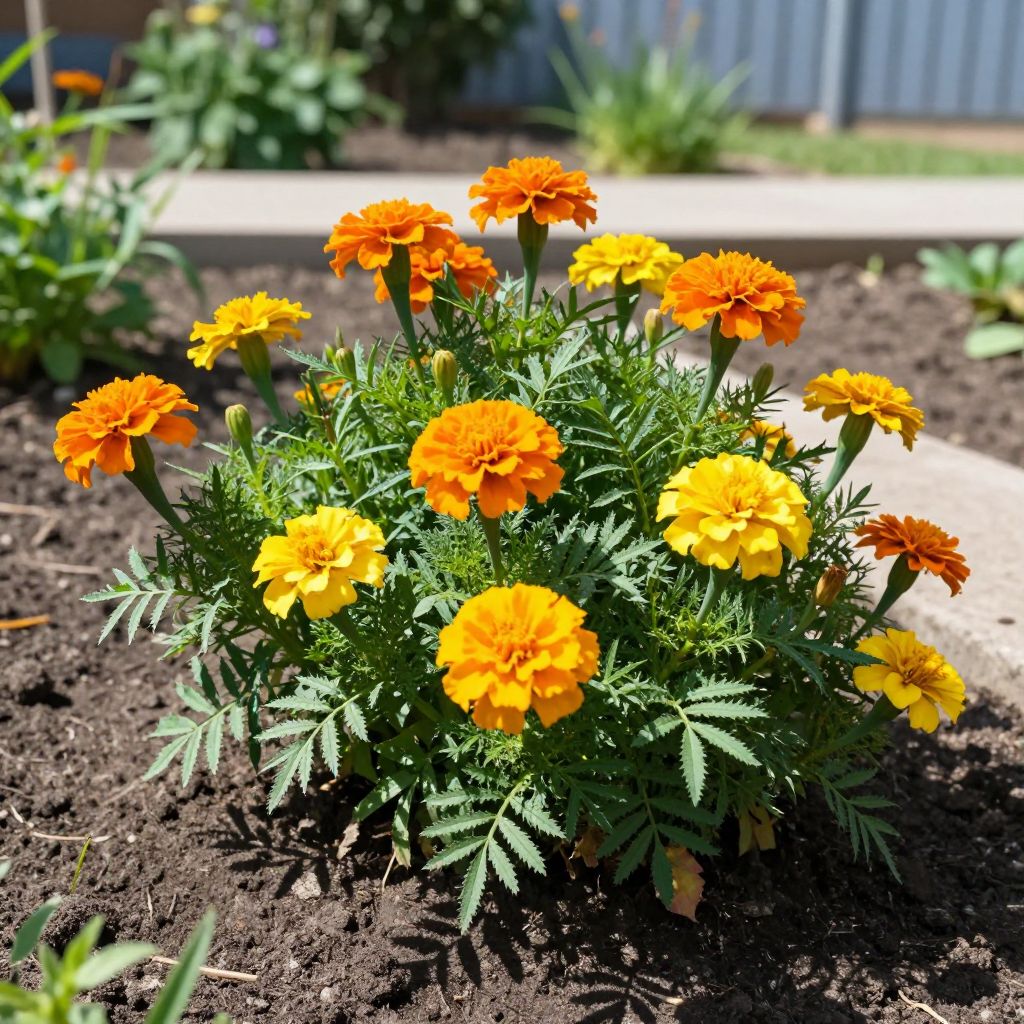
Do marigolds need full sun? In most gardens, yes—marigolds bloom best with plenty of direct light and will look fuller, flower more heavily, and stay tidier when they get a sunny spot. They can tolerate a little light shade, but too much shade usually means fewer blooms and leggier growth.
If you’re trying to decide where to plant them, the good news is that marigolds are forgiving. With the right balance of sun, well-drained soil, and regular deadheading, they’re one of the easiest annual flowers to grow for bright color all season.
Do marigolds need full sun?
Yes, marigolds usually perform best in full sun, which means at least 6 hours of direct sunlight per day. They can survive in partial shade, but flowering is often reduced and stems may stretch toward the light. In hotter climates, a little afternoon shade can help prevent stress during peak summer heat.
How much sun marigolds really need
Most marigolds flower best with 6 to 8 hours of direct sun. More sun generally means more blooms, sturdier stems, and a compact shape. If they receive only 3 to 5 hours, they may still grow, but expect fewer flowers and a looser, less colorful display.
What counts as full sun?
- Full sun: 6 or more hours of direct sunlight daily
- Partial sun or partial shade: 3 to 6 hours of direct sun
- Light shade: Dappled light or morning sun with afternoon shade
When choosing a planting spot, watch the area through the day rather than guessing. A bed that looks bright in the morning may be shaded by noon if it sits near trees, fences, or buildings.
Do different marigolds need different light?
French marigolds, African marigolds, and signet marigolds all prefer sun. Some types handle heat or brief shade a little better than others, but none are true shade plants. If you want strong flowering, treat all marigolds as sun-loving annuals.
What happens if marigolds don’t get enough sun?
Insufficient light is one of the most common reasons marigolds disappoint gardeners. The plants may survive, but they often become thin, bloom less, and look less vigorous.
- Fewer flowers: The biggest sign of too much shade
- Leggy growth: Long stems with wide spaces between leaves
- Poor color: Plants may look pale or weak
- More flopping: Stems may lean or fall over
- Higher disease risk: Damp, shaded conditions can encourage fungal issues
If your marigolds are already planted in a shady area, moving them is often the best fix. They usually transplant well when handled carefully and watered after moving.
Best growing conditions for healthy marigolds
Sun matters most, but it works best when paired with the right soil and watering habits. Marigolds prefer conditions that are warm, open, and not soggy.
Soil and drainage
Marigolds grow best in soil that drains well. They do not like sitting in waterlogged ground, which can lead to root problems and weak growth.
- Use average garden soil with good drainage
- Mix in compost if the soil is poor or compacted
- Avoid heavy, constantly wet soil unless you improve drainage first
- In containers, use a quality potting mix rather than garden soil
Compost can help sandy soil hold moisture longer and improve structure in clay soil, but don’t overdo it. Rich, overly fertile soil can encourage leafy growth at the expense of flowers.
Watering
Marigolds like even moisture while they establish, then moderate watering once growing well. The goal is to keep roots healthy without making the soil soggy.
- Water newly planted marigolds more often until roots settle in
- Water deeply when the top inch or two of soil dries out
- Avoid frequent shallow watering, which encourages weak roots
- Water at the base if possible to keep foliage drier
In hot, sunny sites, containers may dry out much faster than in-ground beds. Check pots daily during warm weather, especially if wind and direct sun are both strong.
Temperature and seasonal timing
Marigolds are warm-season annuals. They grow best once the weather is settled and frost has passed. Cool, cloudy weather can slow them down, even if they are getting enough light.
If you start them too early in cold soil, they may sit and sulk. Wait until conditions are warm enough for active growth, or start them indoors if your climate has a short growing season.
How to plant marigolds for the sunniest results
Planting marigolds in the right spot from the beginning saves frustration later. A sunny, open location with good airflow usually gives the best display.
- Choose a site with at least 6 hours of direct sun.
- Check that the soil drains well after rain or watering.
- Loosen the soil and mix in a small amount of compost if needed.
- Space plants so air can move between them.
- Water after planting and keep the soil lightly moist until established.
Spacing matters because crowded marigolds can shade each other and trap humidity. Give them enough room to develop a rounded shape instead of a crowded, stretched look.
Container growing tips
Marigolds do very well in pots if the container gets enough sun. Choose a pot with drainage holes and place it where it will receive direct light for most of the day.
- Use a pot large enough for root growth and moisture retention
- Make sure the container drains freely
- Rotate pots occasionally if one side gets more sun than the other
- Watch closely for drying out in hot weather
Can marigolds grow in partial shade?
Yes, but with limits. Marigolds can grow in partial shade, especially if they still receive strong morning sun. The more shade they get, the fewer blooms you should expect.
When partial shade can work
- In very hot climates where afternoon sun is intense
- In spots that get bright morning sun and light afternoon shade
- Near reflective surfaces that increase light exposure
Partial shade is more acceptable in hot regions than in cool, cloudy ones. In cooler climates, marigolds usually need the fullest sun you can give them to flower well before the season ends.
When shade is too much
If marigolds get less than about 4 hours of direct sun, they often become weak and sparse. In that situation, it’s usually better to move them or choose a more shade-tolerant flower for the site.
How to keep marigolds blooming longer
Even in full sun, marigolds bloom best when you keep up with a few simple maintenance tasks. These small efforts help the plants stay neat and productive.
- Deadhead spent flowers regularly to encourage more buds
- Pinch or trim back leggy stems to promote branching
- Remove faded, damaged, or diseased foliage
- Keep weeds down so plants don’t compete for light, water, and nutrients
Deadheading is especially useful if you want a long flowering season. Once flowers fade and begin forming seed heads, the plant shifts energy away from making new blooms.
Should you fertilize marigolds?
Marigolds usually don’t need heavy feeding. Too much fertilizer, especially nitrogen, can produce lots of leaves and fewer flowers. If your soil is poor, a light feeding or compost amendment may help, but avoid overfeeding.
Common marigold problems linked to poor sun or care
When marigolds struggle, the cause is often environmental rather than complicated. Sun, drainage, and airflow are the first things to check.
Leggy plants
Leggy growth usually means the plant is stretching for light. Move it to a sunnier location, pinch back long stems, and avoid overcrowding.
Few or no blooms
Low light is a common reason marigolds fail to flower well. Excess fertilizer, especially one high in nitrogen, can also reduce blooming. Use less fertilizer and give the plant more sun if possible.
Powdery mildew and fungal spots
Shaded, crowded, or damp plants are more likely to develop fungal issues. Improve spacing, water at the soil line, and remove badly affected leaves.
Root rot
Marigolds in soggy soil may wilt even when the soil is wet. This usually points to poor drainage. Improve the site or move the plant to a better-drained bed or container.
Practical troubleshooting checklist
If your marigolds are not thriving, use this quick check to figure out what they need most.
- Do they get at least 6 hours of direct sun?
- Is the soil draining well after rain?
- Are they crowded by other plants?
- Are you watering only when needed, not every day by habit?
- Have you removed faded flowers and weak stems?
If the answer to the first question is no, sunlight is probably the main issue. If the answer to the second is no, drainage may be the bigger problem.
Bottom line: give marigolds sun for the best show
Marigolds are at their best in full sun, with warm conditions, well-drained soil, and regular deadheading. They can tolerate a little shade, but the more direct light they get, the better they usually bloom. If your plants look sparse, move them to a brighter spot and watch the difference.
For more practical flower-growing advice, you may also want to read related guides on annual flower care and container gardening tips if those topics match your garden plans.