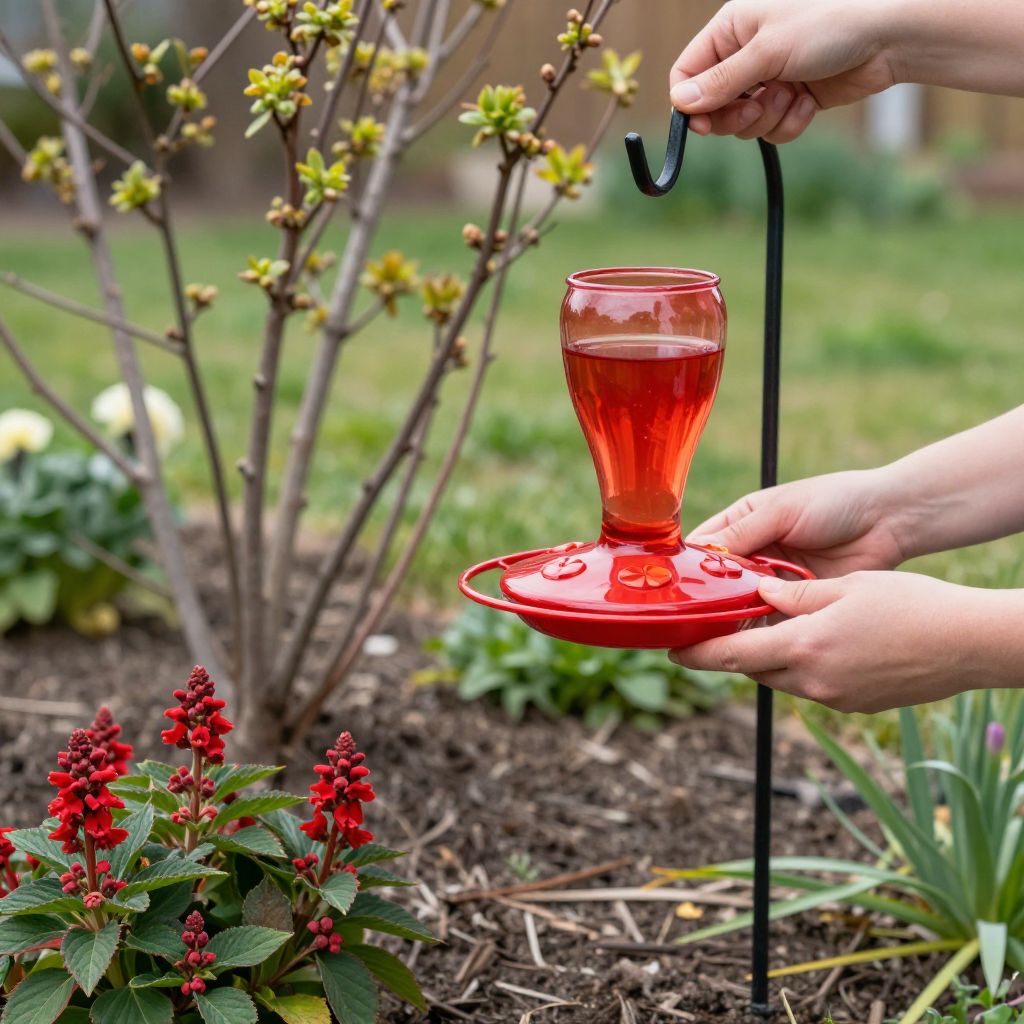
Wondering when to put hummingbird feeders out so you don’t miss the first arrivals? Timing matters because hummingbirds travel at different times depending on your region, elevation, and spring weather. Put feeders out early enough to catch migrants, but not so early that you create extra maintenance in freezing conditions.
The best time is usually about 1 to 2 weeks before you expect hummingbirds to arrive locally. In warm climates that may be late winter or early spring; in colder regions it may be mid- to late spring. If you’re unsure, it’s usually better to put feeders out a little early than too late.
When to put hummingbird feeders out?
Set feeders out before the first hummingbirds reach your area, not after you spot them. A good rule is to have feeders ready by the time nearby flowers begin blooming and daytime temperatures are staying consistently above freezing. In many places, that means early spring; in southern regions, it can be much earlier.
How to time feeders by season and climate
Spring timing
Spring is the most important time to get the timing right. Migrating hummingbirds may pass through quickly, and they often return to the same yards year after year.
- Southern climates: feeders may go out in late winter or very early spring.
- Temperate regions: aim for early to mid-spring, before peak bloom in many gardens.
- Colder northern regions: wait until the risk of hard freezes is lower, but still get feeders out before expected arrival.
If you know the species common in your area, use their migration window as a guide. Local birding groups, extension offices, and neighborhood observations can help you narrow the timing.
Summer timing
Once hummingbirds are active in your yard, keep feeders available through summer. This is especially useful during hot, dry spells when nectar sources may be scarce. Feeders should be cleaned more often in warm weather because sugar water spoils faster.
Fall timing
Do not take feeders down too early in autumn. Many hummingbirds migrate later than people expect, and some individuals linger while natural nectar sources decline. Keep feeders up until you are confident migration has passed in your area, which may be well into fall in some regions.
Winter timing
In mild winter climates, hummingbirds may overwinter or appear as seasonal stragglers. If you have hummingbirds in winter, feeders can stay up as long as you can prevent freezing and keep them clean. In very cold regions, feeders usually come down after migration ends unless you are actively supporting wintering birds.
How to tell if it’s the right time in your yard
Local conditions matter more than the calendar. Watch for these signs that it’s time to hang feeders:
- Early-blooming plants are opening, such as columbine, salvia, or flowering shrubs in your landscape.
- Daytime temperatures are becoming milder and more stable.
- Neighbors or local birders are reporting first sightings.
- Insect activity is increasing, which often lines up with hummingbird arrival.
If you garden in a windy site, near a coast, or at higher elevation, timing can shift by weeks. Microclimates can make your yard behave differently from the rest of your town.
Where to place hummingbird feeders for best results
Placement affects whether birds find and use the feeder. Hummingbirds prefer safe, visible feeding spots with nearby perches and some shelter from harsh weather.
Good feeder placement tips
- Hang feeders in partial shade to slow spoilage and reduce heat stress.
- Choose a spot that is visible but not exposed to strong wind.
- Keep feeders near shrubs or trees so birds have quick cover.
- Place them where you can reach them easily for cleaning and refilling.
Avoid placing feeders too close to windows unless you use bird-safe glass markings. Also avoid hanging them where ants, bees, or squirrels can reach them too easily.
What kind of feeder setup works best
Most home gardeners do well with a simple feeder that is easy to clean and refill. The best feeder is one you can maintain consistently, because cleanliness matters more than style.
Feeder basics
- Use a feeder with removable parts for washing.
- Choose red accents if you like, but do not rely on dyed nectar.
- Look for a design that limits leaks and is easy to inspect for mold.
Use plain sugar water, not honey, brown sugar, artificial sweeteners, or red dye. Sugar water should be mixed at the common ratio of 1 part white granulated sugar to 4 parts water. If you need to make a small batch, keep the ratio consistent.
Maintenance after you put feeders out
Once feeders are up, regular upkeep is essential. Nectar can ferment or grow mold, especially in warm weather. Dirty feeders can harm hummingbirds and may keep them away.
Cleaning routine
- Empty leftover nectar before it turns cloudy or sour.
- Wash the feeder with hot water and a bottle brush.
- Rinse thoroughly so no soap residue remains.
- Let parts dry before refilling.
In hot weather, check feeders more often. In cooler weather, they may last a little longer, but you should still inspect them regularly. If nectar looks cloudy, has floating particles, or smells off, replace it.
How often to refresh nectar
- Hot weather: every 1 to 2 days may be needed.
- Mild weather: every few days is often enough.
- Cool weather: change it before it degrades, especially after rain or direct sun exposure.
Common mistakes to avoid
Most feeder problems come from timing or maintenance, not from the birds themselves. Avoid these common errors:
- Putting feeders out too late and missing early migrants.
- Leaving feeders up but forgetting to clean them.
- Using nectar that is too strong, too weak, or dyed.
- Hanging feeders in full sun where nectar spoils quickly.
- Taking feeders down too early in fall.
- Assuming one feeder is enough for every season and every yard.
If bees or ants become a problem, move the feeder, adjust the hanging location, or use a feeder style designed to reduce access. Do not use pesticides near feeders.
How feeders fit into a hummingbird-friendly garden
Feeders are helpful, but they work best alongside nectar-rich plants. A garden with staggered bloom times gives hummingbirds natural food from spring through fall.
Useful garden features
- Flowering plants with tubular blooms.
- Native shrubs and perennials that bloom at different times.
- Some open space for flight, with nearby cover for resting.
- A small water source or damp area nearby, if appropriate for your garden.
Planting a mix of early, midseason, and late bloomers reduces pressure on your feeders and helps birds stay in the area longer. It also makes your landscape more resilient if one bloom cycle is shortened by weather.
Troubleshooting if hummingbirds are not coming
If you’ve put feeders out and no birds are visiting, don’t assume the feeder is the problem right away. Hummingbirds may simply not have arrived yet, or they may be feeding elsewhere in your neighborhood.
Things to check
- Is the feeder clean and fresh?
- Is it visible from the air and easy to spot?
- Is it placed near shelter, not in a harsh, exposed location?
- Are there blooming plants nearby that might be more attractive than the feeder?
- Are you within the local migration window?
Be patient for a few days after setting feeders out, especially in spring. Once a hummingbird finds a reliable source, it may return regularly.
Simple seasonal checklist
Use this quick checklist to stay on track through the year:
- Before expected arrival: clean feeders and hang them up.
- During migration: keep nectar fresh and feeders visible.
- In summer: monitor heat, spoilage, and insect pressure.
- In fall: leave feeders up until migration clearly ends locally.
- In winter: keep feeders only if hummingbirds are present and you can maintain them safely.
Conclusion
The best answer to when to put hummingbird feeders out is: before hummingbirds arrive in your area, adjusted for your local climate and migration timing. If you’re unsure, put them out a little early, keep them clean, and pair them with hummingbird-friendly plants for the longest season of visits.
If you want to support more wildlife in your garden, you may also enjoy reading about pollinator-friendly planting and seasonal garden maintenance.