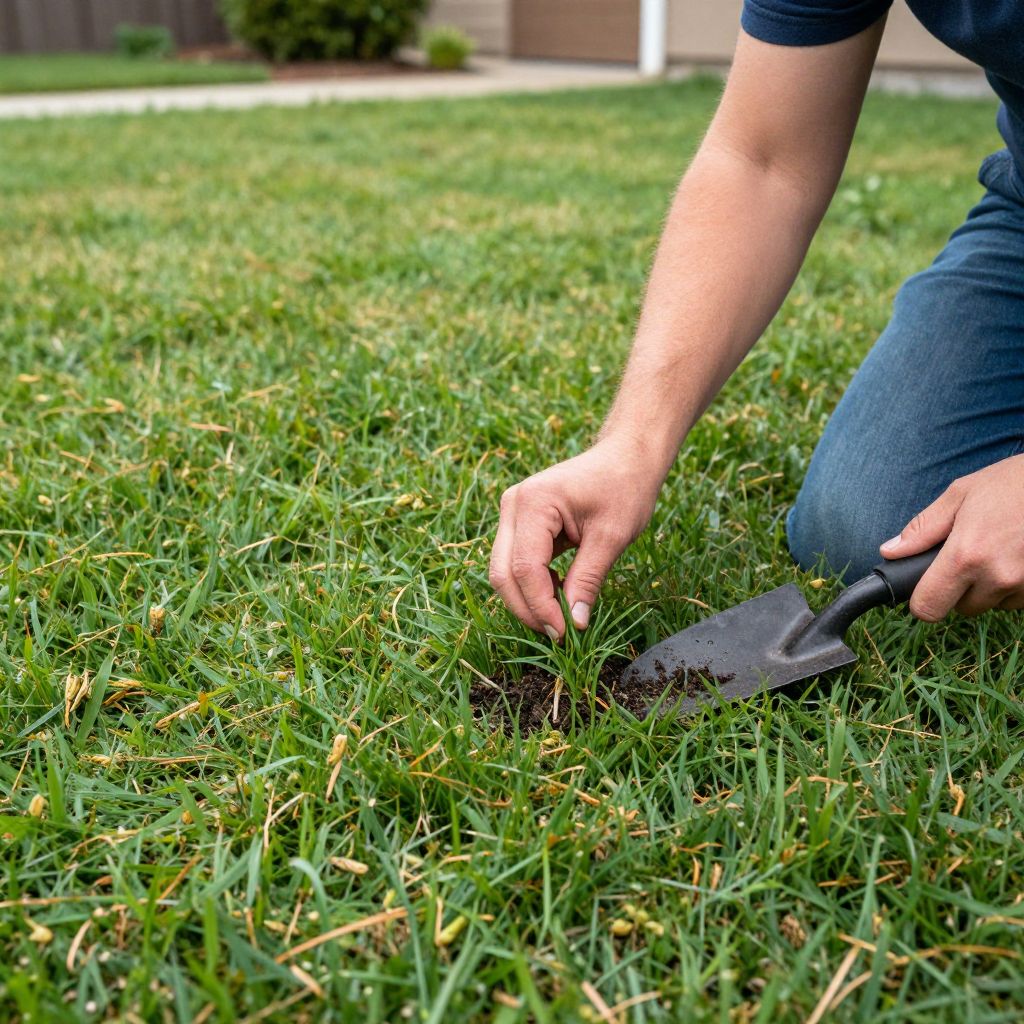
You’re trying to figure out what type of grass you have, and that’s the right first step before you mow, fertilize, overseed, or repair thin spots. Different grasses look similar at a glance, but leaf width, growth habit, color, and seasonal behavior can help you narrow it down quickly.
Once you identify your lawn grass, you can match your care to its needs instead of guessing. That usually means better mowing height, healthier roots, fewer weeds, and less frustration when the lawn thins out or turns brown in the wrong season.
What type of grass do I have?
You can identify your grass by looking at blade width, how it spreads, where it grows best, and whether it stays green in cool or warm weather. Most lawns are either cool-season grasses or warm-season grasses, and a simple close-up inspection usually narrows the type down fast.
Start with the biggest clues
Before you look at individual blades, step back and observe the whole lawn. The way grass grows across your yard often tells you more than one single feature.
1. Check the season it grows best
- Cool-season grasses grow most actively in spring and fall and may slow down in summer heat.
- Warm-season grasses thrive in late spring and summer and often go dormant or brown in cool weather.
If your lawn looks strongest in mild weather and struggles during hot spells, it may be a cool-season type. If it greens up late in spring and loves heat, it may be a warm-season grass.
2. Look at the texture
- Fine blades are narrow and soft-looking.
- Medium blades are common in many lawn grasses.
- Coarse blades are wider, stiffer, and often feel rougher underfoot.
Blade width is one of the easiest ways to separate grass types, especially when paired with growth habit and color.
3. Notice how it spreads
Some grasses spread by above-ground runners called stolons, while others spread by underground stems called rhizomes. Bunch-type grasses grow in clumps and do not spread as aggressively.
- Stolons: creeping stems across the soil surface, common in some warm-season lawns.
- Rhizomes: underground spreading stems, common in many cool-season and warm-season grasses.
- Bunching growth: clump-forming grass that expands outward slowly.
Common lawn grasses and how to recognize them
These are the grasses most homeowners encounter. You do not need to identify the exact species perfectly to care for the lawn well, but these traits can point you in the right direction.
Cool-season grasses
- Kentucky bluegrass (Poa pratensis): fine to medium blades, rich green color, spreads by rhizomes, often forms a dense lawn.
- Perennial ryegrass (Lolium perenne): shiny underside on blades, fine texture, bunching growth, quick to establish.
- Tall fescue (Festuca arundinacea or Schedonorus arundinaceus): wider blades, coarse texture, deep roots, often used in tougher lawns.
- Fine fescues (Festuca spp.): very fine blades, soft appearance, tolerate shade better than many other grasses.
Warm-season grasses
- Bermudagrass (Cynodon dactylon): fine blades, aggressive spreading, loves heat and sun, often forms a dense mat.
- Zoysiagrass (Zoysia japonica and related species): medium-fine blades, dense growth, slower to establish, handles heat well.
- St. Augustinegrass (Stenotaphrum secundatum): broad, flat blades, coarse texture, spreads by stolons, common in warmer climates.
- Centipedegrass (Eremochloa ophiuroides): light green color, medium texture, slow-growing, low-maintenance in suitable climates.
How to identify your grass step by step
If you want a practical answer, use a simple inspection method. A small hand lens can help, but your eyes and fingers are usually enough.
- Cut a small sample from the lawn, including roots, stems, and a few blades.
- Measure blade width with a ruler or compare it to a coin or pencil tip.
- Check blade tips for pointed, boat-shaped, or rounded ends.
- Look at the ligule where the blade meets the sheath; some grasses have a visible membrane or hairs there.
- Inspect the stem for stolons, rhizomes, or clumping growth.
- Compare color and density to common lawn types in your region.
Take photos in daylight and compare them with local extension resources or turf guides. Regional climate matters because the same grass type can look different depending on shade, mowing height, and soil conditions.
Useful visual clues
- Very fine, dense, and soft: often fine fescue, bermudagrass, or Kentucky bluegrass.
- Wide, coarse blades: often tall fescue or St. Augustinegrass.
- Shiny underside on narrow blades: often perennial ryegrass.
- Thick carpet with runners: often bermudagrass, zoysiagrass, or St. Augustinegrass.
Where your grass grows tells you a lot
Climate and site conditions are major clues. Grass that thrives in shade, heat, drought, or foot traffic usually belongs to a limited group.
Sun and shade
If your lawn grows under trees or on the north side of a building, shade-tolerant grasses are more likely. Fine fescues and some tall fescue lawns often do better in partial shade than bermudagrass or centipedegrass.
Heat and drought
In hot, sunny areas, warm-season grasses often dominate. Bermudagrass, zoysiagrass, and St. Augustinegrass generally handle heat better than cool-season grasses, though each has its own care needs.
Traffic and wear
If the lawn gets heavy foot traffic, you may see a dense, spreading grass that recovers quickly. Kentucky bluegrass and bermudagrass can repair themselves well, while bunch-type grasses often need overseeding or patch repair.
Common mistakes when identifying grass
Many lawns contain more than one grass type, especially after years of overseeding, patching, or weed invasion. That is why identification can be tricky.
- Confusing weeds with grass: crabgrass, nutsedge, and goosegrass can mimic lawn grass until they mature.
- Judging by color alone: fertilizer, drought, and shade can change color without changing species.
- Ignoring mixed lawns: one yard may contain two or three grass types.
- Looking only at mowed blades: a close cut hides key features like ligules and growth habit.
If your lawn has patches that look different, identify the dominant grass first. Then decide whether the smaller patches are a manageable mix or a problem worth correcting.
What to do after you identify your grass
Once you know the type, you can adjust your maintenance to fit it. That usually improves lawn health faster than any single product.
Mowing height matters
Different grasses tolerate different mowing heights. Cutting too short stresses roots, invites weeds, and makes drought damage worse. As a rule, never remove more than one-third of the blade at a time.
- Cool-season lawns often prefer a slightly higher cut than many people expect.
- Warm-season lawns may be mowed lower, but the correct height depends on the species.
- Sharp mower blades reduce tearing and help prevent browning at the tips.
Water based on grass type and weather
New lawns need more frequent moisture than established lawns. Mature grass usually benefits more from deeper, less frequent watering than from daily sprinkling, but local rainfall, soil texture, and heat all matter.
- Sandy soil drains quickly and may need more frequent watering.
- Clay soil holds water longer and can become waterlogged if overwatered.
- Shady areas dry more slowly than full-sun areas.
Watch the lawn rather than following a rigid schedule. Wilting, bluish-gray color, and footprints that remain visible can signal drought stress.
Fertilize carefully
Grass type affects when and how much fertilizer it can use efficiently. Cool-season and warm-season grasses do not peak at the same time, so feeding them on the wrong schedule can waste nutrients and encourage weak growth.
If you are unsure, start with a soil test. A test is the best way to learn whether your lawn needs lime, phosphorus, potassium, or just better mowing and watering.
How soil, drainage, and thatch affect identification
Soil conditions can change how grass looks. A healthy lawn on well-drained soil may appear denser and greener than the same species growing in compacted or poorly drained ground.
Drainage problems
Grass that sits in wet soil may thin out, yellow, or develop moss and weeds. Some species tolerate poor drainage better than others, but no lawn grass likes to stay soggy for long.
Thatch buildup
Thatch is a layer of undecomposed stems and roots between the soil and green blades. A moderate amount is normal, but excessive thatch can make grass feel spongy and reduce water penetration.
- Use a screwdriver or soil probe to check whether the lawn is compacted.
- Rake out dead material if the lawn has a heavy thatch layer.
- Aeration can help compacted lawns, especially in high-traffic areas.
When to call in extra help
If you still cannot tell what type of grass you have, that is common. A mixed lawn, a stressed lawn, or a newly established yard can be hard to read.
Bring a sample to a local garden center, cooperative extension office, or turf specialist if possible. A clear photo of the blade, stem, and whole lawn in good light can also help with identification.
Quick troubleshooting guide
- Thin patches: check mowing height, shade, compaction, and irrigation before reseeding.
- Brown in summer: could be heat stress, drought, or a cool-season grass going dormant.
- Yellowing: may point to nutrient imbalance, overwatering, or poor drainage.
- Weedy lawn: often means the grass is stressed and not dense enough to compete.
Conclusion
To answer what type of grass do I have, start with blade width, growth habit, and whether the lawn prefers cool or hot weather. Then confirm your guess with a close sample and local climate clues. Once you know the grass type, you can mow, water, and feed it with much better results.
For more practical lawn care help, you may also want to read about lawn care basics from university extension resources and how to identify common turfgrasses.