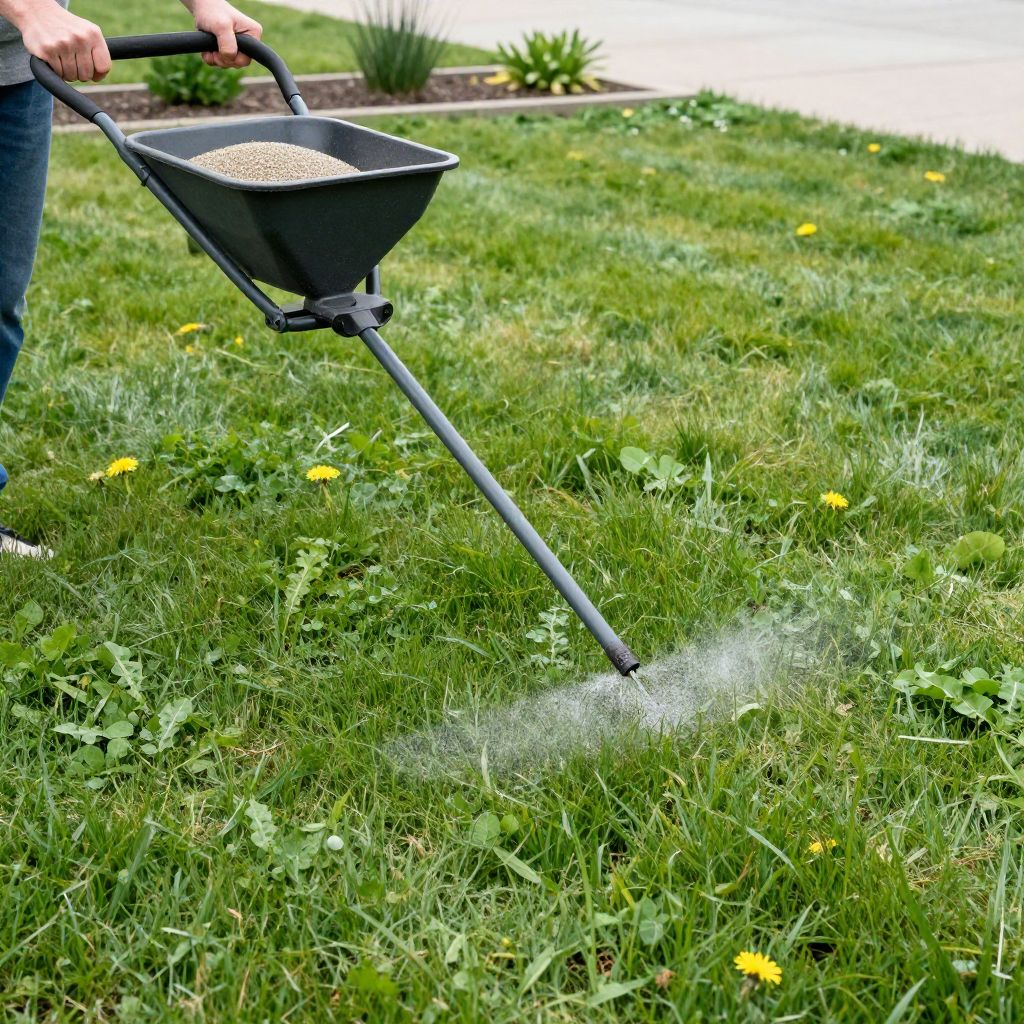
Wondering when to apply weed and feed so it actually works instead of wasting time or stressing your lawn? Timing matters more than most people realize, because the product works best when weeds are actively growing and your grass is in a suitable growth phase.
The right window depends on your grass type, your climate, and whether you’re treating broadleaf weeds in an established lawn. Apply weed and feed only when temperatures, soil moisture, and lawn growth are favorable, and always follow the product label for your specific turf and weed problem.
When to apply weed and feed?
Apply weed and feed when your lawn is actively growing, weeds are small and actively growing too, and rain is not expected immediately after application. For most lawns, that means spring or fall for broadleaf weed control, but the best timing depends on your grass type, local weather, and whether the product is a pre-emergent or post-emergent formula.
How weed and feed works
Weed and feed combines a lawn fertilizer with a herbicide, usually aimed at common broadleaf weeds such as dandelion, clover, and plantain. Some products also include pre-emergent weed control, while others are designed only for weeds already visible.
Because the fertilizer and herbicide are applied together, timing is a compromise. You want the grass to be ready to use the nutrients, but the weeds must also be actively growing so the herbicide can move through the plant.
Why timing matters
- Too early: weeds may not be growing enough to absorb the herbicide.
- Too late: weeds may already be mature and harder to kill.
- Wrong season: heat, drought, or frost can reduce effectiveness and stress turf.
- Wet conditions: heavy rain can wash product off before it works.
Best seasonal timing for weed and feed
In many regions, the best time to apply weed and feed is during active lawn growth in spring or fall. The exact window depends on whether your lawn is cool-season or warm-season grass and whether you are targeting existing weeds or preventing new ones.
Spring applications
Spring is a common time for weed and feed because many broadleaf weeds begin active growth as temperatures rise. Apply when the lawn has greened up, the soil is workable, and daytime temperatures are mild.
Spring is often a good choice for cool-season lawns such as Kentucky bluegrass, perennial ryegrass, and tall fescue. For warm-season grasses, spring timing should wait until the lawn is fully awake and growing strongly, not just lightly green.
Fall applications
Fall is often the best time for broadleaf weed control in many lawns, especially cool-season turf. Weeds are still active, temperatures are usually milder, and grass can recover quickly after treatment.
Fall applications can be especially useful if summer heat made spring treatment less effective or if you missed the early-season window. In many climates, fall also gives you a better chance to repair thin turf later with overseeding, if the product label allows it.
Summer cautions
Summer is usually the riskiest time to apply weed and feed, especially during heat waves, drought, or when the lawn is already stressed. Herbicides and fertilizer together can increase stress on turf if applied under hot, dry conditions.
If you must treat summer weeds, choose a cooler stretch of weather and make sure the lawn is well watered beforehand, unless the label says otherwise. Avoid application on newly seeded lawns or drought-stressed turf.
How to tell if your lawn is ready
Before you apply weed and feed, check the lawn itself rather than relying only on the calendar. A lawn that is growing steadily will respond better than one that is dormant, scorched, or waterlogged.
- Grass is actively growing and looks healthy overall.
- Weeds are young and leafy, not old and woody.
- Soil is moist but not saturated.
- No heavy rain is expected right after application.
- Temperatures are within the product’s recommended range.
If your lawn is patchy, thin, or struggling, fix the underlying issue first. Weed and feed is not a cure for compacted soil, poor drainage, severe shade, or mowing problems.
Choosing the right weed and feed product
Not all weed and feed products are the same. Some are made for spring feeding and weed control, while others are targeted for fall or for specific weed types. Read the label carefully before buying.
Check these details on the label
- Grass type compatibility for your lawn.
- Whether it is for pre-emergent or post-emergent weed control.
- Which weeds it controls.
- Temperature restrictions.
- Whether you can seed soon after use.
Some weed and feed products should not be used on newly seeded lawns or on certain turf species. If you plan to overseed, make sure the product will not interfere with germination or young grass establishment.
How to apply weed and feed correctly
Even a good product can disappoint if it is applied unevenly or at the wrong time of day. Careful application helps you get more consistent weed control and reduces the chance of burning or patchy results.
- Mow the lawn a few days before treatment, but not so short that you stress the grass.
- Remove heavy thatch, sticks, or debris so granules reach the soil evenly.
- Apply to a dry lawn unless the label says otherwise.
- Use a calibrated spreader for even coverage.
- Water in only if the label instructs you to do so.
- Keep people and pets off the lawn for the time listed on the label.
For liquid products, spray evenly and avoid drift onto ornamentals, vegetable beds, or desirable groundcovers. Broadleaf herbicides can damage many garden plants if they contact leaves or roots.
Spreader tips for granular products
- Set the spreader according to the label, not guesswork.
- Walk at a steady pace to avoid stripes.
- Overlap slightly on each pass for even coverage.
- Clean the spreader afterward to prevent corrosion and accidental reuse.
Common mistakes to avoid
Many weed and feed failures come from poor timing or treating the wrong lawn condition. Avoid these common errors if you want better results.
- Applying to drought-stressed grass or during extreme heat.
- Using it on a newly seeded lawn without checking the label.
- Expecting it to kill large, mature weeds instantly.
- Applying before heavy rain or irrigation runoff.
- Using the wrong product for the weeds you actually have.
- Overapplying in hopes of faster results.
Overapplication can burn turf and increase the risk of runoff. More product is not better; correct timing and even coverage matter much more.
What to do before and after application
A little lawn prep can improve results. Healthy turf competes better with weeds, and a lawn that is mowed and watered correctly will recover more quickly after treatment.
Before you apply
- Mow if needed, but leave enough leaf blade for the grass to keep growing.
- Water lightly a day or two before if the soil is dry, unless the label says not to.
- Identify the weeds so you know whether the product is appropriate.
- Check the forecast for rain, wind, and temperature swings.
After you apply
- Do not mow immediately unless the label allows it.
- Keep foot traffic light for the recommended period.
- Watch for weed yellowing over the next 1 to 3 weeks, depending on the product.
- Resist reapplying too soon if weed control is slow.
If weeds are still present after the waiting period, identify whether they are the wrong weed species, too mature, or in a stressed area of the lawn. Sometimes spot treatment is more effective than repeating a full-lawn application.
When not to use weed and feed
There are several situations where weed and feed is the wrong tool. In those cases, a separate fertilizer, a targeted herbicide, or a different lawn-care approach is usually safer and more effective.
- Newly seeded lawns or freshly sodded areas, unless the label specifically allows it.
- Lawns under drought stress or heat stress.
- Areas with mostly grassy weeds, since many weed and feed products target broadleaf weeds only.
- Lawns with severe bare spots that need reseeding or renovation.
- Sloped areas where runoff is likely.
If your main issue is crabgrass or other grassy weeds, you may need a different pre-emergent or post-emergent product. Weed and feed is not a universal weed solution.
Better results with a healthier lawn
Weed control works best when the lawn itself is dense and vigorous. Thick turf shades soil, reduces weed germination, and recovers faster after treatment.
To support that, mow at the proper height for your grass type, avoid scalping, improve drainage if water pools, and fertilize according to your turf’s needs rather than on a rigid calendar. If compaction is an issue, aeration can help roots and water move more freely through the soil.
Long-term lawn habits that reduce weeds
- Mow regularly at the recommended height.
- Water deeply but infrequently when appropriate for your grass.
- Fill thin areas with overseeding when the season is right.
- Correct soil problems such as compaction or poor drainage.
- Spot-treat weeds before they spread and set seed.
Final takeaway
The best time to apply weed and feed is when your lawn is actively growing, weeds are actively growing, and the weather is mild enough for the grass to handle treatment. For many lawns, that means spring or fall, but your local climate and grass type should guide the final decision.
Before you apply anything, read the label, check the forecast, and make sure your lawn is ready. If you want to keep learning about lawn care timing, you may also find it helpful to read about when to fertilize your lawn and how to overseed a lawn.