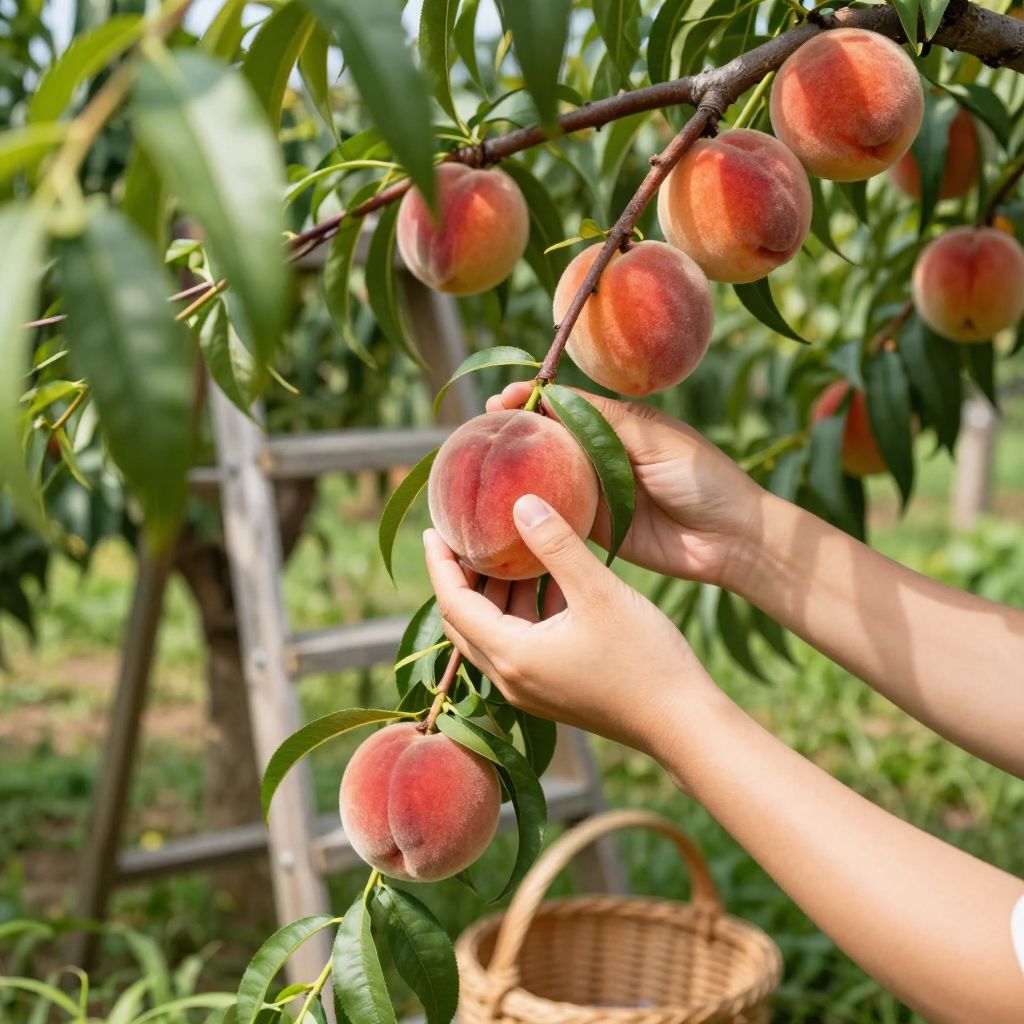
Wondering when to pick peaches so they’re sweet, juicy, and not mealy? The best time is usually when the fruit has fully colored up, smells fragrant, and gives slightly to gentle pressure near the stem end. Peaches do not ripen much after picking, so timing matters more than with many other fruits.
Because varieties and climates differ, the right harvest window can range from a few days to a couple of weeks. If you learn the signs of maturity and check your tree often, you can pick peaches at peak flavor instead of guessing.
When to pick peaches?
Pick peaches when they are fully colored for the variety, fragrant, and slightly soft at the stem end, but still firm enough to handle. Ripe peaches usually detach with a gentle lift-and-twist. If you must tug hard, wait a day or two and check again. Taste is the best final test.
How to tell peaches are ready to harvest
Peaches can look ripe before they are actually ready, so use several signs together rather than relying on color alone.
Look for background color, not just blush
Many peaches develop a red blush before they are ripe, so that is not the only clue. Instead, check the background color of the skin, which shifts from green to creamy yellow, gold, or pale orange depending on the variety.
If the fruit still has a green cast, it is usually not ready. A ripe peach should look full-colored and mature, with no obvious green near the shoulders.
Use touch carefully
Hold the peach in your hand and press very gently near the stem end. A ripe peach will yield slightly, while an unripe one feels hard. Avoid squeezing the sides too firmly, since that can bruise the fruit.
If the peach is soft all over or feels mushy, it is likely overripe and should be used right away.
Check aroma and ease of detachment
Ripe peaches often smell sweet and fruity, especially near the stem. They also come off the branch with little effort when lifted and twisted gently. If the fruit resists, leave it on the tree a bit longer.
Do not pull downward hard. That can damage the spur or tear the stem, which shortens storage life and can injure the tree.
What season are peaches usually picked?
Peach harvest season depends on your climate, variety, and local weather. In many home gardens, peaches ripen in mid- to late summer, but early cultivars can mature sooner and late-season types can extend harvest into early fall. Warm, sunny weather usually speeds ripening.
In cooler areas, peaches may ripen later and more gradually. In hot climates, fruit can mature quickly, so you may need to check the tree every day or two once color starts changing.
Why harvest timing varies
- Variety: Early, midseason, and late peaches ripen at different times.
- Sun exposure: Fruit on the outside of the canopy ripens first.
- Crop load: Heavily loaded trees may ripen unevenly.
- Weather: Hot spells can accelerate ripening; cool nights can slow it.
How to harvest peaches without damaging them
Peaches bruise easily, so gentle handling matters as much as timing. Harvest in the cool part of the day if possible, and place fruit carefully into a shallow container rather than piling them deep.
- Hold the peach in your palm and support it from below.
- Lift slightly and twist gently.
- If it releases easily, place it in a shallow basket or tray.
- Keep harvested fruit out of direct sun.
- Sort out any damaged or split peaches right away.
If you plan to store peaches for a short time, handle them even more carefully. Bruised fruit softens quickly and can spoil the rest of the harvest.
Can you pick peaches before they are fully ripe?
Yes, but only if they are mature enough. Peaches can ripen off the tree after harvest if they have already reached the mature stage, meaning they are full-sized and the background color has shifted away from green. They will not improve much if picked too early.
If a peach is hard and green, it may soften a bit but usually stays bland and dry. For best flavor, let fruit ripen on the tree as long as possible without risking overripe fruit, wildlife damage, or splitting.
When early picking makes sense
- Birds, squirrels, or wasps are starting to damage fruit.
- A storm is forecast and ripe peaches may fall or split.
- You need to harvest in stages because the tree ripens unevenly.
- The fruit is mature but still slightly firm for transport or storage.
How to ripen peaches after picking
If you harvest mature peaches that are still firm, let them finish ripening at room temperature. Set them in a single layer in a shallow bowl or tray, out of direct sunlight. Once they soften and smell fragrant, move them to the refrigerator if you need to slow further ripening.
Do not put very unripe peaches in the fridge. Cold can slow or stall ripening and leave you with fruit that never develops good flavor.
Simple ripening tips
- Keep peaches at room temperature until they soften.
- Separate bruised fruit so it does not speed spoilage in the batch.
- Check daily; ripe fruit can go from firm to overripe quickly.
- Refrigerate only after the fruit is ripe.
Common mistakes when deciding when to pick peaches
Many gardeners harvest too early because the fruit looks colorful, or too late because they wait for maximum softness. Both can reduce quality. The best peaches are picked at the right stage, not simply when they look pretty.
Mistakes to avoid
- Relying on red blush alone instead of checking background color and firmness.
- Waiting for softness on the tree, which often means overripe fruit and more bruising.
- Pulling too hard and damaging the spur or branch.
- Stacking fruit deeply, which causes bruising.
- Harvesting after heavy rain when fruit may split or spoil faster.
What if your peaches ripen unevenly?
Uneven ripening is common, especially on trees with dense canopies or fruit exposed to different amounts of sun. The outside fruit often ripens first, while shaded fruit needs more time.
Pick the ripest peaches first and return every day or two. This staged harvest helps you catch fruit at its best and reduces losses from overripening or pests.
How to improve even ripening on future crops
- Prune annually to open the canopy to light and air.
- Thin fruit early so remaining peaches size up better.
- Remove crowded or crossing branches that shade the interior.
- Keep the tree healthy with consistent watering during dry periods.
Growing conditions that affect harvest quality
Good harvest timing starts long before picking. Healthy peach trees produce better fruit, and better fruit is easier to judge at harvest. Peaches generally need full sun, well-drained soil, and regular moisture during fruit development.
Wet feet can weaken trees and reduce fruit quality, while drought stress can lead to smaller peaches and uneven ripening. Mulch helps conserve moisture, but keep it a few inches away from the trunk to prevent rot.
Practical care that supports better peaches
- Plant in full sun for the best sweetness and color.
- Use soil that drains well; avoid low spots where water collects.
- Water deeply during dry spells, especially while fruit is sizing up.
- Prune to keep the canopy open and manageable.
- Watch for pests and disease that can ruin fruit before harvest.
Pests and diseases that can ruin harvest timing
Birds, squirrels, insects, and fungal diseases can all affect when you should pick peaches. If wildlife pressure is high, it is often better to harvest slightly early at the mature stage than to lose the crop.
Brown rot is a common peach disease that can spread quickly in warm, humid weather, especially if fruit is damaged or touching. Remove any rotting fruit promptly and keep the tree well aired through pruning.
Signs to watch for before harvest
- Soft spots, mold, or brown patches on the fruit.
- Insect damage or oozing from the skin.
- Splitting after rain or irrigation swings.
- Bird pecks or animal bites.
Quick harvest checklist
Before you pick, run through this simple check. It helps you avoid both underripe and overripe fruit.
- The peach has full mature color for the variety.
- The background color is no longer green.
- The fruit smells sweet and peachy.
- It yields slightly to gentle pressure near the stem.
- It releases easily with a light lift and twist.
Conclusion
When to pick peaches comes down to a few reliable signs: mature color, fragrance, slight softness, and easy detachment. Check your tree often once the fruit starts changing color, then harvest in stages as each peach reaches peak flavor. For the best results, pick gently, handle carefully, and ripen only mature fruit indoors if needed.
If you want to improve next year’s harvest, consider reading more about peach tree pruning and fruit thinning so your tree produces larger, better-colored peaches that are easier to time and pick.