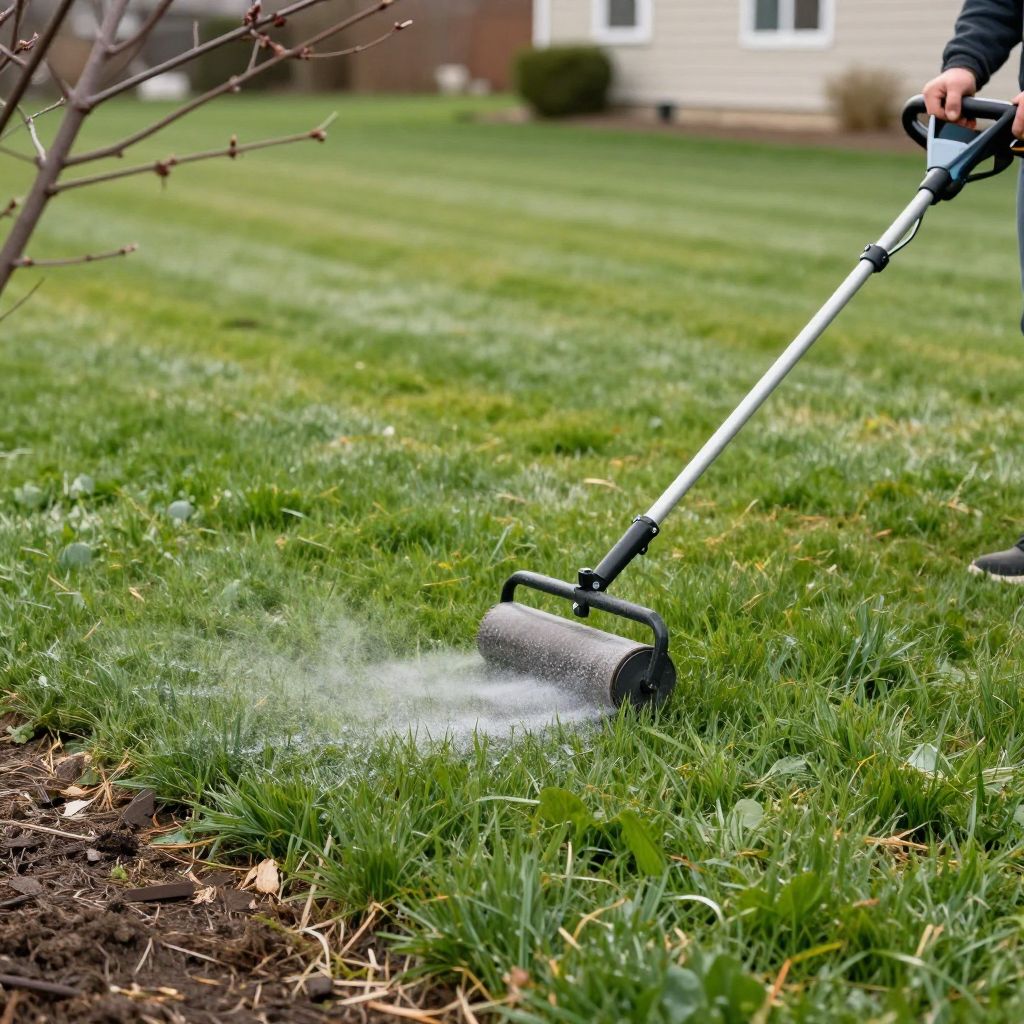
Wondering when to apply crabgrass preventer so it actually works? Timing matters more than the brand on the bag. Apply it too early and it may wear off before crabgrass germinates; too late and the weed has already started growing.
The best timing depends on soil temperature, not the calendar. In most areas, crabgrass preventer is applied in early spring before soil temperatures reach about 55°F for several days, which is when crabgrass seeds begin to sprout.
When to apply crabgrass preventer?
Apply crabgrass preventer in early spring before crabgrass germinates, usually when soil temperatures are consistently near 50–55°F. In many regions this is just before forsythia blooms or as soil warms after winter, but local weather matters more than the date on the calendar.
How crabgrass preventer works
Crabgrass preventers are pre-emergent herbicides. They create a barrier in the top layer of soil that stops crabgrass seeds from developing after they sprout.
They do not kill crabgrass that is already growing. If you can see established plants, you need a different control method, such as hand pulling, spot treatment, or a post-emergent herbicide labeled for your lawn.
Why timing is so important
Crabgrass seeds germinate when the soil warms in spring. If you apply the preventer too late, seedlings may already be established and the product will be much less effective.
If you apply it too early, especially a product that breaks down over time, the barrier may fade before peak germination occurs.
Best seasonal window for application
For most lawns, the right window is early spring, before crabgrass germinates. That often means late winter to mid-spring, depending on your climate.
- Warm climates: apply earlier, because soil warms sooner.
- Cooler climates: apply later, once the soil begins to warm but before germination starts.
- High-elevation or coastal areas: timing can shift by several weeks from nearby inland locations.
A practical rule is to watch soil temperature rather than rely only on the calendar. When soil at a 2-inch depth is holding around 50°F and trending upward, it is time to prepare.
Common natural cues gardeners use
Many gardeners use seasonal indicators as a backup, especially if they do not have a soil thermometer.
- Forsythia begins blooming
- Redbud starts flowering
- Daytime temperatures are consistently mild, and nights are no longer freezing as often
These cues are helpful, but they are not perfect. In some years, crabgrass germination can begin before or after these signs depending on local weather.
How to time it by soil temperature
The most reliable approach is to check soil temperature in your lawn. Use a soil thermometer and take readings in the morning for several days in a row.
- Insert the thermometer about 2 inches deep in a representative area of the lawn.
- Check the reading for several consecutive mornings.
- Watch for a steady warming trend toward 50–55°F.
- Apply crabgrass preventer before the soil stays in that range long enough for germination to begin.
Do not wait for the first crabgrass seedlings to appear. By then, the prevention window has passed.
What to do if you missed the timing
If crabgrass is already visible, a pre-emergent product will not solve the problem. You still have options, but the strategy changes.
For small infestations
- Hand pull young plants when soil is moist and roots come out easily.
- Mow regularly to prevent seed production.
- Fill thin lawn areas with healthy turf to reduce open soil where crabgrass can return.
For larger infestations
- Use a post-emergent herbicide labeled for crabgrass and your turfgrass type.
- Follow label directions carefully, especially around heat-stressed lawns.
- Plan to use pre-emergent next season at the correct time.
If crabgrass has already seeded, cleanup matters. Removing plants before they drop more seed helps reduce next year’s pressure.
How to apply crabgrass preventer correctly
Good timing helps, but good application matters too. Uneven coverage leaves gaps where crabgrass can still emerge.
- Mow and remove heavy debris so the product can reach the soil surface.
- Apply evenly with a spreader, following the product label.
- Water it in if the label says to do so, or wait for the recommended rainfall.
- Avoid disturbing the soil after application, since that can break the protective barrier.
Read the label before applying. Different products have different instructions, and some include fertilizer while others do not.
Important application mistakes to avoid
- Applying after crabgrass has already germinated
- Using too little product and leaving thin coverage
- Raking, aerating, or dethatching right after application
- Applying to a newly seeded lawn if the product is not safe for seeding
- Ignoring rainfall or irrigation directions on the label
Can you seed and use crabgrass preventer in the same season?
Sometimes, but not always. Many pre-emergent crabgrass preventers also stop desirable grass seed from germinating, which creates a problem if you are trying to overseed or start a new lawn.
If you need to seed, choose a product and timing plan that fits your goal. In many cases, you must decide between crabgrass prevention and seeding for that season, unless the label specifically allows both under certain conditions.
Best approach for new lawns and overseeding
- Seed first if establishing turf is the priority.
- Use a crabgrass prevention plan later, once the new grass is established and the product label allows it.
- Keep soil moist for germination when seeding, but avoid products that interfere with seed growth.
If you are unsure, check the product label before buying. This is one of the most common reasons homeowners end up with poor results.
How lawn care affects crabgrass pressure
Crabgrass is more likely to invade thin, stressed lawns. Preventer helps, but long-term control is easier when the turf is dense and healthy.
- Mow at the proper height for your grass type so turf shades the soil.
- Water deeply when needed rather than giving frequent shallow watering.
- Improve compacted soil with core aeration when appropriate for your lawn.
- Fill bare spots with grass seed or sod to reduce open ground.
Healthy turf is one of the best defenses against crabgrass because it competes for light, water, and space.
How to adjust timing by climate
There is no single date that works everywhere. Local spring weather and soil warming determine the right application window.
Cool-season regions
In areas with cold winters and a later spring, crabgrass preventer often goes down in early to mid-spring. Watch the soil, not just the calendar.
Warm-season regions
In warmer climates, germination can begin much earlier. You may need to apply in late winter or very early spring, depending on local conditions.
Variable spring weather
If your area has warm spells followed by cold snaps, keep checking soil temperature. A brief warm spell does not always mean it is time, but a steady warming trend usually does.
Troubleshooting common crabgrass preventer problems
The lawn still has crabgrass after application
This usually means the product was applied too late, coverage was uneven, or the barrier was disturbed. Look for missed areas, compacted spots, or places where soil was exposed after application.
The lawn was seeded and nothing came up
Some pre-emergent products prevent all seed germination, not just weeds. Always confirm whether the product is safe for overseeding or new lawn establishment.
Heavy rain followed application
Some products need watering-in, while others can be affected by excessive runoff. Follow the label directions and avoid applying before heavy rain if the product instructions do not recommend it.
You are unsure whether it is too late
Check a few sunny, thin, or compacted spots in the lawn first. These areas often show crabgrass earliest. If seedlings are present, shift from prevention to control and plan better timing next season.
Simple seasonal checklist
- Watch soil temperature in early spring.
- Apply before crabgrass germination begins.
- Use even coverage and follow the label.
- Do not disturb the soil after application.
- Seed only if the product and timing allow it.
- Maintain a dense lawn to reduce future crabgrass pressure.
Conclusion
The best answer to when to apply crabgrass preventer is: before crabgrass germinates, when soil temperatures are just starting to warm in spring. Use local weather, soil temperature, and seasonal cues to guide your timing, then apply evenly and follow the label closely.
If you want better results next season, start checking soil temperature a little earlier each year and plan your lawn care around that window rather than the calendar alone.
For related lawn care planning, you may also want to read about proper lawn mowing height and maintenance and general lawn care practices.