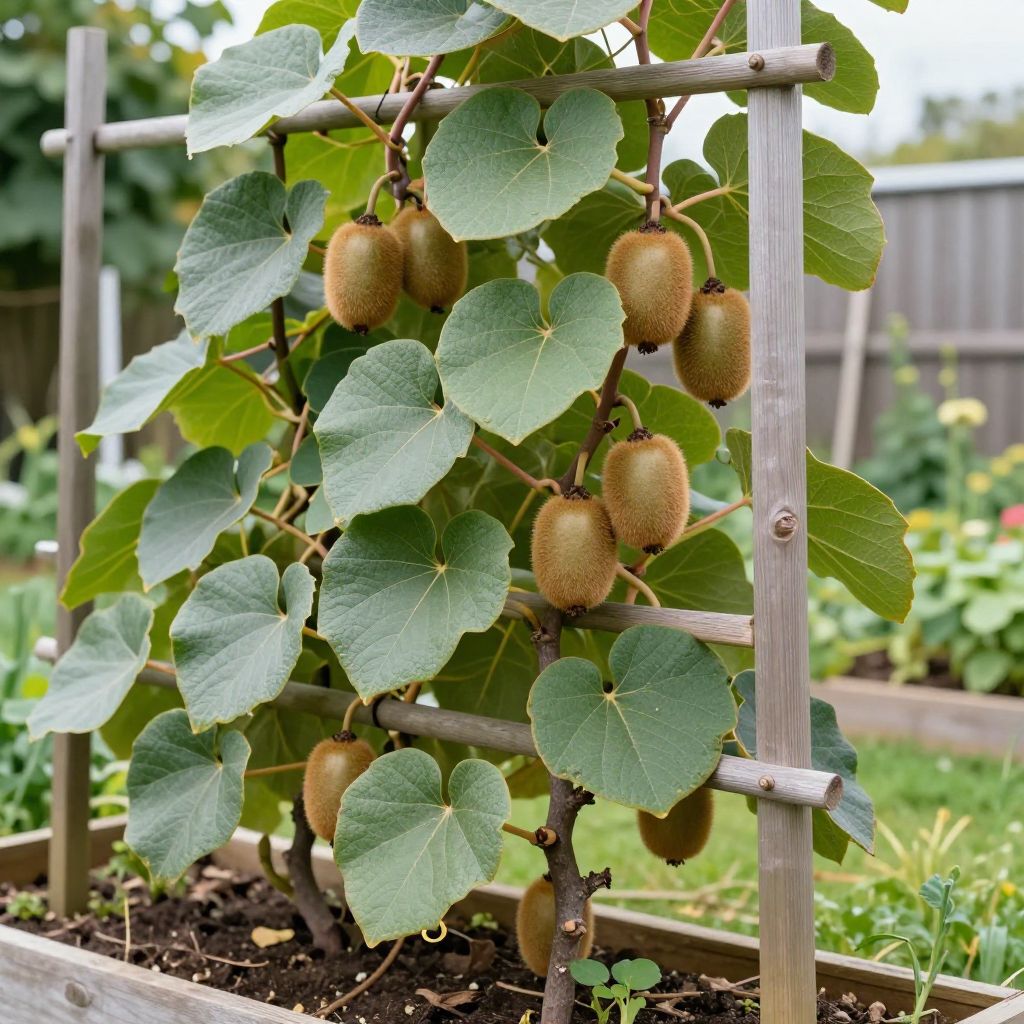
Do kiwis grow on trees? Not exactly. Kiwi fruit grows on vigorous woody vines, not true trees, and those vines need strong support to produce well. If you’re hoping to grow this fruit at home, the key is giving the plant space, sun, and a sturdy trellis or pergola.
With the right conditions, kiwi vines can be productive, long-lived, and beautiful in the landscape. The trick is understanding their growth habit, choosing the right type, and pruning them correctly so they flower and fruit instead of becoming a tangled mass of stems.
Do kiwis grow on trees?
No, kiwi fruit does not grow on trees. Kiwi plants are climbing vines in the genus Actinidia, and they need a strong support structure such as a trellis, arbor, fence, or pergola. The fruit develops on woody canes that are trained and pruned, not on a trunk like an apple or peach tree.
What kind of plant is kiwi?
Most garden kiwis are vigorous deciduous vines with broad leaves and twining stems. They can grow quite large, so they are best treated as permanent landscape plants rather than temporary annual climbers.
Common kiwi types
- Fuzzy kiwi (Actinidia deliciosa) is the classic supermarket fruit with brown, fuzzy skin.
- Hardy kiwi (Actinidia arguta) produces smaller, smooth-skinned fruit that is often eaten whole.
- Arctic kiwi (Actinidia kolomikta) is grown partly for fruit and partly for ornamental foliage.
Some kiwi types are more cold-tolerant than others, so your climate matters. If you live in a cooler region, hardy kiwi is often the better choice; in milder climates, fuzzy kiwi may perform well with enough heat and a long growing season.
How kiwi vines grow and fruit
Kiwi vines climb by twining around supports, and their fruit forms on new growth that emerges from older wood. That means pruning is not optional. If you let the vine grow unchecked, it can become too dense, shade itself, and produce fewer flowers and fruit.
Male and female plants matter
Most kiwi varieties are dioecious, which means male and female flowers are on separate plants. For fruit, you usually need at least one male plant to pollinate several female plants, depending on the variety and local pollinator activity.
If you buy a kiwi and it never fruits, a missing pollinator plant may be the reason. Some nursery labels will note whether a plant is male or female, so check before planting.
Best growing conditions for kiwi vines
Kiwi vines grow best in full sun, fertile soil, and a site protected from strong winds. They like consistent moisture, but they do not tolerate soggy roots. Good drainage is essential because waterlogged soil can weaken the roots and reduce vigor.
Soil and drainage
- Choose soil that drains well but holds some moisture.
- Work in compost before planting to improve structure and fertility.
- Avoid heavy, compacted ground unless you can improve drainage first.
Kiwi plants generally prefer slightly acidic to neutral soil, but the most important factor is drainage. If water sits around the roots after rain, raise the planting area or choose another site.
Sunlight and shelter
Give kiwi vines at least 6 hours of direct sun daily if possible. More sun usually means better flowering and sweeter fruit, while some afternoon protection can help in very hot climates.
Young shoots and blossoms can be damaged by harsh wind, so a sheltered location is useful. A south- or west-facing fence, pergola, or sturdy arbor often works well if it can support the mature weight of the vine.
How to plant kiwi successfully
Plant kiwi in spring or fall when the soil is workable and temperatures are moderate. In colder regions, spring planting is often safer because it gives the vine time to establish before winter.
- Pick a permanent site with strong support already planned.
- Dig a hole wider than the root ball, but no deeper.
- Mix compost into the backfill if your soil is poor or thin.
- Set the plant at the same depth it grew in the pot.
- Water thoroughly after planting and mulch lightly around the base.
- Train the strongest stem to the support as it grows.
Do not bury the crown too deeply. Kiwi roots need oxygen, and planting too low can slow establishment and encourage rot.
Support structures: trellis, arbor, or pergola?
Because kiwi vines are heavy and vigorous, flimsy supports are a common mistake. A mature vine can become substantial, especially once it starts fruiting, so build for the long term.
Good support options
- Trellis for training along a wall or fence.
- Arbor for a garden feature that also creates shade.
- Pergola for a larger vine with room to spread.
- Wire system for orchard-style training.
Use rot-resistant posts and strong wire or lumber. If the support flexes under pressure, it may fail once the vine matures and the canopy fills in.
Watering and feeding kiwi vines
New kiwi plants need regular moisture while they establish, especially during dry spells. Mature vines still prefer even moisture, but they should never sit in waterlogged soil.
Watering tips
- Water deeply rather than giving frequent shallow sprinkles.
- Check soil moisture a few inches below the surface before watering again.
- Mulch to help conserve moisture and reduce weeds, but keep mulch a few inches away from the stem.
Feeding is best guided by soil quality. Compost added at planting and a yearly top-dressing of organic matter is often enough in fertile gardens. If growth is weak or leaves look pale, a soil test is the best way to decide whether extra nutrients are needed.
Pruning kiwi for flowers and fruit
Pruning is one of the most important parts of kiwi care. The goal is to create a manageable framework of main stems and fruiting wood that gets plenty of light and air.
Basic pruning approach
- Train one main trunk up to the support.
- At the top, allow side arms to develop along the wire or beam.
- Each year, remove crowded, weak, or tangled growth.
- Shorten fruiting shoots according to the plant’s growth habit and support system.
Pruning is usually done during dormancy and again in summer if the vine becomes overly dense. Summer pruning can help control size and improve light penetration, but avoid removing so much growth that you expose fruit to sunscald in very hot weather.
Common pruning mistake: letting the vine climb freely for several years and then cutting it back hard. That often delays fruiting and creates a mess of vigorous regrowth.
Pollination and fruit set
If your kiwi flowers but does not fruit, pollination may be the issue. Many kiwi vines need a compatible male plant nearby, and cool, wet, or windy weather during bloom can reduce pollinator activity.
How to improve fruit set
- Plant a compatible male and female pair if your variety requires it.
- Encourage bees by avoiding insecticides during bloom.
- Grow the vine where flowers are easy for pollinators to reach.
- In small plantings, hand-pollination can help if needed.
Hand-pollination is simple: collect pollen from a fresh male flower and dab it onto the center of an open female flower with a small brush or cotton swab. This can be especially useful in rainy weather or where pollinator numbers are low.
Common pests and diseases
Kiwi vines are generally not the most troublesome fruit plants, but they can still face pest and disease problems. The best defense is healthy growth, good spacing, and regular inspection.
Possible pests
- Aphids on soft new growth.
- Spider mites in hot, dry conditions.
- Scale insects on older stems.
- Birds that peck at ripening fruit.
Possible diseases and disorders
- Root rot in poorly drained soil.
- Leaf spotting during prolonged wet weather.
- Frost injury to young shoots or blossoms.
- Sunburn on exposed fruit in intense heat.
Practical prevention matters more than rescue treatments. Space vines well, prune for airflow, remove dead material, and avoid overwatering. If you see a sudden decline, check the roots, drainage, and stem health before assuming the problem is a nutrient deficiency.
Growing kiwi in containers or small spaces
Kiwi is not the easiest container fruit, but smaller hardy kiwi types may be grown in very large pots if you can provide strong support and regular care. Container-grown vines dry out faster than in-ground plants, so they need closer attention.
Use a large container with excellent drainage and a sturdy trellis attached or nearby. Choose a potting mix that drains well but still holds moisture, and be prepared to water more often during hot weather.
For small gardens, train kiwi along a fence, arch, or pergola instead of letting it sprawl. This keeps the plant productive and makes harvest easier.
Harvesting kiwi fruit
Kiwi fruit is usually harvested when it has reached mature size but is still firm. Many types finish ripening after picking, so you do not always need to wait for the fruit to soften on the vine.
Signs fruit may be ready
- Fruit has reached full size for the variety.
- Seeds inside are dark.
- The fruit detaches more easily from the stem.
- Flavor improves after a short ripening period off the vine.
Harvest carefully to avoid bruising, especially on fuzzy kiwi. Use clean pruners or twist fruit gently from the stem if it separates easily. If frost is approaching, pick mature fruit before temperatures drop too low.
Quick troubleshooting guide
Why your kiwi vines look healthy but do not fruit
- The plant may be too young.
- You may have only a male plant or only a female plant.
- There may be too much shade.
- Pruning may be removing fruiting wood.
Why leaves turn yellow or growth stalls
- Soil may be too wet.
- Roots may be stressed by poor drainage.
- The plant may need more organic matter or balanced nutrition.
- Cold damage or wind stress may be affecting new growth.
When in doubt, start with the site conditions. Kiwi problems are often caused by too little sun, too much water, weak support, or incorrect pruning rather than a rare disease.
Conclusion
So, do kiwis grow on trees? No—they grow on vigorous vines that need sun, support, pruning, and the right pollination setup to produce fruit. If you choose a suitable site, build a strong trellis, and manage the vine carefully, you can grow kiwi successfully at home.
If you want to keep learning about fruiting vines and garden structure, look for more practical guides on fruit tree training and pruning and how to build a strong garden trellis.