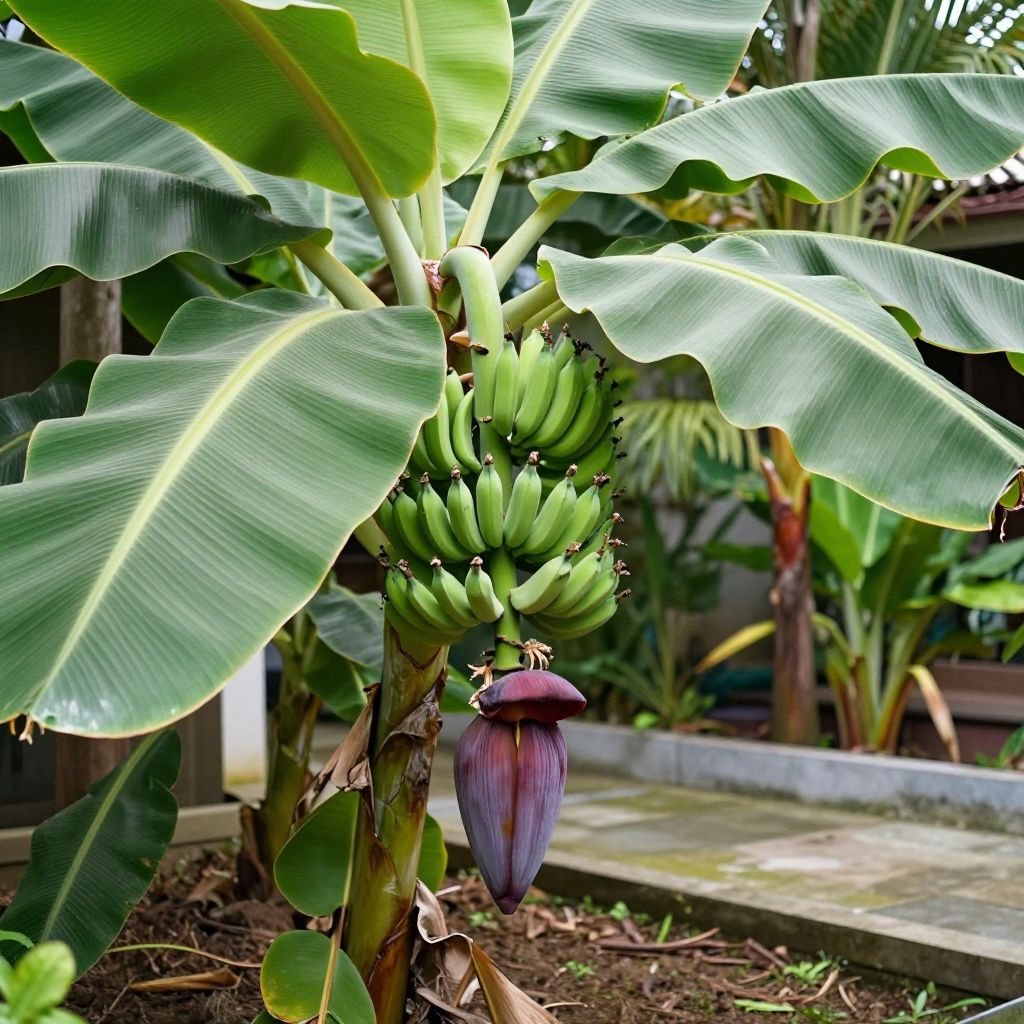
What do bananas grow on? Bananas grow on a large herbaceous plant, not a tree. The plant is often called a banana plant or banana pseudostem, and the fruit develops in a hanging bunch from the center of the plant after it flowers.
If you want to grow bananas successfully, it helps to understand that they need warmth, steady moisture, rich soil, and room to spread. With the right conditions, banana plants can grow quickly and produce impressive tropical foliage, even in containers or sheltered garden beds.
What do bananas grow on?
Bananas grow on a giant herbaceous plant made of tightly wrapped leaf stalks, called a pseudostem. The fruit forms on a flower stalk that emerges from the center of the plant, then develops into a heavy bunch of bananas. After fruiting, that stem dies back, while new shoots or “pups” continue the plant’s life cycle.
How banana plants grow
Banana plants are not woody trees. What looks like a trunk is actually a layered stem made from leaf bases, which means the plant is soft, fast-growing, and sensitive to cold and wind.
The plant structure
- Pseudostem: the upright “trunk” formed by overlapping leaf sheaths.
- Rhizome or corm: the underground base that stores energy and produces new shoots.
- Pups: young offshoots that grow from the base and can become new plants.
- Flower stalk: the center stem that emerges, blooms, and carries the fruit bunch.
Once a banana stem fruits, it will not fruit again. The plant’s energy shifts to the pups, which is why managing new shoots is part of good banana care.
Growing conditions bananas need
Bananas are tropical or subtropical plants, so they perform best in warm, frost-free conditions. In cooler climates, you can still grow ornamental or dwarf banana varieties in containers, but fruiting is much less reliable unless your season is long and warm.
Sunlight
Give bananas full sun for the best growth and strongest stems. In very hot climates, a little afternoon shade can help reduce leaf scorch, especially for young plants.
Soil
Bananas prefer fertile, moisture-retentive soil that drains well. They dislike waterlogged conditions, which can rot the corm and weaken the plant.
- Work in plenty of compost or well-rotted manure before planting.
- A slightly acidic to neutral soil is usually suitable.
- Avoid heavy, compacted soil unless you improve drainage first.
Water
Bananas need consistent moisture, especially during active growth. Their large leaves lose water quickly, so dry soil can slow growth, cause leaf tearing, and reduce fruit quality.
Water deeply when the top layer of soil begins to dry, but do not keep the root zone soggy. In containers, check moisture more often because pots dry out faster than garden beds.
Temperature and wind
Warmth is essential. Bananas slow down in cool weather and can be damaged by frost. Strong wind can shred leaves, so plant them in a sheltered site or use windbreaks where possible.
How to plant bananas in the garden
If your climate is suitable, bananas can be planted directly in the ground. Choose the warmest, most sheltered part of your garden and prepare the soil well before planting.
- Choose a sunny, protected location with room for the plant to spread.
- Dig in compost to improve fertility and soil structure.
- Make sure excess water can drain away after rain or irrigation.
- Plant at the same depth the banana was growing before.
- Water thoroughly after planting and mulch around the base.
Keep mulch a little away from the pseudostem to reduce rot. A 5 to 10 cm layer of organic mulch can help conserve moisture and feed the soil as it breaks down.
Growing bananas in containers
Container growing is a practical option if you live outside a tropical climate or want a banana plant on a patio, balcony, or greenhouse. Choose a large pot with drainage holes and a rich, free-draining potting mix.
Container care tips
- Use a pot that is large enough to support top-heavy growth.
- Water more often than you would in the ground.
- Feed regularly during the growing season with a balanced fertilizer or compost-based topdressing, following the product label.
- Rotate the pot occasionally so the plant grows evenly toward the light.
Container bananas may need repotting or division as pups crowd the pot. If the plant becomes rootbound, growth slows and leaves may become smaller.
Pruning and managing banana pups
Pruning bananas is mostly about removing damaged leaves and controlling pups. You do not prune them like shrubs or trees, but simple maintenance keeps the plant healthier and more productive.
What to remove
- Dead, broken, or badly damaged leaves.
- Old fruiting stems after harvest.
- Excess pups that crowd the base.
Many gardeners keep one strong main stem and one or two healthy pups for the next cycle. Too many shoots compete for water and nutrients, which can reduce fruit size and slow growth.
How to handle pups
Choose sturdy pups with their own roots if you want to propagate them. Remove unwanted pups by cutting them cleanly away from the corm with a sharp spade or knife.
Feeding and soil care
Bananas are heavy feeders because they grow fast and produce a lot of leafy growth. Rich soil and steady nutrition help them build strong stems and support flowering.
Compost is one of the best soil amendments for bananas. It improves structure, helps retain moisture, and adds slow-release nutrients without the risk of overfeeding that can come from excessive synthetic fertilizer.
Good feeding habits
- Topdress with compost during the growing season.
- Keep mulch in place to protect the root zone.
- Avoid overfertilizing with nitrogen alone, which can produce lush leaves but poor fruiting.
- Use a balanced approach based on your soil and plant response.
Common banana growing problems
Most banana problems come from cold, drought, poor drainage, or pests. If you catch issues early, the plant often recovers well.
Yellowing leaves
Older leaves naturally yellow and die as new ones form, but widespread yellowing can signal poor drainage, nutrient deficiency, or inconsistent watering. Check the soil first before adding fertilizer.
Split or shredded leaves
This is often caused by wind and is common on bananas. It looks dramatic but is not always a serious problem. A sheltered planting site helps reduce damage.
Slow growth
Slow growth usually means the plant is too cold, too dry, or short of nutrients. Bananas grow best when warmth, moisture, and fertility are all present at the same time.
Pests and diseases to watch for
Bananas can be affected by pests such as aphids, spider mites, mealybugs, and scale, especially indoors or in greenhouses. Outdoors, snails and slugs may chew young leaves.
Practical pest control
- Inspect leaf undersides and the base of the plant regularly.
- Rinse small pests off with water when possible.
- Remove heavily infested leaves if needed.
- Improve airflow around crowded plants.
Diseases are often linked to excess moisture, poor sanitation, or stressed plants. Remove dead material, avoid overhead watering late in the day, and do not let fallen plant debris build up around the base.
Harvesting bananas
Banana bunches develop after the plant flowers, and they are usually harvested while still green for ripening off the plant. Exact timing depends on variety, climate, and growing conditions, so watch the fruit rather than relying on a fixed calendar.
Signs that bananas are ready for harvest often include plump fingers, rounded edges softening, and the fruit becoming less angular. Cut the bunch carefully with support, because it can be heavy.
After harvest
Once the main stem has fruited, cut it down at ground level after it finishes. Leave healthy pups in place to continue the plant’s growth cycle.
Indoor vs outdoor banana growing
Indoor bananas can be attractive foliage plants, but they need much more light and humidity than most homes naturally provide. A bright conservatory, greenhouse, or sunny room is usually better than a dim indoor corner.
- Indoors: focus on light, humidity, and pest monitoring.
- Outdoors: focus on warmth, wind protection, and soil drainage.
- In cold climates: grow in pots so you can move plants to shelter before frost.
If you overwinter bananas indoors, reduce watering as growth slows, but do not let the root ball dry out completely. Move them back outside only after nights are reliably warm enough for your climate.
Quick checklist for healthy banana plants
- Plant in full sun or bright light.
- Use rich, well-drained soil with plenty of compost.
- Water consistently without waterlogging the roots.
- Protect the plant from wind and frost.
- Remove dead leaves and manage pups.
- Watch for pests, especially on container or indoor plants.
Final thoughts
So, what do bananas grow on? They grow on a large herbaceous banana plant with a pseudostem, not a woody tree. If you want to grow one well, start with warmth, rich soil, steady moisture, and good drainage, then manage pups and protect the plant from cold and wind.
For more practical plant care ideas, you may also enjoy reading about container gardening basics and how to improve garden soil with compost.