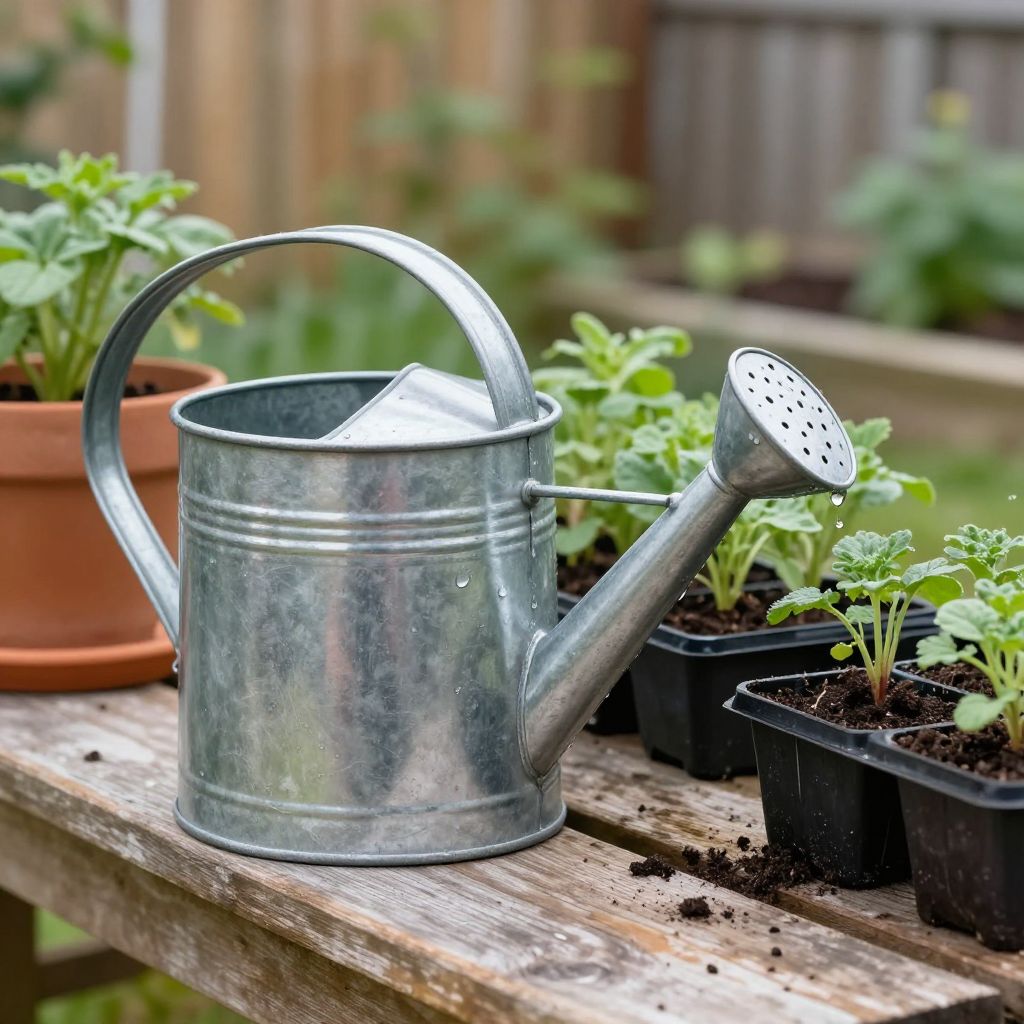
If you’re wondering whether a galvanized watering can is just a pretty garden accessory or a genuinely useful tool, the answer is both. It can be durable, attractive, and practical for everyday watering, but only if you choose the right size, use it correctly, and maintain it well.
For home gardeners, the best galvanized watering can is one that matches your plants, your watering routine, and your climate. Here’s how to use one effectively, avoid common problems, and keep it in good condition for years.
What is a galvanized watering can, and is it good for gardening?
A galvanized watering can is a metal watering can coated with zinc to help resist rust. It works well for light to moderate garden watering, especially for containers, seedlings, houseplants, and small beds. Choose one with a comfortable handle, a stable spout, and a removable rose if you want gentler watering.
Why gardeners like galvanized watering cans
Many gardeners choose a galvanized watering can because it is sturdy, easy to carry, and often lasts longer than thin plastic cans. It also has a classic look that fits neatly into potting sheds, patios, and cottage-style borders.
Practical benefits include:
- Durability: Galvanized metal usually stands up better to knocks and everyday use than lightweight plastic.
- Better balance: A well-made can feels stable when full, which helps reduce spills.
- Useful for precise watering: The spout can direct water exactly where you need it.
- Good for small-scale care: Ideal for indoor plants, seedlings, hanging baskets, and patio containers.
That said, a galvanized watering can is not always the best choice for large gardens. If you need to water many beds or a big lawn area, a hose, drip irrigation, or a larger rain barrel setup will usually be more efficient.
How to choose the right galvanized watering can
The best can for you depends on how much water you need to carry, how far you walk with it, and what you are watering. A can that feels charming in the shop can become awkward once it is full.
Size and capacity
Most home gardeners do well with a medium can that is easy to lift when full. If you are watering indoors or on a balcony, a smaller can is often easier to manage. For larger patios or raised beds, a bigger can may save trips, but only if you can carry it comfortably.
- Small cans: Better for houseplants, seedlings, and herbs.
- Medium cans: A good all-purpose choice for containers and small beds.
- Large cans: Useful for bigger outdoor spaces, but heavier when full.
Spout and rose
A long, narrow spout helps you water close to the soil without splashing leaves. A removable rose, or sprinkler head, is useful when you need a softer shower for seedlings or newly sown seed.
If the rose holes are too fine, they can clog more easily with debris from rainwater or soil. If they are too coarse, water may come out too forcefully for delicate plants.
Handle and balance
Try to imagine the can full of water, not empty. A good handle should feel secure in one hand, and the can should not tip forward when you pour. If possible, test the grip and balance before buying.
How to use a galvanized watering can properly
Using a watering can well is less about pouring water everywhere and more about delivering it where roots can actually use it. Water the soil, not the foliage, unless you are rinsing dust from leaves or watering a plant that prefers overhead moisture.
- Fill the can with clean water.
- Attach the rose if you need a gentler flow.
- Carry the can close to your body to reduce strain.
- Pour slowly at the base of the plant.
- Stop when water begins to soak through the root zone rather than running off the surface.
Tip: For containers, water until you see a little excess drain from the bottom, then empty saucers after a few minutes so roots do not sit in water.
Watering seedlings and young plants
Seedlings need a soft, even shower. A rose helps prevent soil displacement and keeps tiny roots from being exposed. Water gently enough that the surface stays in place and the seedlings remain upright.
For newly transplanted seedlings, keep the root zone evenly moist while they establish. The soil should feel damp, not muddy.
Watering established plants
For mature plants, water less often but more deeply. This encourages roots to grow downward, which helps plants cope better with dry spells. Shallow, frequent watering can keep roots near the surface and make plants more dependent on constant moisture.
Best uses for a galvanized watering can in the garden
This tool is especially handy for jobs that need control rather than volume. It shines where precision matters more than speed.
- Watering houseplants and indoor herbs
- Feeding hanging baskets and patio pots
- Moistening seed trays and newly sown rows
- Watering around the base of tomatoes, peppers, and ornamentals
- Carrying water to small raised beds or hard-to-reach corners
If you garden in a windy location, a watering can is often easier to control than a hose. It helps you place water exactly where it belongs instead of losing it to drift or splash.
Common problems with galvanized watering cans
Even a sturdy can can cause frustration if it is the wrong size, poorly maintained, or used in the wrong conditions. Most issues are easy to prevent once you know what to look for.
Rust or corrosion
Galvanized metal resists rust, but it is not completely immune. Scratches, dents, and constant standing water can shorten its life. If the coating wears through, rust may begin at seams, edges, or the base.
To reduce corrosion:
- Empty the can after use.
- Store it in a dry place.
- Do not leave it full of water for long periods.
- Rinse out fertilizer residue promptly.
Clogged rose
Fine holes in the rose can clog with debris, algae, or mineral deposits. If water flow becomes uneven, remove the rose and rinse it thoroughly. A soft brush or a soak in warm water can help clear buildup.
Leaks at seams or joints
Small leaks can happen where the spout or handle is attached. Check the can regularly, especially if it is older or has been knocked around. A slow leak may be manageable for a while, but a growing one usually means the can is nearing the end of its useful life.
Too heavy to carry
A full watering can can strain your wrist, shoulder, or back. If you find yourself struggling, switch to a smaller can and refill more often. That is usually easier than carrying a heavy load across the garden.
How to care for a galvanized watering can
Good maintenance keeps the can looking better and working longer. A few simple habits make a big difference.
- Empty leftover water after each use.
- Rinse out any soil, fertilizer, or algae.
- Wipe the outside dry if it gets wet often.
- Store it under cover or indoors when possible.
- Check the rose, handle, and seams for wear.
If you use rainwater, inspect the can more often. Rainwater is excellent for many plants, but it can still carry debris that settles inside the can and clogs the rose.
Can you use fertilizer in it?
You can mix liquid fertilizer in a watering can if the product label allows it, but rinse the can well afterward. Fertilizer residue can leave deposits or accelerate wear if it sits inside the metal for too long.
For best results, use a separate can for feeding if you fertilize regularly. That helps avoid residue buildup and keeps your main watering can cleaner.
Indoor vs. outdoor watering: what changes?
Indoors, a galvanized watering can is often used for smaller volumes and more careful pouring. Outdoors, it may be used more frequently and exposed to weather, dirt, and rougher handling.
For indoor plants:
- Choose a smaller can with a narrow spout.
- Use room-temperature water when possible.
- Water slowly to avoid runoff onto floors and furniture.
For outdoor plants:
- Choose a can that is easy to refill from a tap or rain barrel.
- Use the rose for seedlings and the open spout for established plants if needed.
- Store it out of direct weather to extend its life.
What to avoid when using a galvanized watering can
A few simple mistakes can make watering less effective or shorten the life of the can.
- Leaving water inside it: This encourages corrosion and mineral buildup.
- Using too much force: A hard pour can wash away soil and expose roots.
- Overwatering on a schedule: Plants need water based on soil moisture, weather, and growth stage, not just the calendar.
- Ignoring drainage: Pots and beds must drain well or roots may rot.
- Choosing a can that is too large: A heavy can is harder to control and may discourage regular watering.
Seasonal considerations for watering with a metal can
Weather changes how quickly soil dries out, so your watering habits should change too. Hot, windy, and sunny conditions dry containers much faster than cool, cloudy weather.
In warm weather, check pots and beds more often, especially after transplanting or during flowering and fruiting. In cooler seasons, many plants need less frequent watering, and soil may stay wet longer.
If you garden in a dry climate, a watering can is useful for targeted watering, but you may still need larger-scale irrigation for thirsty beds. In a humid climate, the main challenge may be avoiding excess moisture and poor drainage.
Is a galvanized watering can worth buying?
Yes, if you want a reliable, attractive tool for precise watering. It is especially worthwhile for gardeners with containers, seedlings, indoor plants, or small beds. If you need to water large areas quickly, pair it with a hose, drip system, or rainwater setup.
The best choice is the one that fits your routine. A well-made galvanized watering can should feel comfortable, pour smoothly, and be easy to clean and store.
If you want to improve your watering habits further, consider reading about how to water container plants correctly and choosing the right garden tools for small spaces.