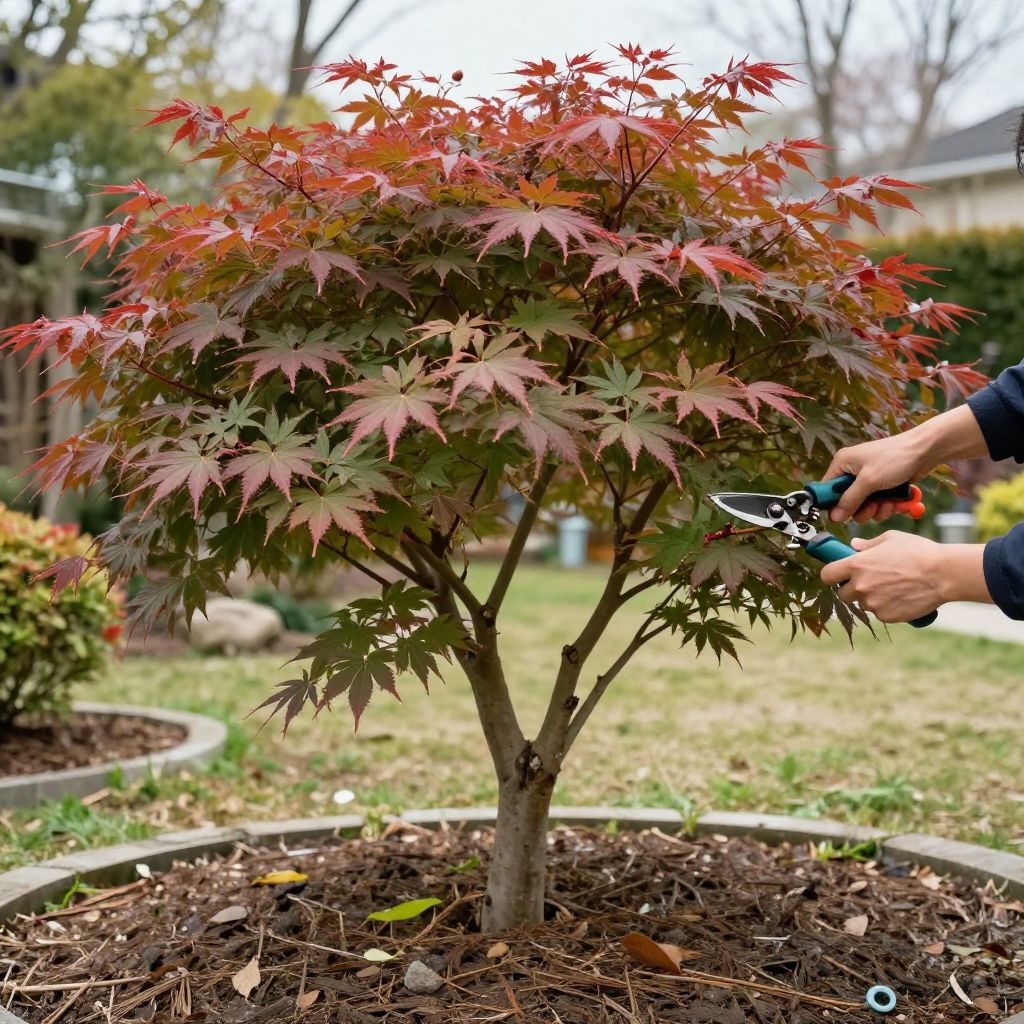
Wondering when to prune Japanese maple without ruining its shape or stressing the tree? Timing matters more than heavy cutting, because Japanese maples can bleed sap, lose their graceful form, and respond poorly to hard pruning at the wrong time.
The good news is that most Japanese maples are best pruned lightly during dormancy or in mid- to late summer, depending on your goal and climate. With a careful approach, you can improve structure, remove damaged growth, and keep the tree healthy without overdoing it.
When to prune Japanese maple?
The best time to prune a Japanese maple is usually during late winter while the tree is dormant, or in mid- to late summer for light shaping. Avoid heavy pruning in early spring, when sap flow is strongest. For most trees, small corrective cuts are safer than major reshaping.
Best timing for pruning Japanese maple
Late winter: best for structural pruning
Late winter is often the safest window for pruning because the tree is dormant and you can clearly see the branch structure. This is the time to remove dead, crossing, rubbing, or poorly placed branches.
Choose a mild, dry day if possible. In very cold climates, wait until the worst freezes have passed, since fresh cuts can be more vulnerable to winter damage.
Mid- to late summer: best for light shaping
If you want to refine the silhouette, thin crowded growth, or shorten a few soft shoots, summer pruning can work well. The tree is actively growing, so cuts tend to be less likely to trigger a strong flush of unwanted new growth.
Keep summer pruning light. This is not the time for major reduction cuts or heavy canopy thinning.
Early spring: usually avoid major pruning
Early spring is when sap is moving strongly, and Japanese maples can “bleed” from fresh cuts. While sap loss is not always fatal, it can weaken the tree and create unnecessary stress.
If you must remove a broken branch in spring, make the cut cleanly and only take what is necessary.
Fall: usually not ideal
Fall pruning is generally avoided because new cuts may not heal well before winter. The tree is also preparing for dormancy, so it is better to leave major pruning for later.
Light removal of dead or damaged wood is fine if needed, but save shaping work for a better season.
How much should you prune?
Japanese maples usually need minimal pruning. Their natural form is one of their main features, so the goal is to guide the tree rather than reshape it aggressively. In many cases, you only need to remove a few branches each year.
As a rule, avoid taking off more than necessary in one season. If the tree is mature, stressed, newly planted, or recovering from heat or drought, prune even less.
Good reasons to prune
- Remove dead, broken, or diseased branches
- Improve airflow through a crowded canopy
- Eliminate branches that cross or rub
- Correct awkward growth that spoils the shape
- Raise the canopy slightly for paths or views
Reasons to avoid pruning
- The tree is newly planted and still establishing roots
- It is already stressed by drought, heat, or root damage
- You are tempted to “top” the tree or shorten everything at once
- The tree is in active spring sap flow and the cuts are not urgent
How to prune Japanese maple correctly
Step 1: Start with the dead and damaged wood
Begin by removing any dead, broken, or diseased branches. This improves the tree’s health and makes the rest of the pruning easier to judge.
Cut back to healthy wood or to the branch collar, depending on the size and location of the branch. Make clean cuts with sharp tools.
Step 2: Remove crossing and rubbing branches
Branches that rub against each other can create wounds that invite pests and disease. Choose the weaker or poorly placed branch and remove it entirely.
If two branches are crowded but not actually rubbing, you may thin one out to open the canopy slightly.
Step 3: Thin for shape, not size
Japanese maple pruning works best when you thin selected branches rather than shearing the outer edge like a hedge. This preserves the tree’s layered, natural look.
Step back often and look at the tree from several angles. A few well-placed cuts can improve the shape more than many small ones made without a plan.
Step 4: Use reduction cuts carefully
If a branch is too long, shorten it by cutting back to a side branch that can take over the growth. This is better than leaving a stub or cutting randomly in the middle of a branch.
Try not to remove too much of the canopy at once. A Japanese maple that is overpruned can look sparse for years.
Tools you should use
Clean, sharp tools make better cuts and reduce the chance of tearing bark. Match the tool to the branch size.
- Hand pruners for small twigs and shoots
- Loppers for medium branches
- Pruning saw for larger limbs
- Rubbing alcohol or disinfectant for cleaning blades between cuts if disease is a concern
Make sure your tools are sharp enough to cut cleanly. Ragged cuts heal more slowly and can spoil the look of a finely branched tree.
Common pruning mistakes to avoid
Do not top the tree
Topping removes the natural structure and often leads to weak, awkward regrowth. Japanese maples are especially unattractive after this kind of hard cut, and they may never regain their elegant form.
Do not remove too much at once
Heavy pruning can expose bark to sunscald, reduce energy production, and trigger stress growth. If a tree needs major correction, spread the work over more than one season.
Do not leave stubs
Stubs can die back and become entry points for decay. Cut just outside the branch collar when removing a branch, or back to a suitable side branch when shortening growth.
Do not prune when the tree is already struggling
If your Japanese maple is wilting, scorched, recently transplanted, or showing root stress, hold off unless you are removing dead or hazardous wood. Let the tree recover first.
How pruning differs for young and mature Japanese maples
Young trees
Young Japanese maples need gentle guidance. Focus on building a strong framework by removing competing leaders, crossing branches, and awkwardly placed shoots.
Light pruning now can save you from bigger corrections later, but avoid forcing the tree into a shape it does not naturally want to take.
Mature trees
Mature trees usually need only selective cleanup and occasional thinning. Their branches are part of the landscape design, so pruning should be subtle and deliberate.
If you want to reduce height or spread, do it gradually over several seasons rather than in one hard cut.
What if your Japanese maple is weeping or laceleaf?
Weeping and finely cut laceleaf types often need even lighter pruning than upright forms. Their branching pattern is part of their appeal, so a few careful cuts are usually enough.
Remove dead wood, crossing branches, and any shoots that disrupt the cascading outline. Avoid shearing the outer edges, which can make the tree look stiff and unnatural.
After pruning care
After pruning, give the tree steady but not excessive care. A healthy Japanese maple recovers best when its roots are not stressed.
- Water deeply during dry spells, especially for young trees
- Keep mulch a few inches away from the trunk
- Avoid heavy fertilizing immediately after pruning
- Watch for sunburn on newly exposed branches or bark
If the tree was pruned in hot weather, make sure the soil does not dry out completely. Heat and drought can make pruning stress worse.
Signs you pruned too much
A Japanese maple may show stress after overpruning, especially if the weather is hot or dry. Common signs include sparse regrowth, scorched leaves, dieback on cut branches, or a canopy that looks exposed and unbalanced.
If this happens, stop pruning and focus on consistent care. The tree often needs time, not more cuts.
Pruning and disease concerns
Pruning does not usually cause disease on its own, but poor cuts and dirty tools can create problems. Clean tools are especially important if you are removing diseased wood.
If you notice cankers, dieback, or unusual leaf spotting, remove affected material carefully and dispose of it according to local guidance. If the problem seems widespread, it may be better to have the tree inspected before doing more pruning.
Quick pruning checklist
- Prune lightly, not heavily
- Use late winter for structural cuts
- Use summer for light shaping only
- Avoid early spring if sap is flowing strongly
- Remove dead, crossing, and rubbing branches first
- Keep the tree’s natural form intact
- Use sharp, clean tools
Conclusion
When to prune Japanese maple comes down to timing, restraint, and the tree’s natural shape. For most gardeners, late winter is best for structural pruning, while summer is better for light refinement. Make a few careful cuts, step back often, and let the tree keep its graceful form.
If you want to improve your Japanese maple further, you may also find it helpful to read more about Japanese maple care and pruning trees and shrubs.