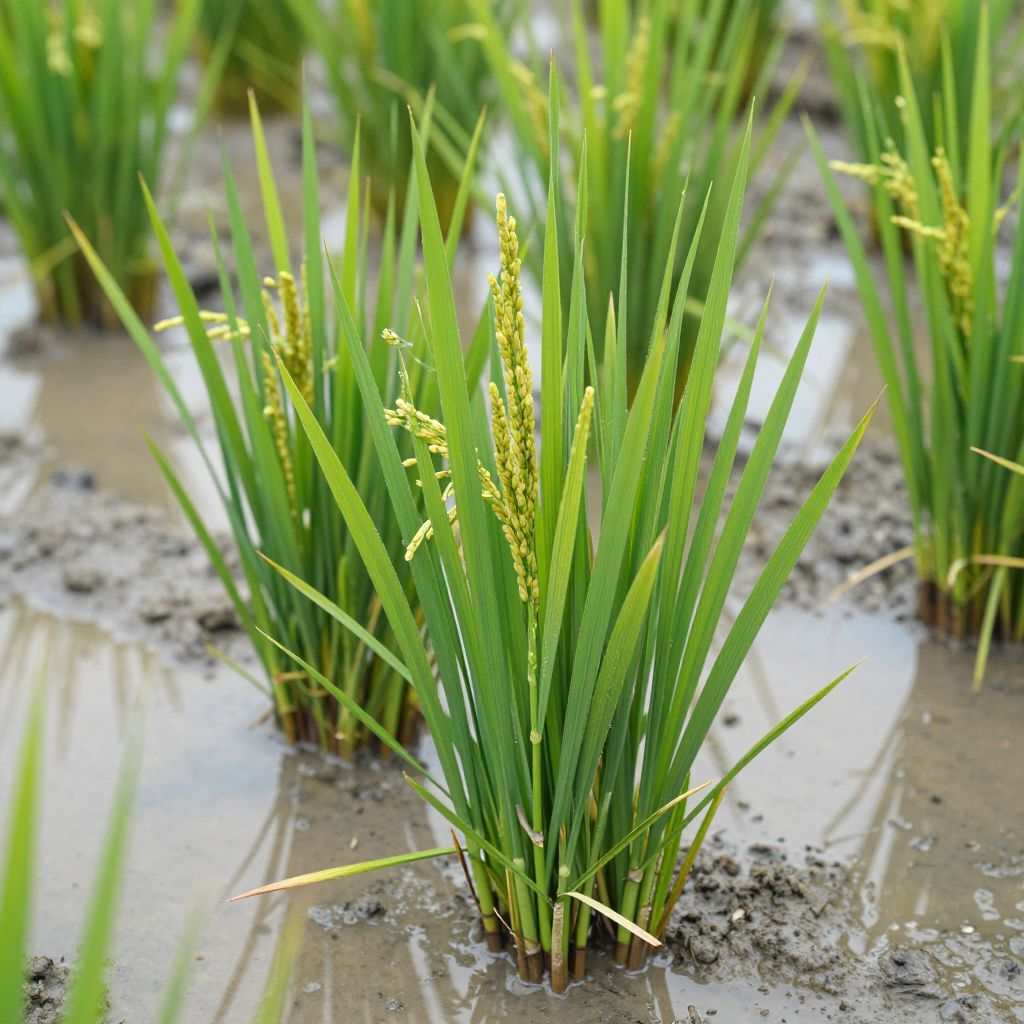
If you’re wondering, “What does a rice plant look like?” the short answer is that it looks like a tall, grassy plant with narrow leaves, upright stems, and a seed head that eventually bends under the weight of developing grain. Rice is not a leafy vegetable or a bush; it is a cereal grass, Oryza sativa, and its appearance changes a lot from seedling to harvest.
Knowing the plant’s growth stages helps you identify it correctly, grow it in the right conditions, and avoid confusing it with other grasses or weeds. Whether you’re curious about rice in a garden pond, a paddy, or a container, the key features are easy to spot once you know what to look for.
What does a rice plant look like?
A rice plant is a clump-forming grass with narrow, flat green leaves, jointed stems, and a flowering head called a panicle. Young plants look like fine blades of grass, while mature plants can reach about 2 to 5 feet tall, depending on variety and growing conditions. At maturity, the grain head becomes heavy and often droops.
How to identify rice at each growth stage
Rice changes dramatically as it grows, so identification is easiest when you match the plant to its stage of development.
Seedling stage
- Very narrow, grass-like leaves emerge from the base.
- Leaves are usually bright green and upright.
- Young plants may look like lawn grass, but they grow in a more vertical, clumping form.
Vegetative stage
- Stems become taller and more noticeable.
- Leaves are long, flat, and pointed, often with a slight arch.
- The plant forms several shoots or tillers from the base.
Flowering stage
- A loose, branching flower head appears at the top.
- The panicle rises above the leaves and may stand upright at first.
- Small flowers open, then grain begins to form along the branches.
Ripening stage
- The panicle becomes heavier and often bends downward.
- Grains change from green to yellow, straw-colored, or golden.
- The whole plant may look dry and mature as harvest approaches.
Key features that separate rice from other grasses
Rice is easy to mistake for wild grass when it is young, but a few details help you tell the difference. Look for a more upright growth habit, thicker clumps, and a distinctive grain head later in the season. Rice also tends to grow best in consistently moist soil, unlike many lawn grasses.
- Leaf shape: long, narrow, flat blades with pointed tips.
- Growth habit: clumping and upright, not spreading like many turf grasses.
- Seed head: a branched panicle, not a compact spike.
- Color: usually medium to bright green until ripening begins.
What growing conditions does rice need?
Rice is a water-loving cereal that performs best in warm weather, full sun, and soil that can stay evenly moist. Many gardeners grow it in flooded beds, shallow water, or very wet soils, but it can also be grown in containers if you can maintain the right moisture level. It is not a drought-tolerant crop.
Sunlight
Rice needs full sun for strong growth and grain production. Aim for at least 6 to 8 hours of direct sunlight each day.
Soil
Rice grows best in fertile, heavy soil that holds moisture well. Sandy soil dries too quickly unless you irrigate carefully and often. A loamy soil with plenty of organic matter can also work if you can keep it consistently wet.
Water
Consistent moisture is essential. Traditional rice culture often uses shallow standing water, but home gardeners can also grow rice in saturated beds or containers with frequent watering. Letting the soil dry out during active growth can reduce vigor and yield.
Temperature
Rice is a warm-season crop. It grows best when nights and days are warm and frost risk has passed. Cool temperatures slow growth and can interfere with flowering and grain filling.
How to grow rice in a home garden
If you want to grow rice yourself, start with a small area and focus on moisture control. Rice is more forgiving than many people expect, but it does need the right setup from the beginning.
- Choose a sunny site. Pick the warmest, brightest part of your garden.
- Prepare the soil. Work in compost to improve fertility, but avoid making the soil too loose if it drains too fast.
- Sow seeds or transplant seedlings. Follow the spacing recommended for your variety, since some types tiller more than others.
- Keep the area consistently wet. Use irrigation, shallow flooding, or frequent watering to prevent drying.
- Watch for weeds early. Young rice competes poorly with aggressive weeds.
- Support ripening plants if needed. Heavy seed heads can cause stems to bend or lodge.
Container growing
Rice can be grown in a large container, but the pot must hold moisture well. Choose a deep container with no need for fast drainage, and keep the soil wet throughout the growing season. A tub, half-barrel, or similar large vessel works better than a small decorative pot.
Garden pond or wet bed growing
If you have a pond edge or a low-lying bed that stays damp, rice may fit naturally there. Just make sure the site still receives full sun and does not become stagnant or overly shaded by surrounding plants.
Common problems when growing rice
Most rice problems come from water stress, poor site selection, or competition from weeds. Identifying the issue early makes a big difference.
Leaves turning yellow
Yellowing can happen from nutrient deficiency, root stress, or inconsistent watering. Check whether the soil has dried out, whether the plant is crowded, and whether the site gets enough sun.
Weak stems or lodging
If plants flop over before harvest, they may have grown too tall in rich soil, received too much shade, or been exposed to wind and heavy rain. Avoid over-fertilizing and give plants room to grow upright.
Pests and diseases
Home-grown rice can attract insects and fungal problems, especially in humid conditions. Good spacing, clean growing areas, and steady water management help reduce trouble. Remove badly affected leaves and avoid letting debris pile up around the base.
- Check leaves regularly for chewing insects or discoloration.
- Keep the planting area weed-free to improve airflow and reduce competition.
- Do not let water become foul or stagnant for long periods.
When and how to harvest rice
Rice is ready to harvest when most grains on the panicle have turned golden or straw-colored and the stems begin to dry. The exact timing depends on variety and climate, so don’t rely only on the calendar. If you harvest too early, the grains may be immature and soft.
Signs rice is ready
- Most seed heads have turned from green to yellow or tan.
- The grains feel firmer and less milky.
- The plant begins to dry down naturally.
Basic harvest approach
- Cut the stems when the grain heads are mature.
- Bundle them and allow them to dry further if needed.
- Thresh the grain from the heads once fully dry.
- Store harvested grain in a dry, protected place.
For most home gardeners, the goal is not large-scale production but learning the plant’s appearance and growth cycle. Even a small planting can teach you a lot about how rice develops from a grass-like seedling into a grain-bearing crop.
Practical mistakes to avoid
A few common errors can make rice harder to identify or grow successfully.
- Planting in shade: rice becomes weak and sparse without strong sun.
- Letting soil dry out: moisture stress can stunt growth quickly.
- Using fast-draining soil only: rice prefers soil that holds water.
- Confusing it with lawn grass: look for clumping growth and later the panicle seed head.
- Ignoring weeds: young rice is easily overtaken by competitors.
Quick visual summary
If you want a fast mental picture, think of rice as a tall, elegant grass with narrow leaves, upright stems, and a branched grain head that droops as it matures. The plant looks simple at first, but its seed head is the clearest clue that you’re looking at rice rather than another grass.
If you’d like to keep learning about edible grasses and grain crops, you may also enjoy reading about how to grow grain plants in a home garden and best soil conditions for wetland crops.