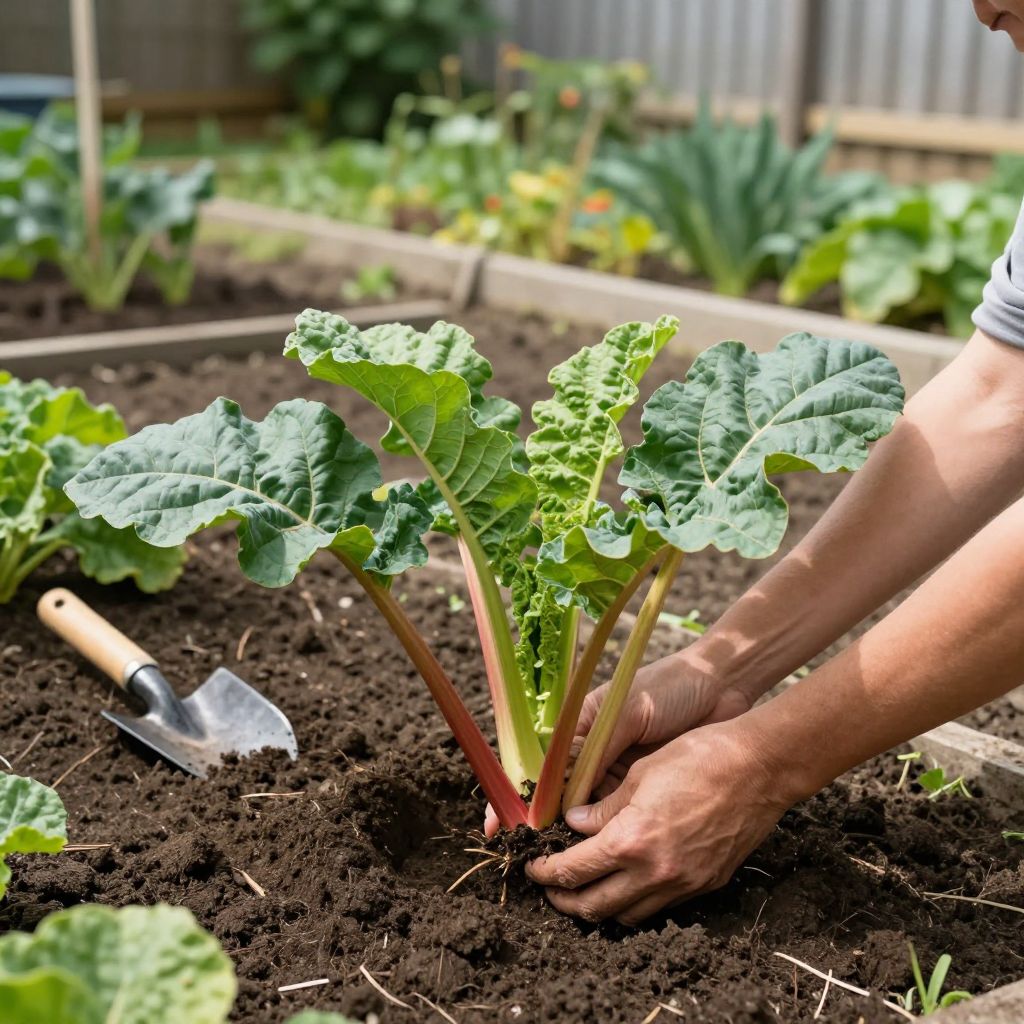
Where should you plant rhubarb so it grows well and keeps producing for years? The best spot is one with full sun, rich soil, and excellent drainage, away from competition from trees and shrubs. Rhubarb is a long-lived perennial, so choosing the right location matters more than almost anything else.
If you place it in the wrong spot, you may get weak stalks, poor flavor, or rot from wet soil. The good news is that rhubarb is fairly forgiving once established, as long as you give it room, moisture, and the right soil conditions.
Where to plant rhubarb?
Plant rhubarb in a sunny, open location with fertile, well-drained soil and enough space for a mature crown to spread. Avoid low, waterlogged areas, heavy shade, and places crowded by roots from trees or large shrubs. A permanent bed is best because rhubarb can stay productive for many years.
Best site conditions for rhubarb
Sunlight
Rhubarb grows best in full sun, which usually means at least 6 hours of direct light each day. In cooler climates, more sun helps build strong growth and thick stalks.
In hotter regions, a little afternoon shade can help prevent stress and keep the plant from wilting during extreme heat. The key is to avoid deep shade, which leads to thin, weak petioles and slower recovery after harvest.
Soil type and drainage
Rhubarb prefers deep, fertile, moisture-retentive soil that still drains well. It does not like sitting in water, especially in winter or early spring.
If your soil is heavy clay, improve drainage before planting by mixing in plenty of compost and, if needed, raising the bed slightly. If your soil is very sandy, add compost or well-rotted manure to help it hold moisture and nutrients.
Space and permanence
Choose a place where rhubarb can stay undisturbed. A mature plant can spread into a large clump, so give it room from the start.
- Allow about 3 to 4 feet between plants.
- Keep it away from aggressive roots and overhanging tree canopies.
- Pick a site you will not need to dig up often.
Because rhubarb is a perennial, it performs best when left in one place for several years. Frequent moving can slow establishment and reduce vigor.
What kind of soil does rhubarb need?
Rhubarb grows best in soil that is rich in organic matter, slightly acidic to neutral, and consistently moist but not soggy. Before planting, work in compost or well-rotted manure to improve fertility and structure.
If you can, test your soil first. Rhubarb usually does well in a pH range around 6.0 to 7.0, but it is more important that the bed drains well and contains plenty of organic matter. Extremely acidic or very alkaline soil can reduce performance over time.
How to prepare the planting area
- Clear the site of perennial weeds and grass.
- Dig the soil deeply, at least 12 to 18 inches if possible.
- Mix in compost or well-rotted manure generously.
- Level the bed so water does not pool around the crown.
- If drainage is poor, build a raised bed or mound the planting area slightly.
Do not plant rhubarb into compacted, unamended ground. Poor soil preparation is one of the most common reasons for weak growth in the first few years.
Should rhubarb be planted in full sun or partial shade?
Full sun is usually best for rhubarb, especially in cooler climates. More sunlight encourages stronger stalks and better overall growth, which is important if you want a productive plant.
Partial shade can work if your summers are very hot, but too much shade will reduce vigor. If the plant is shaded for most of the day, expect thinner stalks and slower regrowth after cutting.
Signs the site is too shady
- Long, floppy stalks
- Pale or weak leaves
- Slow spring growth
- Small harvests year after year
Where not to plant rhubarb
Some locations cause problems no matter how well you care for the plant. Avoid these common mistakes when deciding where to plant rhubarb.
- Low-lying wet spots: Standing water can rot the crown.
- Dense shade: Growth becomes weak and sparse.
- Near trees and shrubs: Roots compete for water and nutrients.
- Windy exposed sites: Large leaves can tear and dry out.
- Areas with poor soil: Thin, exhausted soil limits long-term growth.
If your only available space is less than ideal, a raised bed is often the best solution. It gives you more control over drainage and soil quality.
How to plant rhubarb in the right spot
Once you have the location, planting correctly helps the crown settle in quickly. Rhubarb is usually planted from crowns or divisions rather than seed for faster, more reliable results.
Planting crowns
- Dig a hole wide enough to spread the roots comfortably.
- Set the crown so the growing buds sit just at or slightly below the soil surface.
- Backfill with amended soil and firm gently.
- Water thoroughly to settle the soil around the roots.
- Mulch lightly to conserve moisture and suppress weeds.
Do not bury the crown deeply. Planting too deep can delay growth and increase the risk of rot.
Planting divisions
If you are dividing an established plant, make sure each section has at least one strong bud and a healthy root piece. Replant divisions promptly so the roots do not dry out.
Divisions should go into a prepared bed with the same spacing and soil conditions as new crowns. Water them well after planting and keep the soil evenly moist while they establish.
Can you grow rhubarb in containers?
Yes, but containers are best for gardeners who cannot plant in the ground. Use a very large pot or half-barrel with excellent drainage and rich potting mix blended with compost.
Container-grown rhubarb needs more attention than garden-grown plants because pots dry out faster and nutrients leach away more quickly. Choose a sunny spot, water consistently, and avoid letting the pot sit in a saucer of water.
Container tips
- Use a container at least 18 to 24 inches wide and deep, if possible.
- Make sure the pot has several drainage holes.
- Top-dress with compost each year.
- Protect the pot from extreme heat and freezing where needed.
Watering and mulch after planting
Rhubarb likes steady moisture, especially during establishment and active spring growth. The soil should be moist but never soggy.
Mulch helps keep roots cool, conserve water, and suppress weeds. A 2- to 4-inch layer of straw, shredded leaves, or compost works well, but keep mulch a little away from the crown so it does not stay wet against the plant.
When to water more often
- During dry spells or hot weather
- When plants are newly planted
- In sandy soil that drains quickly
- In containers, which dry out faster than beds
Feeding rhubarb for strong growth
Rhubarb is a heavy feeder and does best in soil enriched with organic matter. Compost is usually the simplest and safest way to feed it.
Each spring, top-dress the bed with a layer of compost or well-rotted manure, then mulch lightly. If growth is weak, check first for shade, crowding, or poor drainage before adding more fertilizer. Too much nitrogen can produce lush leaves without improving stalk quality.
Seasonal care after planting
First year
In the first year, focus on root establishment rather than harvest. Let the plant build strength so it can support future production.
- Keep weeds down so they do not compete for moisture and nutrients.
- Water during dry periods.
- Remove flower stalks if they appear, so energy stays in the crown.
Later years
Once established, rhubarb benefits from regular spring feeding, mulch, and occasional division if the crown becomes crowded. Healthy plants often improve with age, as long as the bed remains fertile and well drained.
Common problems caused by a poor planting site
Weak stalks
Weak stalks are often caused by too much shade, overcrowding, or poor soil. Move the plant only if necessary, and improve the new site before replanting.
Crown rot
Crown rot usually points to wet soil or poor drainage. If the site stays soggy after rain, raise the bed or choose another location.
Small harvests
Small harvests can happen when rhubarb is planted too close to trees, in depleted soil, or in a spot with insufficient sun. Rhubarb needs time and space to perform well.
Leaf scorch or wilting
Hot, exposed sites can stress the plant, especially if the soil dries out quickly. Mulch, consistent watering, and a little afternoon shade in very hot climates can help.
Best companion planting and spacing ideas
Rhubarb usually works best as a standalone crop or at the edge of a vegetable bed where it will not be crowded. It can also fit into a mixed perennial border if you give it enough room.
Good neighbors are plants that do not compete heavily for light or root space. Avoid planting it right beside vigorous spreading herbs, shrubs, or large vegetables that will shade or crowd it.
Final tips for choosing the right spot
If you are still deciding where to plant rhubarb, choose the sunniest open area you have with fertile, well-drained soil and room for the crown to expand. That combination gives you the best chance of a long-lived, productive plant.
Before planting, improve the bed with compost, check drainage after rain, and keep the crown at the proper depth. If you want more help planning your perennial beds, you may also find it useful to read about how to grow rhubarb and choosing compost for vegetable gardens.